To fix a toilet that keeps running, you usually need to adjust or replace a worn flapper, fix the float level, or repair the fill valve. These are simple fixes, but ignoring them can waste water, raise your bill, and signal deeper plumbing issues that may surface during a home inspection.
A running toilet is one of the most common problems inspectors see in homes. Many homeowners put it off because the toilet still “works.” The problem is that constant running often means water is escaping where it should not. Over time, that can cost you real money and create inspection red flags.
Below is a clear, step-by-step guide to help you understand what is happening, how to fix it, and when it is time to look deeper.
Why Is A Toilet That Keeps Running More Than A Minor Annoyance
During a home inspection, the plumbing scope typically includes checking toilets and other fixtures for proper operation, continuous running, and visible leaks or moisture concerns.
A running toilet may seem minor, but it signals a fixture that isn’t functioning as intended. It can also prompt closer attention to shut-off performance, water flow, and signs of past leakage nearby.
Even a silent, slow leak can waste a surprising amount of water over time and increase strain on the system. But beyond utility costs, it matters because a running toilet can affect how an inspector evaluates the home’s plumbing.
During a home inspection, plumbing is typically evaluated for:
- Functional operation (fixtures that work as intended)
- Leaks and signs of water damage (visible moisture, staining, corrosion)
- Water supply and shutoff performance (valves and fill systems that stop correctly)
- Overall maintenance patterns (small defects that suggest bigger neglect)
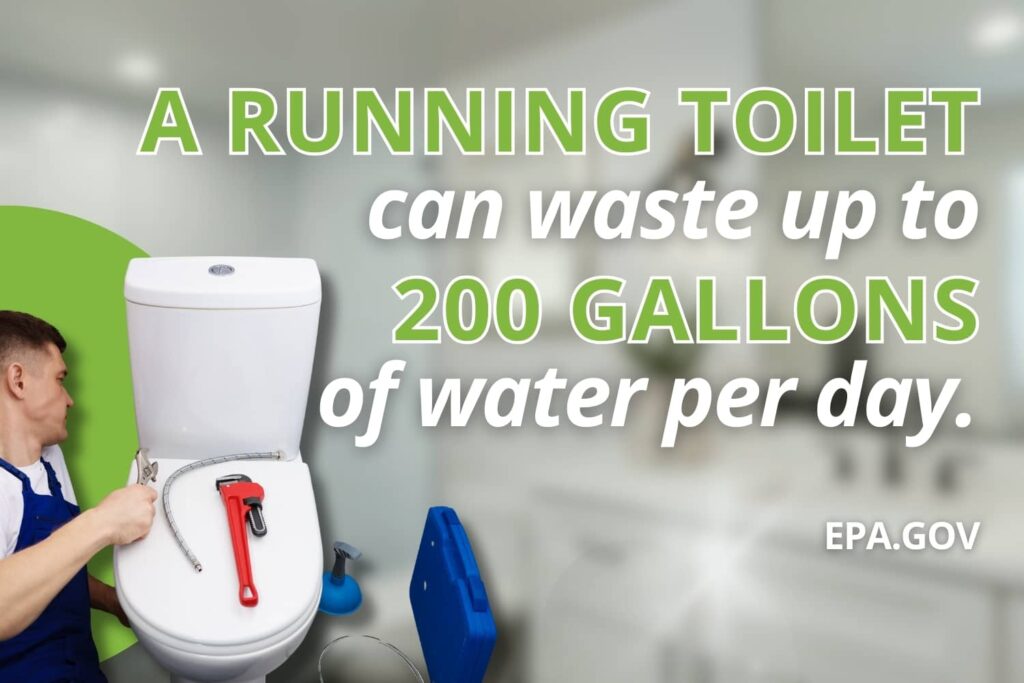
A running toilet is often flagged because it’s a clear defect, and when it’s left unfixed, it can signal that other plumbing maintenance may have also been delayed.
How to Tell If Your Toilet is Constantly Running
Some toilets run loudly. Others run so quietly that homeowners do not notice right away.
Here are common signs your toilet may be running when it should not be:
- You hear water refilling long after a flush
- The toilet makes random refill sounds when no one uses it
- The water level in the tank drops on its own
- You jiggle the handle often to stop the noise
Quick checks that match what inspectors do:
- Dye test: Add a few drops of food coloring into the tank and wait 10 minutes without flushing. If dye appears in the bowl, water is leaking past the flapper (a very common inspection finding).
- Tank-lid check: After flushing, watch the tank. If water keeps flowing into the overflow tube or the fill never stops, it’s running.
Why Toilets Keep Running and What That Can Indicate
A small number of issues cause most running toilets. The good news is that these problems are usually inexpensive to fix.
1) Worn or misaligned flapper
The flapper is the rubber piece at the bottom of the tank that lifts when you flush. Over time, it can warp, crack, or fail to seal properly. When that happens, water slowly leaks into the bowl.
A deteriorated flapper often suggests aging rubber components throughout the home (other seals and valves may be nearing failure, too).
2) Float set too high
The float controls how much water fills the tank. If it is set too high, water spills into the overflow tube and continues to run.
This is a “small adjustment” defect, but it can suggest the toilet has been improperly adjusted after repairs or never tuned after a part replacement.
3) Faulty fill valve
The fill valve controls how water enters the tank. When it wears out, it may not shut off fully.
A failing fill valve can be linked to water pressure issues, sediment buildup, or general wear in older plumbing systems.
4) Problems with the overflow tube
If the water level is always above the overflow tube, excess water constantly drains away instead of staying in the tank.
Inspectors often see these issues in older homes or homes where plumbing parts have never been replaced.
Overfilling can indicate a system that’s not regulating water properly, sometimes tied to an older valve setup or inconsistent pressure.
How to Fix a Running Toilet (and Why Each Step Matters)
Before starting, turn off the water supply valve behind the toilet and flush to empty the tank.
This keeps the job clean and prevents the toilet from continuously refilling while you’re diagnosing the problem. The shutoff valve is usually a small knob behind the toilet near the floor.
Step 1: Check The Flapper
The flapper is the rubber (or silicone) seal at the bottom of the tank. When it doesn’t seal perfectly, water slowly leaks into the bowl. The fill valve then refills the tank to compensate; this is the classic “running toilet” cycle.
What to do:
- Inspect the flapper material: Look for cracking, warping, stiffness, or a slimy/mineral buildup on the sealing edge.
- Check how it sits on the drain opening (flush valve seat): It should lie flat and centered. If it’s twisted or not aligned, it can leak.
- Check the chain length: Adjust so there’s slight slack when the flapper is closed; enough to fully close, but not so loose that the chain can slip under the flapper.
- Clean the seat if needed: Wipe the rim where the flapper seals (use a cloth or sponge). Mineral buildup there can prevent a tight seal, even if the flapper is fine.
Why it matters:
- A leaking flapper is the #1 cause of a running toilet because it creates a slow, constant loss of tank water.
- It’s usually the fastest and cheapest fix, and it removes an obvious issue that’s easy to spot (and easy to call out).
- Even a tiny leak will trigger refilling over time, which is why toilets often “randomly” refill minutes later.
Step 2: Adjust The Float
The float controls the tank’s water level. If it’s set too high, water will spill into the overflow tube (or sit close enough that minor turbulence sends it over), causing constant running or frequent refills.
What to do:
- Find your overflow tube: It’s the vertical tube near the center of the tank.
- Set the correct water level: Adjust the float so the water stops filling about 1 inch below the top of the overflow tube.
- Use the correct adjustment method for your float type:
- Float cup (modern style): usually has a screw or pinch-clip on the fill valve.
- Ball float (older style): may use a screw, or you gently bend the float arm downward (small adjustments).
- Float cup (modern style): usually has a screw or pinch-clip on the fill valve.
- Recheck after adjusting: Turn the water on briefly and confirm the new shutoff point is consistent.
Why it matters:
- It stops water from silently spilling into the overflow tube, one of the easiest “running” symptoms to detect.
- Prevents nonstop water waste and reduces strain on the fill valve (which can wear out faster when it’s always working).
- A properly set float also improves flush consistency because the tank refills to a reliable level.
Step 3: Inspect The Fill Valve
The fill valve is the part that refills the tank after a flush. If it can’t shut off cleanly, it may hiss, trickle, spray, or “cycle” on and off periodically, even if the flapper is fine.
What to do:
- Listen for shutoff behavior: After the tank fills, it should stop completely. If you hear hissing, trickling, or intermittent refilling, that’s a clue.
- Watch the refill action: Look for water spraying sideways, a weak or slow fill, or a valve that keeps running longer than it should.
- Do a quick “diagnosis split”:
- If the water level is below overflow, but the valve keeps running → fill valve issue is likely.
- If the valve shuts off but the tank level later drops → flapper leak is likely.
- If the water level is below overflow, but the valve keeps running → fill valve issue is likely.
- Replace if adjustment doesn’t fix it: If you’ve already set the float level correctly and it still won’t shut off reliably, replacement is usually the most dependable solution.
Why it matters:
- A failing fill valve causes repeated issues: random refill sounds, slow filling, or incomplete shutoff.
- From an inspection or condition standpoint, repeated cycling is a clear sign of wear, poor shutoff, or a valve that’s near the end of its life.
- Replacing a bad fill valve often prevents future callbacks because it addresses the “control” component of the tank.
- From an inspection perspective, repeated cycling suggests ongoing wear or poor shutoff performance
Step 4: Test the toilet
Testing confirms you solved the right problem. Running toilets can be caused by more than one issue (for example, a slightly leaking flapper plus a float set too high). The goal is: flush → fill → stop → stay stopped.
What to do:
- Turn the water supply back on (counterclockwise).
- Flush once and observe the full refill cycle.
- Watch the water level stop at the correct height: ~1 inch below the overflow tube.
- Wait 5–10 minutes and listen:
- Do you hear refilling minutes later? (often flapper leak)
- Does the tank fill and stop completely? (fill valve/float success)
- Is water staying below the overflow tube? (float/level success)
- Do you hear refilling minutes later? (often flapper leak)
Why it matters:
- It’s the only way to confirm the toilet won’t start running again after you walk away.
- A toilet that refills later is still leaking somewhere; catching it now prevents wasted water and repeat repairs.
- A successful test means the tank is sealing, filling properly, and shutting off reliably, exactly what you want for long-term performance.
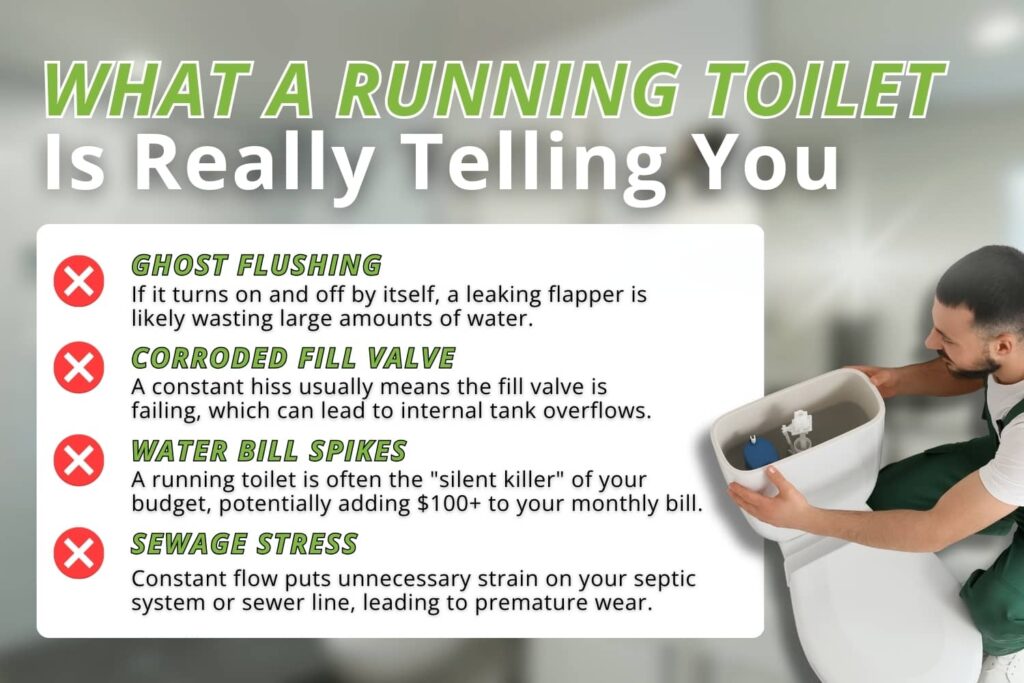
If the toilet still runs after these steps, the issue may be more complex or tied to the plumbing system itself.
When a Running Toilet is a Sign of a Bigger Problem
In many homes, a running toilet is caused by a simple, worn part. But during inspections, it can also be a clue that something deeper is going on behind the scenes.
When basic fixes do not hold, inspectors start looking beyond the toilet itself.
| What Inspectors May Find | Why It Matters |
|---|---|
| Aging plumbing components | Older parts tend to fail together, not one at a time |
| Poor water pressure control | Can cause repeated valve and seal failures |
| Hidden leaks below the bathroom | Moisture may damage subfloors or ceilings over time |
| Temporary or improper repairs | Quick fixes often hide unresolved plumbing issues |
If a toilet continues to run after repairs or the problem keeps recurring, it may signal a larger issue that needs further evaluation.
This is especially important for homeowners preparing to sell or buyers who want to avoid unexpected plumbing problems after closing.
How Much a Running Toilet Can Cost You Over Time
Many homeowners assume a running toilet is harmless, but the costs can add up quickly. Because the water loss is quiet, the problem often goes unnoticed.
A running toilet can lead to:
- Higher water bills over time
- Moisture damage to the flooring near the toilet
- Subfloor issues caused by slow, hidden leaks
- Inspection notes that raise buyer concerns
Fixing the problem early is usually simple and far less expensive than dealing with hidden damage later.
What Home Inspectors Look for With Running Toilets
During a home inspection, toilets are checked for proper operation, leaks, and water flow.
Inspectors typically look for:
- Continuous running or delayed shutoff: This often indicates worn internal components or improper water level settings.
- Loose or damaged internal parts: Cracked flappers, failing fill valves, or misaligned floats can prevent the toilet from sealing correctly.
- Signs of moisture around the toilet base: Moisture may point to slow leaks that can damage flooring or subflooring over time.
- Evidence of past leaks or repairs: Stains, corrosion, or mismatched parts can suggest recurring plumbing issues or temporary fixes.
A running toilet is usually noted in the inspection report because it is considered a defect, even if it seems minor.
For buyers, these notes can lead to repair requests. For sellers, fixing the issue ahead of time helps avoid delays or renegotiations.
How to Prevent Toilet Problems in the Future
Most running toilet issues can be avoided with basic maintenance and regular checkups. Small habits go a long way in keeping your toilet working properly and preventing surprise repairs.
| Preventive Step | Why It Helps |
|---|---|
| Replace flappers every few years | Worn flappers are one of the most common causes of running toilets |
| Avoid harsh tank cleaners | Strong chemicals can break down rubber seals and valves |
| Check toilets for silent leaks | Early leaks are easier and cheaper to fix |
| Fix small issues promptly | Minor problems often turn into ongoing failures when ignored |
Routine home inspections also help identify plumbing wear early, before it leads to visible damage, wasted water, or unexpected repair costs.
Related Questions
Can a running toilet cause water damage?
Yes. Over time, constant water flow can lead to moisture buildup around the toilet and nearby flooring. If leaks are present or go unnoticed, this moisture can reach the subfloor or ceilings below the bathroom and cause hidden damage.
Is a running toilet considered a plumbing defect?
Yes. Home inspectors typically list a running toilet as a plumbing defect because it does not operate as intended and wastes water. Even if the issue seems minor, it is still noted in inspection reports.
Should I fix a running toilet before a home inspection?
Yes. Fixing a running toilet ahead of time helps prevent inspection notes and shows that the home has been properly maintained. Small repairs completed early can also reduce the chance of buyer repair requests.
How long can a toilet run before it becomes a serious issue?
There is no safe amount of time for a toilet to run continuously. Even short-term running can waste water and strain plumbing components, increasing the risk of serious issues.
Will a running toilet affect my home’s resale value?
A running toilet alone may not lower a home’s value, but it can raise concerns for buyers during inspections. These concerns often lead to repair negotiations or delays in the sale process.
Conclusion
A running toilet is often easy to fix, but when the problem continues or keeps returning, it may point to a larger plumbing issue. At that point, bringing in a professional can help prevent ongoing water waste and potential damage.
A NISI home inspection can determine whether the issue is limited to the toilet or part of a broader plumbing concern. If you want peace of mind, consider scheduling a home inspection with NISI to identify small plumbing issues early and avoid more costly repairs down the road.