Termites spread through houses by building hidden tunnels, moving through wood, and following moisture sources inside the home. They travel in protected pathways that allow them to stay out of sight, which is why many infestations grow for months before homeowners notice anything wrong. Once termites find a steady food source, they continue expanding into new areas of the house.
Understanding how termites spread through houses helps homeowners catch early warning signs and prevent costly structural damage. This guide breaks down where infestations usually begin, how termites travel through different parts of a home, and the steps you can take to protect your property.
How Termites Spread Through Houses in Simple Terms
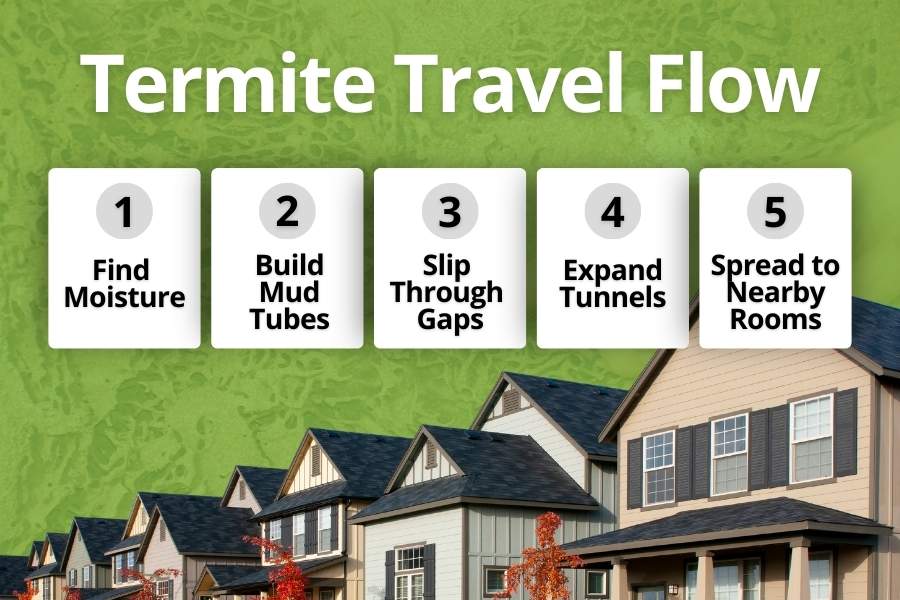
Termites spread through houses by creating small mud tubes, slipping through tiny gaps, and moving through any wood that stays damp. They are always searching for food, and once they find a steady source, they continue expanding into nearby areas. This means they can travel under floors, inside wall cavities, through crawl spaces, and even around plumbing lines without ever being seen.
Termites work around the clock. Because they feed and build tunnels day and night, the infestation can grow much faster than most homeowners realize. Even a small colony can move through a house quietly while causing steady damage over time.
What Makes Termites So Good at Moving Through a Home
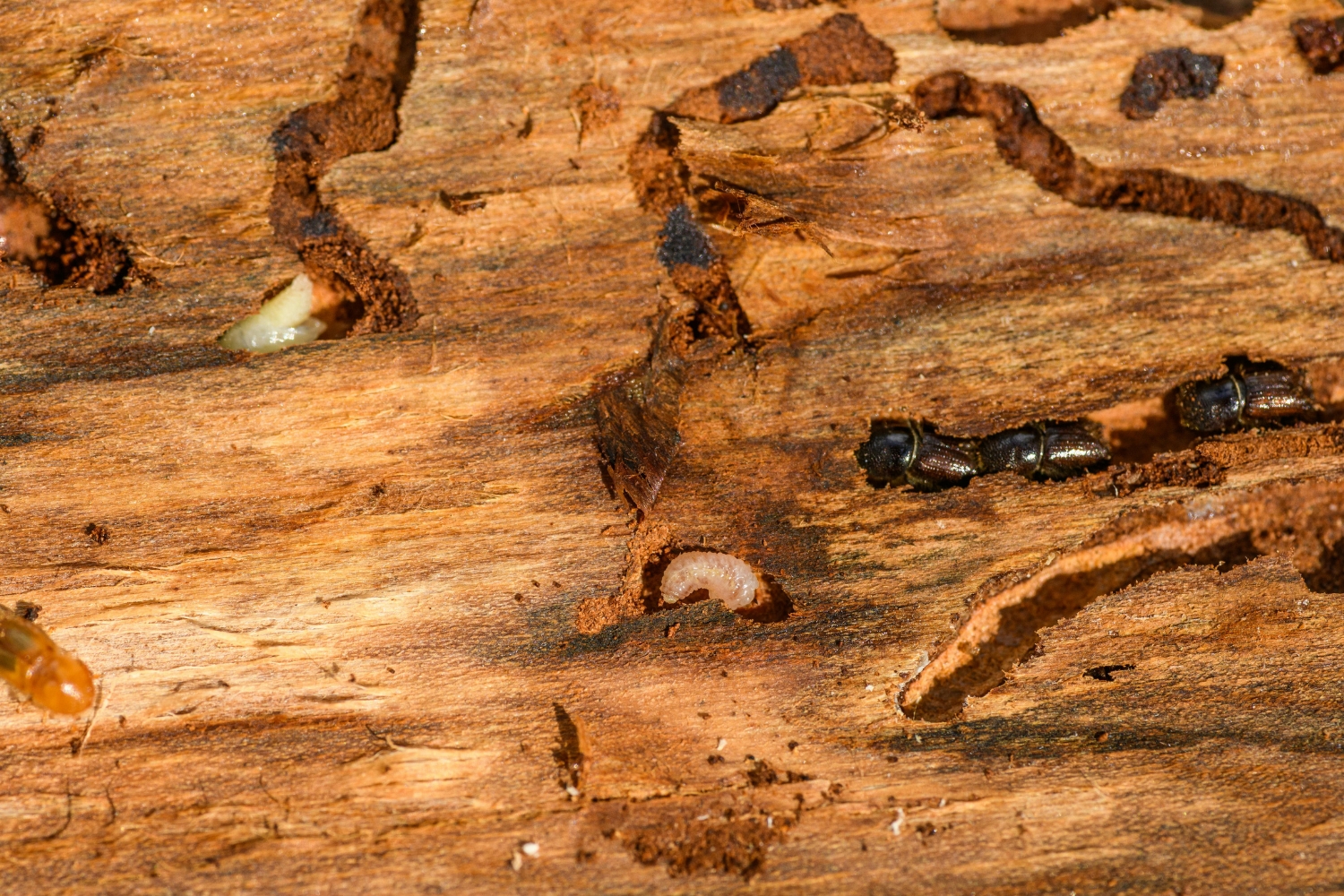
Termites have a strong system inside their colony, with each group playing a specific role. Worker termites search for food, while soldier termites protect the colony from threats. This organized teamwork helps them spread quickly without slowing down. Because they work quietly and often go unnoticed until damage is severe, termites are commonly known as silent destroyers.
They also move nonstop. They do not rest, and they build tunnels even in tight, dark spaces. These tunnels protect them from light and dry air. As long as termites have moisture and food, they can keep traveling through a house.
Some colonies have tens of thousands of termites, which makes the spread even faster.
Where Termites Usually Start Their Infestation Inside a House
Most termite infestations begin in the lower areas of a home, especially near the foundation. Subterranean termites, which are common in states like Indiana, live in the soil and travel upward in search of wood. When they find an entry point with the right mix of moisture and warmth, they start building tunnels and gradually move deeper into the structure.
Common places where termites first enter or begin feeding include:
• Soil that touches the foundation or wooden siding
• Crawl spaces with high humidity or poor ventilation
• Wet or rotting wood near plumbing lines and leaks
• Wooden decks, steps, or posts that connect directly to the home
• Siding or trim installed too close to the ground
Because these areas stay damp and hidden, termites can begin feeding long before anyone notices. Homes with moisture issues or aging wood are especially vulnerable. Regular crawl space inspections help catch these early entry points before termites spread to floors, walls, and other structural areas.
How Termites Move From One Area of a House to Another
Once termites find an entry point, they start building pathways that help them reach new parts of the home.
They often move through:
1. Mud Tubes on Walls or Foundation
These are thin, dirt-colored tubes that help termites travel safely from place to place.
2. Subfloor and Floor Joists
Termites follow the wood grain and move through framing in basements or crawl spaces.
3. Plumbing and Utility Openings
Any hole made for pipes or wires can give termites a new way to move inside.
4. Wall Voids and Framing Cavities
Behind drywall, termites can travel long distances without being seen.
During inspections, many homeowners are surprised at how far termites can travel behind walls or under floors.
How Fast Termites Can Spread Through Houses
The speed at which termites spread through a house depends on several factors, including moisture levels, available food sources, and the size of the colony. Subterranean termites, the most common type in states like Indiana, work nonstop. They feed and build tunnels 24 hours a day, which allows them to expand their territory even when the infestation seems small at first.
Moisture plays a major role in how quickly termites move. When wood stays damp from leaks, poor ventilation, or high humidity, termites travel through it much faster. A large, well-established colony can also spread more aggressively because thousands of worker termites are searching for new areas to feed.
In many homes, termites can move several feet per year, slowly working their way through framing, flooring, and wall cavities. In severe or long-ignored infestations, the spread can happen much quicker. The damage often remains hidden until termites reach a visible area, which is why early inspection is so important.
Signs Termites Have Spread Past the First Infested Area
Once termites spread beyond their starting point, they leave signs in multiple locations. Look for:
• New mud tubes in different parts of the home
• Wood that sounds hollow when tapped
• Floors that start to buckle or feel soft
• Paint that bubbles or thins
• Small piles of wings near windows
• Tiny pellets or frass
• Soft or damaged drywall
When these signs show up in more than one area, it means termites have likely moved deeper into the house.
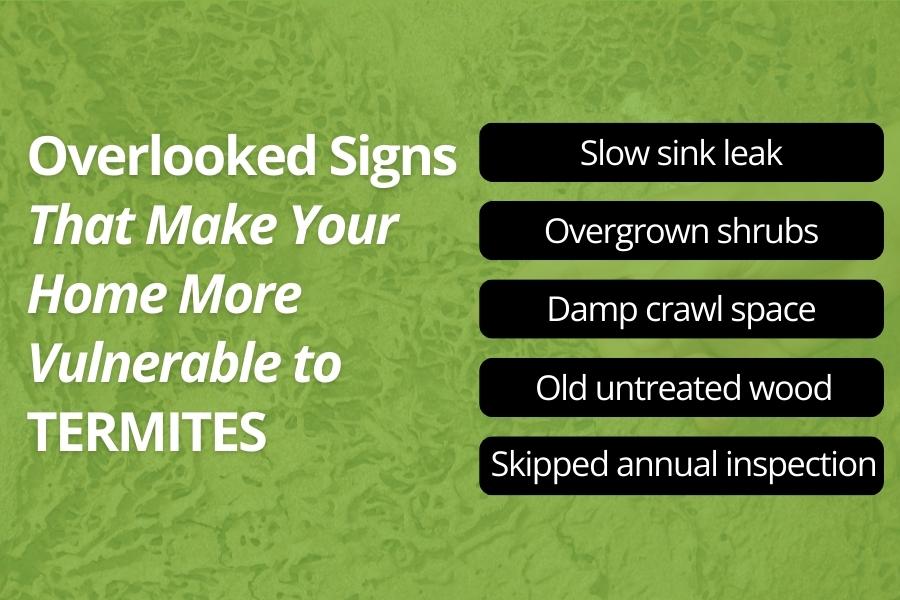
Factors That Make Termites Spread Faster in a Home
Certain conditions can speed up how fast termites spread through houses.
These include:
• Moisture leaks under sinks or inside walls
• Damp crawl spaces with poor airflow
• Missing vapor barriers
• Old or untreated wood
• Landscaping that touches the home
• Delays in scheduling a termite inspection
Moisture is one of the biggest reasons termites spread quickly. Fixing leaks early can make a major difference.
Do Termites Spread Through Brick, Concrete, or Drywall?
Termites cannot eat brick or concrete. However, they can squeeze through small cracks or gaps around these materials. Once inside, they look for wood or drywall paper, which contains cellulose.
They can move behind walls, along pipes, and through expansion joints. This is why homes made of brick or concrete can still have termite problems.
How Inspectors Track Termite Spread During a Professional Inspection
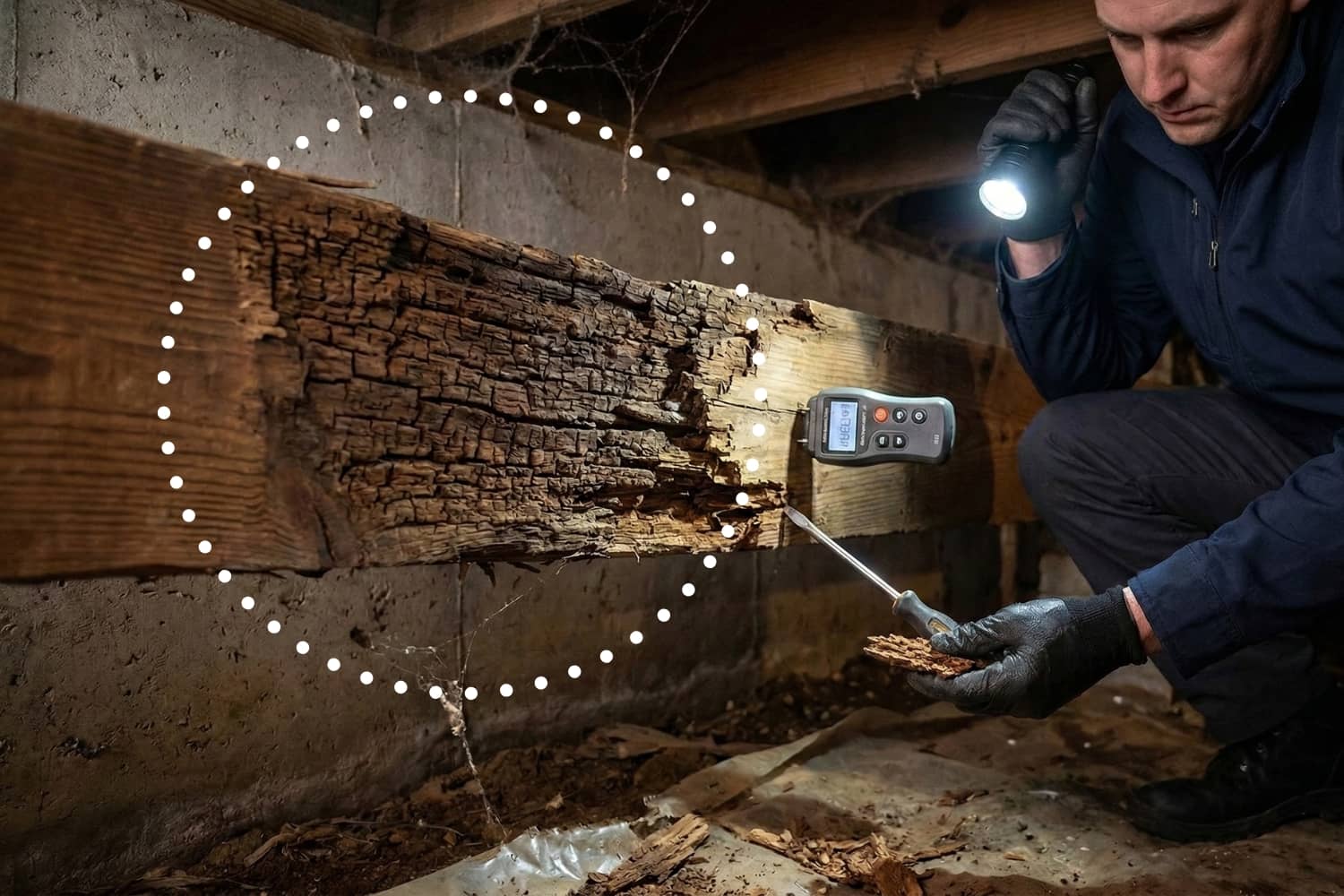
During a professional inspection, inspectors look for the pathways termites create as they move through a home. They evaluate the structure from the ground up and check for patterns that show where termites entered, how far they have traveled, and which areas may be at risk next.
Inspectors typically examine:
• Crawl spaces, basements, and foundation walls
• Floor framing, joists, beams, and support structures
• Plumbing lines, utility penetrations, and other small openings
• Moisture levels inside walls, subfloors, and wood components
• Exterior features like siding, porches, decks, and soil contact points
Special tools such as moisture meters, probes, and flashlights help uncover hidden activity behind walls or inside wood. By mapping out these signs, inspectors can determine how the infestation developed and whether termites have spread beyond the original entry point. This information helps homeowners understand the full scope of the issue and plan the right next steps for protection and repair.
What Homeowners Should Do the Moment They See Possible Termite Activity
If you notice signs of termites, stay calm. The most important steps are simple.
Here is what to do:
| Action | Why It Matters |
|---|---|
| Do not break or disturb any mud tubes | Damaged tubes can cause termites to retreat deeper into the structure, making them harder to locate. |
| Take clear pictures of what you see | Photos help document early signs and guide the inspection. |
| Check for moisture issues nearby | Leaks or damp wood can attract termites and speed up their spread. |
| Avoid sprays or DIY treatments | These can scatter termites and hide the real source of the problem. |
| Schedule a professional termite inspection | A trained inspector can confirm activity and determine how far the termites have spread. |
Breaking tunnels can make termites hide deeper, which makes the inspection harder. It is better to leave everything as is.
Treatment Paths Once Termites Have Spread Through a House
Once termites have spread, the best treatment depends on the size of the infestation.
Some homes may only need a local treatment in specific areas. Others may need broader treatment across the structure.
Moisture control is a key part of stopping the spread. Repairs may also be needed if termites damaged wood framing, floors, or drywall.
An inspector can help point out which areas need attention and which parts of the home are still safe.
How to Stop Termites From Spreading Through Houses in the Future
Homeowners can reduce the chance of spreading by taking a few simple steps.
Helpful ways to protect the home include:
• Keeping gutters clean
• Making sure the ground slopes away from the house
• Fixing roof and plumbing leaks quickly
• Keeping firewood off the ground
• Creating space between landscaping and the home
• Scheduling routine inspections
Regular termite checks help catch the earliest signs of movement before damage spreads.
Realistic Examples of How Termites Spread in Everyday Homes
1. Crawl Space to Subfloor Spread
A small entry point near the foundation lets termites reach the subfloor. Over time, they move into the kitchen and hallways.
2. Moisture Leak Spread
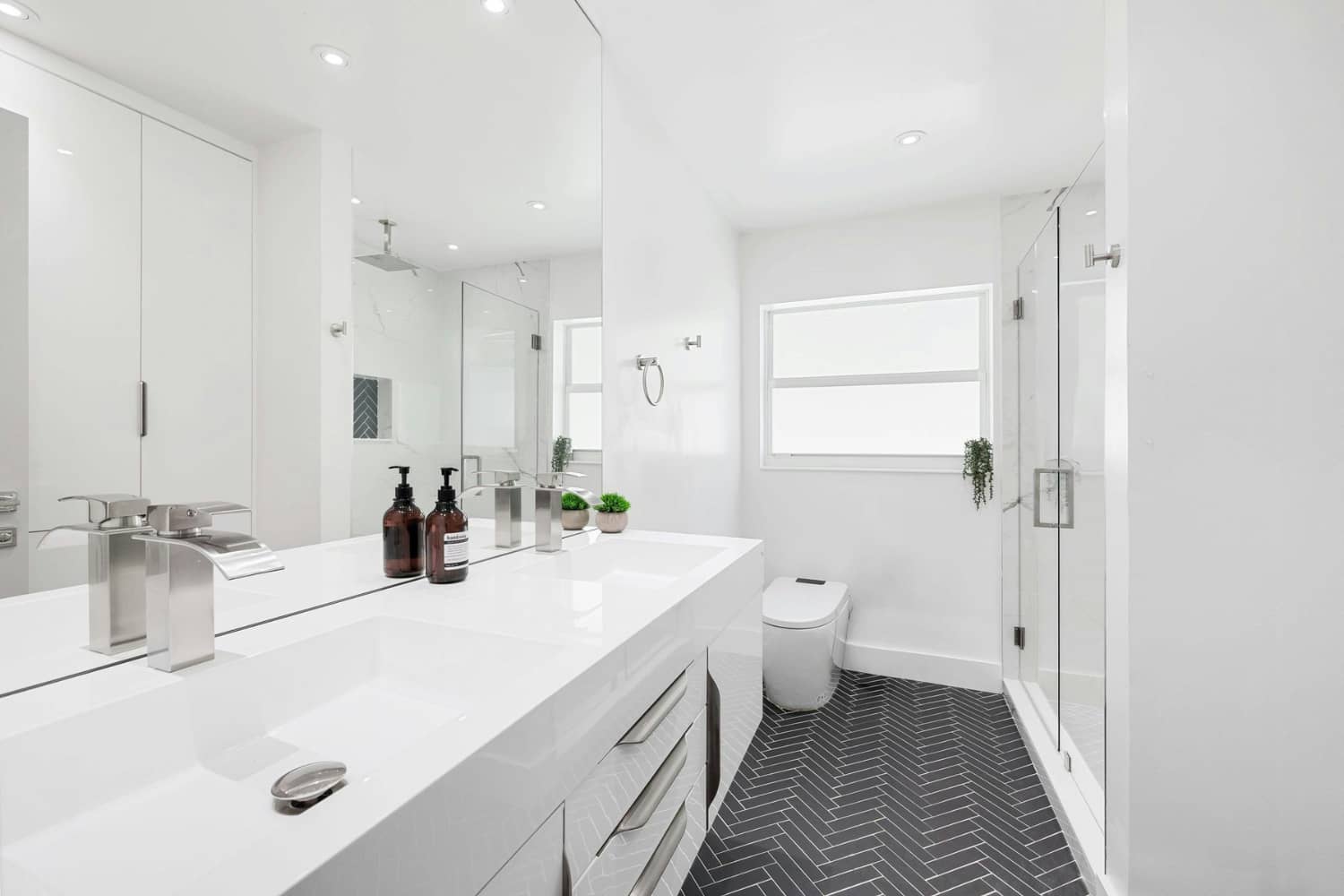
A slow leak under a bathroom allows termites to spread from the foundation up into the walls.
3. Landscaping Connection Spread
Wooden mulch or overgrown plants touch siding. Termites use this as a bridge to enter the home.
These examples show how simple home conditions can give termites access to new areas.
Related Questions
How do termites move through walls and hidden structural areas?
Termites can travel behind drywall, inside framing cavities, and through small construction gaps. This behavior explains why infestations often spread unnoticed through interior walls and structural cavities.
Can moisture control alone slow down termite movement?
Moisture reduction can make a home less attractive to termites, but it does not eliminate an existing colony. Effective prevention often involves addressing humidity, leaks, and ventilation issues while also monitoring for ongoing termite activity.
How do inspectors detect termite activity behind walls or in hidden areas?
Professional inspectors rely on tools such as moisture meters, probes, and structural assessments to identify concealed termite pathways. They look for subtle indicators such as hollow-sounding wood, moisture pockets, or tunneling evidence along framing.
Are termites more active during certain seasons in Indiana?
Warm, humid weather increases termite activity and swarming. Subterranean colonies remain active year-round, but visible movement and feeding tend to accelerate during these warmer, wetter periods.
Conclusion
Termites spread quietly, and many homeowners do not notice the problem until the infestation has moved far beyond the first entry point. Learning how termites spread through houses helps you catch the signs early and protect your home before serious damage occurs.
A regular termite inspection is one of the best ways to stay ahead of hidden activity.
If you see signs of termites or want peace of mind, scheduling a professional termite inspection can help you understand the true condition of your home. NISI provides clear, detailed inspections that help homeowners make safe and informed decisions.