An old electrical panel becomes a real concern once it can’t safely handle your home’s current electrical load, shows a known-risk brand name, or no longer matches modern safety code. During a home inspection, NISI inspectors open the panel cover, check the amperage, and look for the specific warning signs that separate a panel that’s simply old from one that’s genuinely dangerous.
If you’re buying, selling, or just curious why your report mentions the panel at all, here’s what inspectors are actually looking for, which panel brands raise flags, and what a smart next step looks like.
What Makes an Electrical Panel “Old” in the First Place
An electrical panel counts as old once it’s 25 to 40 years past installation, rated below what a modern home needs, or built by a manufacturer with a known history of failures. Age alone isn’t automatically dangerous. A well-maintained panel from the 1990s can still function safely. What matters more is capacity and design.
Homes built before the 1970s often shipped with panels rated for just 60 to 100 amps. That was plenty for a house with a furnace, a refrigerator, and a few lamps. It’s not close to enough for a home running central air, an electric range, a home office, and a couple of EV chargers at once.
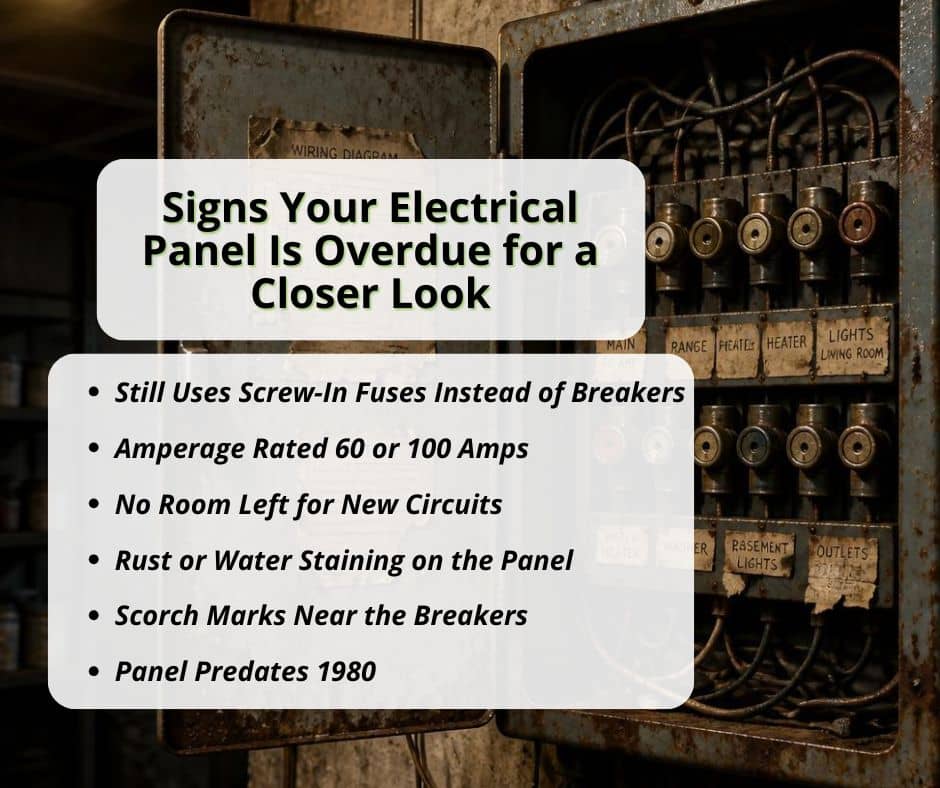
A few quick ways to spot an aging panel:
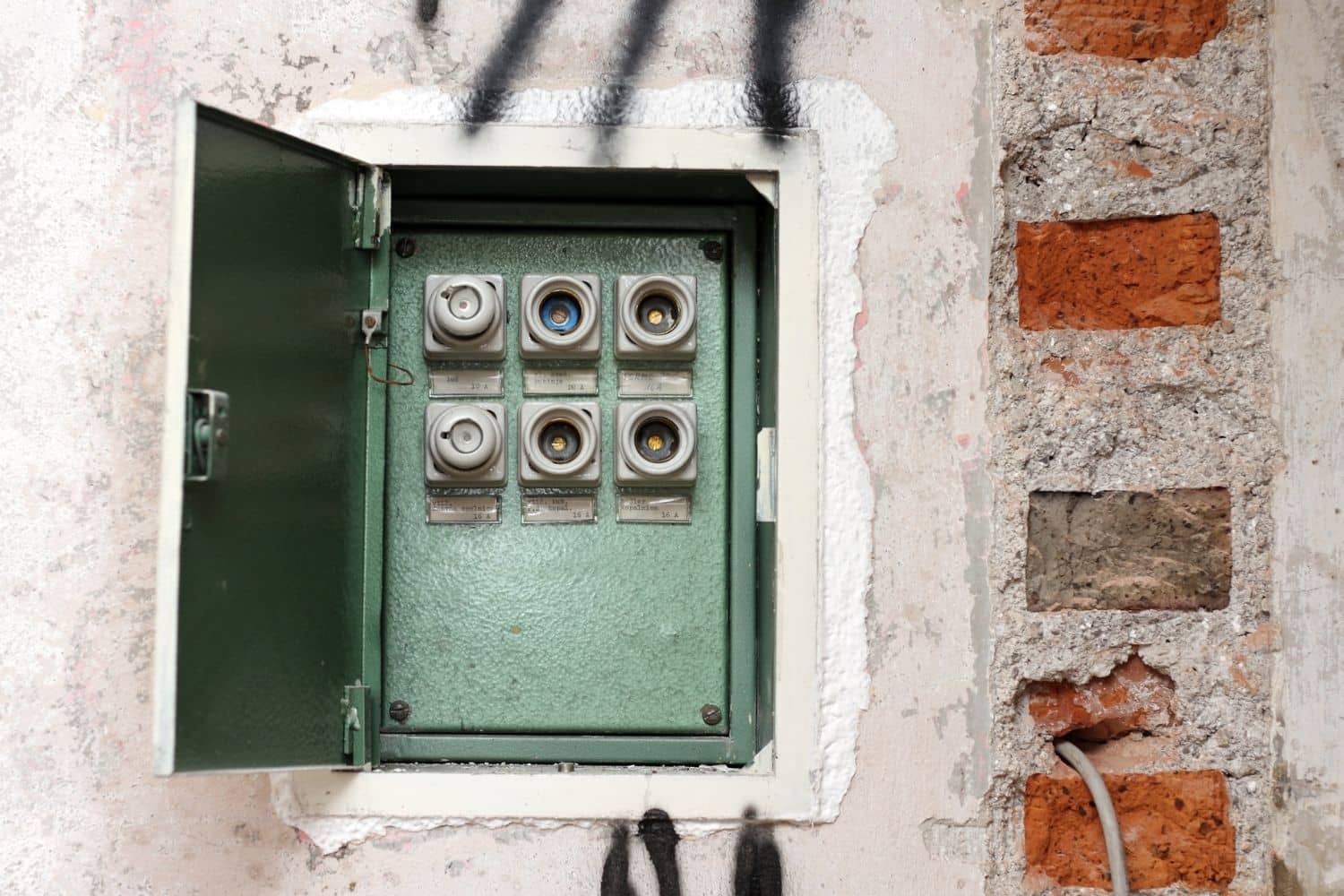
- The panel still uses screw-in fuses instead of breakers
- The amperage rating (stamped inside the door) reads 60 or 100 amps
- There’s no room left for new circuits
- The panel cover shows rust, water staining, or scorch marks
None of these guarantee a problem on their own. Together, they tell an inspector where to look closer.
How Home Inspectors Check an Electrical Panel
Home inspectors check an electrical panel by confirming its amperage rating, opening the dead-front cover to look for wiring and connection issues, and identifying the manufacturer to rule out known-risk brands. Inspectors follow InterNACHI’s Standards of Practice, which call for a visual review rather than disassembly. NISI’s team doesn’t remove breakers or probe live components. That kind of hands-on repair work belongs to a licensed electrician.
During a typical panel check, an inspector will:
- Confirm the panel has enough clear working space in front of it
- Read the main breaker’s amperage rating and compare it to the home’s electrical demand
- Look for double-tapped breakers, where two wires share one slot that’s rated for one
- Check for signs of overheating: discoloration, melted plastic, or a burning smell
- Identify the panel’s brand and model to flag known problem manufacturers
- Note missing breaker knockouts, exposed wiring, or corrosion
This is one part of a much larger scope. As we covered in how long a full home inspection takes, the electrical panel is just one system among dozens an inspector documents during a typical two-to-four-hour visit.
Panel Brands and Types That Are Red Flags
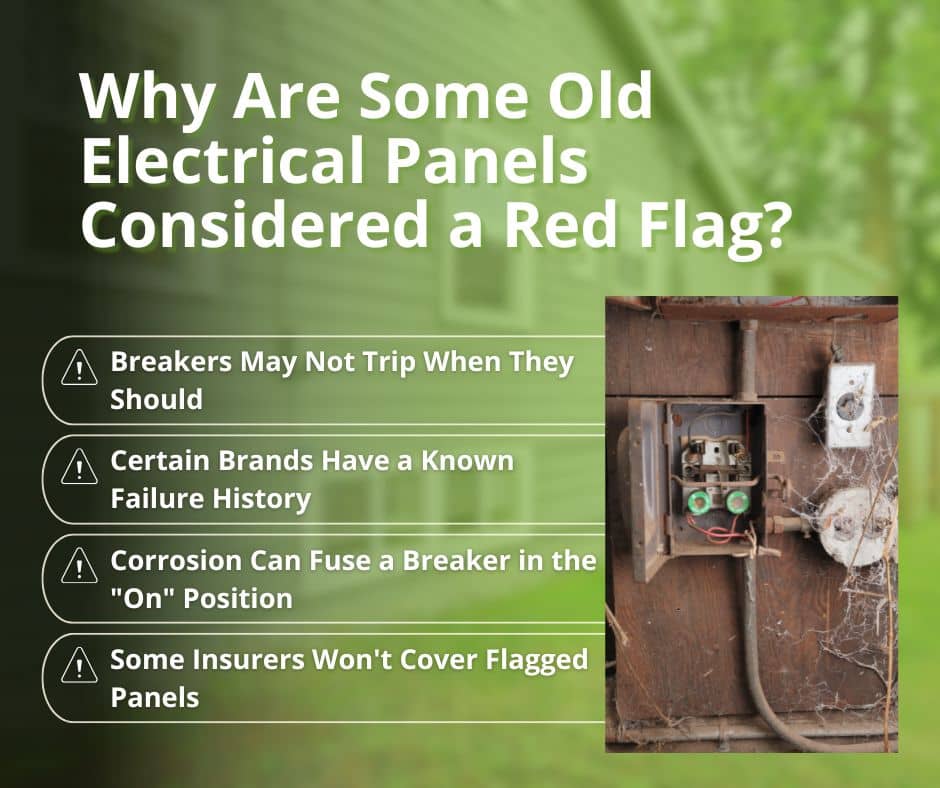
A handful of panel brands and designs get flagged in inspection reports more often than any others, mainly because their breakers have a documented history of failing to trip when they should.
| Panel Brand / Type | What to Look For | Why It’s a Concern |
| Federal Pacific / Stab-Lok | Door or breaker faces stamped “Federal Pacific,” “FPE,” or “Stab-Lok”; breakers with a red stripe | Independent testing found many Stab-Lok breakers fail to trip during an overload, the exact moment they’re supposed to protect the circuit |
| Zinsco / GTE-Sylvania | Label reads “Zinsco,” “Sylvania,” or “GTE-Sylvania,” often with brightly colored breakers | Aluminum bus bars corrode and can fuse to the breaker, so the breaker may stay “on” even when switched off |
| Challenger | Breakers marked “Challenger,” typically installed in the 1980s | A specific batch of 15- and 20-amp breakers was formally recalled in 1988 for overheating |
| Fuse boxes | Screw-in glass fuses instead of breaker switches | Homeowners sometimes swap in oversized fuses, which removes the built-in overload protection entirely |
| Undersized service (60 to 100 amp) | Amperage rating stamped inside the panel door | Can’t safely support modern appliance loads, central air, and EV charging at the same time |
None of these panels were ever hit with a nationwide safety recall except the Challenger breaker batch. That’s a common point of confusion. The absence of a recall isn’t a clean bill of health. It mostly reflects agency budget and legal limits from decades ago, not proof these panels are safe by today’s standard.
The Real Risks of Living With an Outdated Panel
The biggest risk of an outdated electrical panel is fire. According to NFPA data on home electrical fires, electrical distribution and lighting equipment is one of the leading causes of home structure fires in the United States every year. Aging panels contribute disproportionately, since worn connections, corroded bus bars, and breakers that no longer trip correctly are exactly the conditions that let a small fault turn into a fire.
Beyond fire risk, an old panel can cause:
- Insurance complications. Some carriers decline new policies or non-renew existing ones once a Federal Pacific or Zinsco panel shows up on an inspection report.
- Nuisance breaker trips. A panel that can’t keep up with your load will trip repeatedly, which is annoying, but also a sign the system is working harder than it should.
- Resale friction. Buyers and their lenders take panel flags seriously. A known-risk brand on the report can slow down or reopen negotiations on a sale.
- Shock hazard. Corroded connections and failed neutral bonding raise the odds of a shock during normal panel access, not just during a fault.
What to Do After Your Report Flags the Panel
If your inspection report flags the electrical panel, the next step is a licensed electrician, not a DIY fix. A home inspection identifies the concern and documents it clearly. It’s not a repair service, and inspectors are specifically not licensed to perform electrical work.
Here’s a reasonable path forward:
| Step | Why It Matters |
| Read the exact wording in your report | Some flags mean “monitor this,” and others mean “replace before move-in.” The language matters. |
| Call a licensed electrician for a second look | Only an electrician can confirm the panel’s condition up close and give you a real repair or replacement quote. |
| Ask about insurance before you close | If you’re buying, some lenders and insurers want proof of remediation before finalizing coverage. |
| Get a written estimate | Panel replacement costs vary by amperage and complexity, so a written quote avoids surprises later. |
| Don’t ignore a fuse box or red-flag brand | These are the cases where “wait and see” carries real risk, not just inconvenience. |
Related Questions to Explore
Will a Federal Pacific panel pass a home inspection?
A Federal Pacific panel can still be documented in a home inspection report, but most inspectors flag it for further evaluation rather than pass it without comment. The panel isn’t illegal to keep, since it’s grandfathered under existing code, but the known trip-failure history means it typically gets a “recommend evaluation by a licensed electrician” note.
How do I know if my electrical panel is too old?
Check the amperage rating stamped inside the panel door, the manufacturer’s name, and whether it uses breakers or screw-in fuses. A panel rated below 100 amps, a known-risk brand name, or a fuse-based design are the clearest signs it’s time for a closer look.
Does homeowners insurance cover an outdated electrical panel?
Insurance typically doesn’t cover the cost of replacing an aging panel itself, since that falls under maintenance rather than a covered loss. However, some insurers will decline coverage or raise premiums once a Federal Pacific or Zinsco panel shows up on record, which is a separate issue from claims coverage.
How much does it cost to replace an old electrical panel?
Panel replacement costs generally run a few thousand dollars, depending on amperage, panel location, and whether the service line also needs an upgrade. A licensed electrician can give an exact number after seeing the panel in person.
What amperage should a modern home’s panel have?
Most newer homes are built with 150- to 200-amp panels to comfortably support central air, electric ranges, and other high-draw appliances. Homes still running on 60 or 100 amps often need an upgrade before adding major new electrical loads.
When to Call a Professional
A home inspection tells you what condition the panel is in right now and whether it warrants a closer look. It’s not a substitute for hands-on electrical work. If your report flags a known-risk brand, a fuse box, or signs of overheating, the next call should go to a licensed electrician, not a general contractor or handyman.
If you’re getting ready to buy, sell, or just want a clear picture of your home’s electrical system, NISI’s home inspection service documents the panel along with every other major system in the house, so you have the full picture before you decide anything.
Conclusion
An old electrical panel isn’t automatically a crisis, but it’s not something to guess about either. The panel’s age, amperage, and brand tell inspectors most of what they need to know, and a few specific brands carry a documented history worth taking seriously.
Key takeaways:
- Amperage and manufacturer matter more than age alone
- Federal Pacific, Zinsco, and fuse boxes are the most common red flags
- A flagged panel means “call an electrician,” not “panic”
If your home hasn’t had a full inspection recently, or you’re buying a house and want the electrical system checked along with everything else, schedule an inspection with NISI. Twenty thousand inspections in and around Evansville have taught this team exactly what to look for.