A home inspection can reveal early warning signs of foundation problems, but it does not provide a full structural diagnosis. Instead, it gives homeowners and buyers a clear picture of visible conditions, potential risks, and when further evaluation may be needed.
Below, we break down exactly what a home inspection can tell you about the foundation, what it cannot, and how to use that information to protect your investment.
Why the Foundation Matters More Than Most Homeowners Realize
The foundation does more than hold your home in place. It supports the structure, protects it from the elements, and helps maintain a safe and comfortable living environment.
- Supports the full weight of the home and transfers it into the ground
- Uneven settling can create stress throughout the structure
- Shifting can cause cracked walls, sloping floors, and gaps around doors or windows
- Movement may strain plumbing and electrical systems, increasing the risk of leaks or safety issues
- Cracks allow moisture and outside air inside, contributing to mold and poor indoor air quality
- Small foundation issues can grow into costly repairs if left unaddressed
- Foundation condition directly impacts safety, comfort, and long-term home value
Because foundation problems often show up gradually, a professional home inspection plays a key role in identifying early warning signs before they become larger, more expensive issues.
Is the Foundation Fully Evaluated During a Home Inspection?
A standard home inspection includes the foundation, but it is important to understand the scope.
Home inspectors perform a visual, non-invasive evaluation. This means they look for visible signs of damage or movement without drilling, digging, or removing finished surfaces.
A home inspection is designed to identify observable defects, not to confirm engineering-level integrity.
In simple terms:
- A home inspection can identify symptoms
- It cannot determine the exact cause or repair method
That distinction helps set realistic expectations.
What Parts of the Foundation Does a Home Inspector Check?
During a home inspection, the foundation is reviewed both outside and inside the home when accessible.
Exterior Foundation Areas
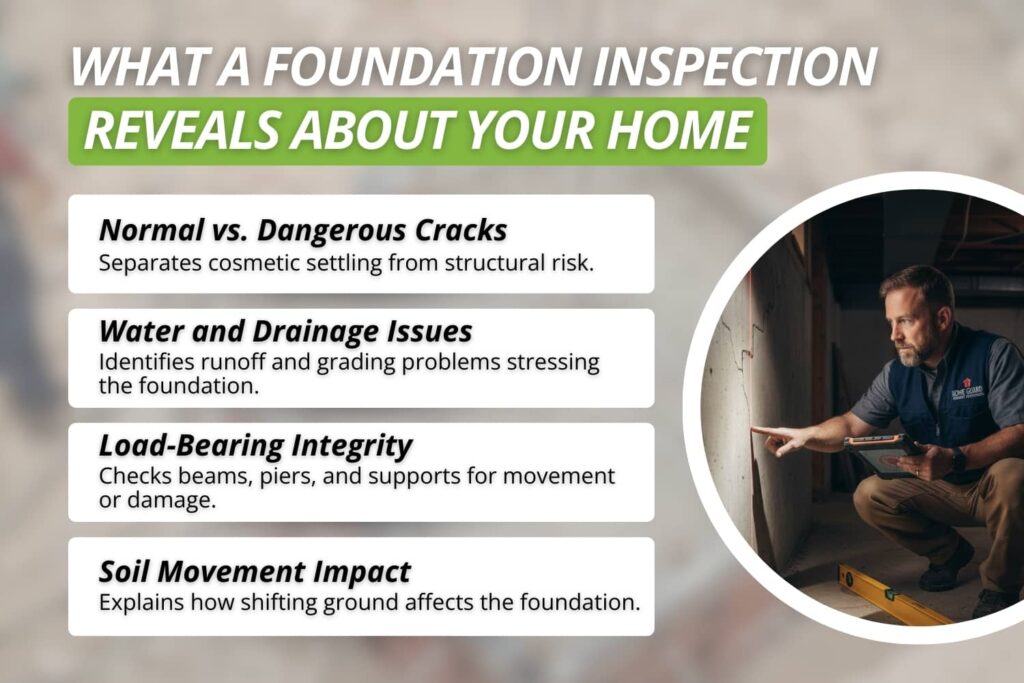
The exterior of the home often provides the earliest visible clues of foundation movement or stress. Inspectors carefully examine exposed areas to identify signs that may indicate shifting, settling, or moisture-related damage.
Inspectors look at:
- Exposed foundation walls
- Slab edges and visible footings
- Piers or supports
- Signs of cracking, bowing, or displacement
They also note grading and drainage issues that may affect foundation stability over time.
Interior Foundation Areas
Interior foundation components offer important insight into how the structure is performing below ground level. Inspectors focus on accessible areas where moisture, movement, or material deterioration is most likely to appear.
Inside the home, inspectors check:
- Basement or crawl space walls
- Support columns and beams
- Moisture intrusion or staining
- Efflorescence, which is a white, chalky residue caused by water movement
Interior Structural Clues
When foundation surfaces are concealed, inspectors rely on structural clues inside the home to assess possible movement. These visible symptoms can signal underlying foundation changes even when the foundation itself cannot be fully seen.
Even when the foundation itself is not fully visible, inspectors look for indirect signs, such as:
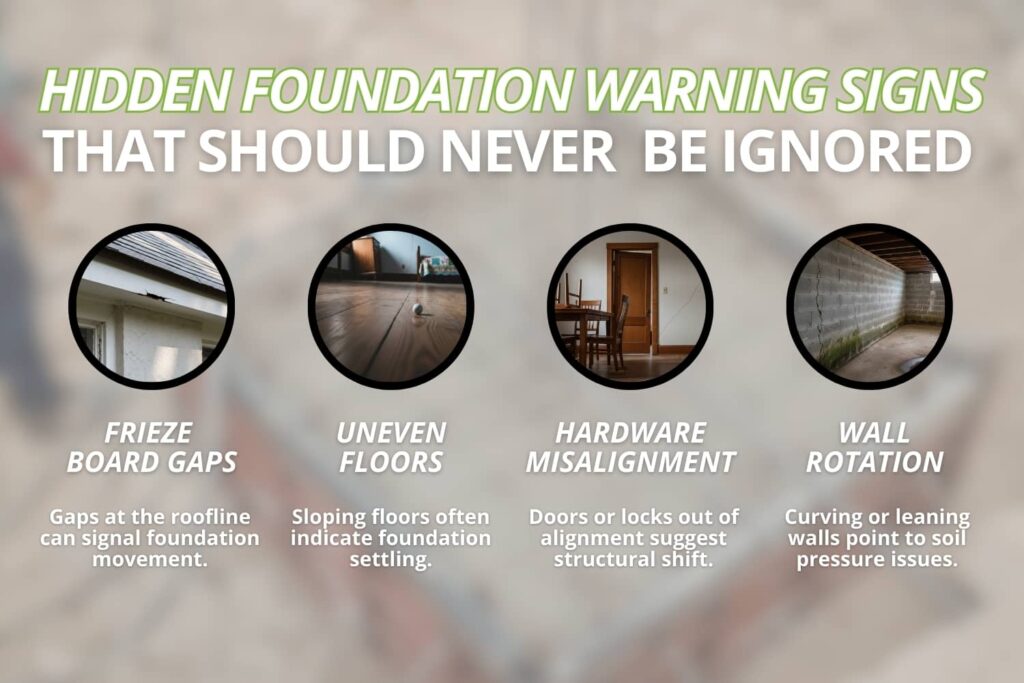
- Uneven or sloping floors
- Cracks in walls or ceilings
- Doors and windows that stick or will not latch
These clues help inspectors connect surface-level issues to possible foundation movement.
What Foundation Warning Signs Commonly Show Up in Inspections?
During an inspection, certain visible conditions tend to appear more often than others. While not every sign indicates a serious problem, some patterns warrant closer attention.
Types of Foundation Cracks
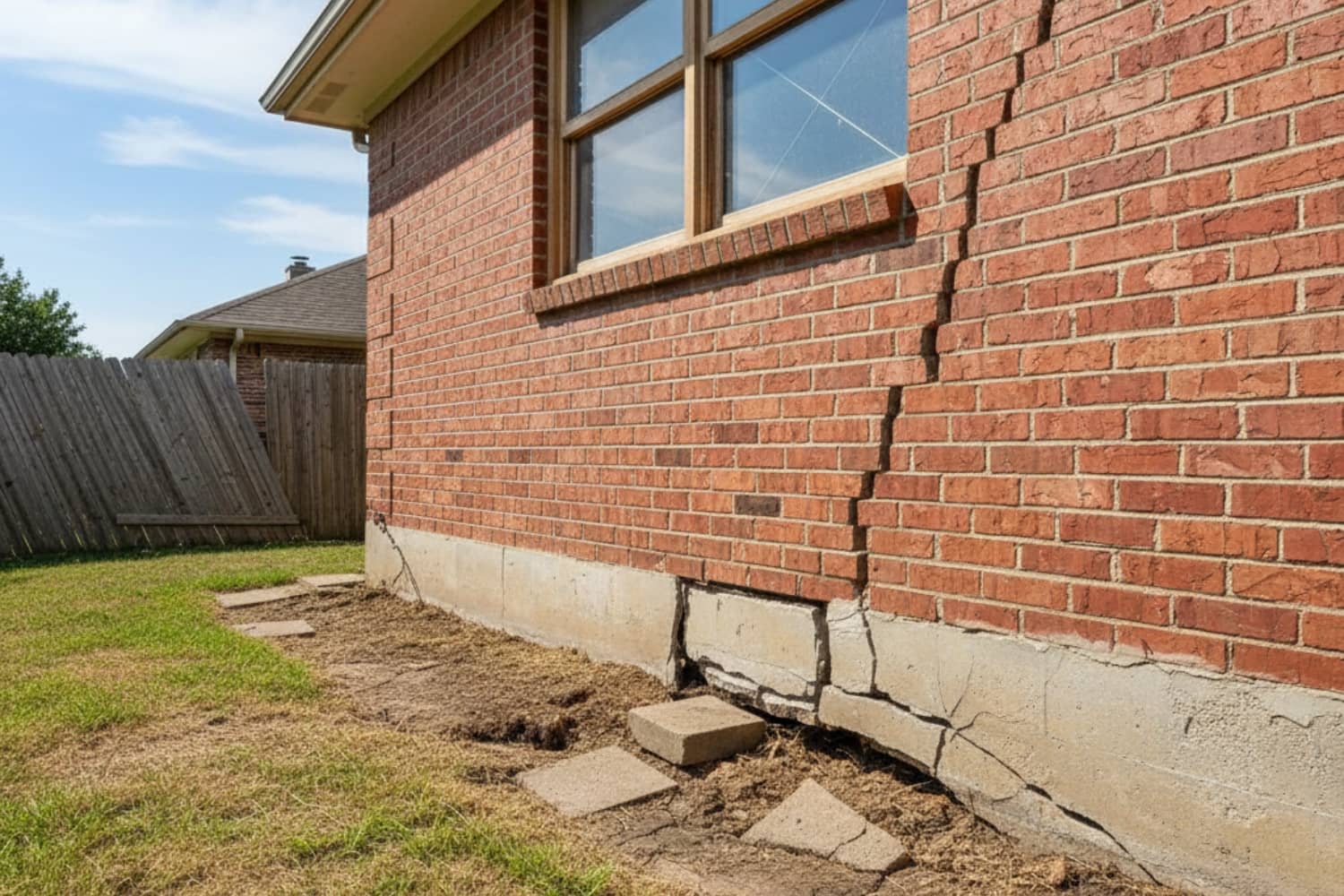
Cracks are one of the most common foundation findings during a home inspection. Inspectors evaluate their direction, size, and location to help determine whether they appear typical or potentially concerning.
Inspectors often note:
- Vertical cracks, which are common and sometimes caused by normal settling
- Horizontal cracks, which can indicate pressure from soil or moisture
- Stair-step cracks, often seen in block or brick foundations
Crack size, location, and direction all matter.
Movement-Related Indicators
Foundation movement often reveals itself through changes in the home’s structure rather than the foundation surface alone. Inspectors watch for signs that suggest shifting or uneven support.
Other warning signs include:
- Floors that slope or feel uneven
- Gaps around doors or windows
- Separating trim or baseboards
Moisture-Related Concerns
Moisture is a major contributor to foundation stress and deterioration. Inspectors pay close attention to areas where water intrusion or prolonged dampness may be affecting foundation materials.
Water plays a major role in foundation damage. Inspectors may document:
- Standing water in crawl spaces
- Damp basement walls
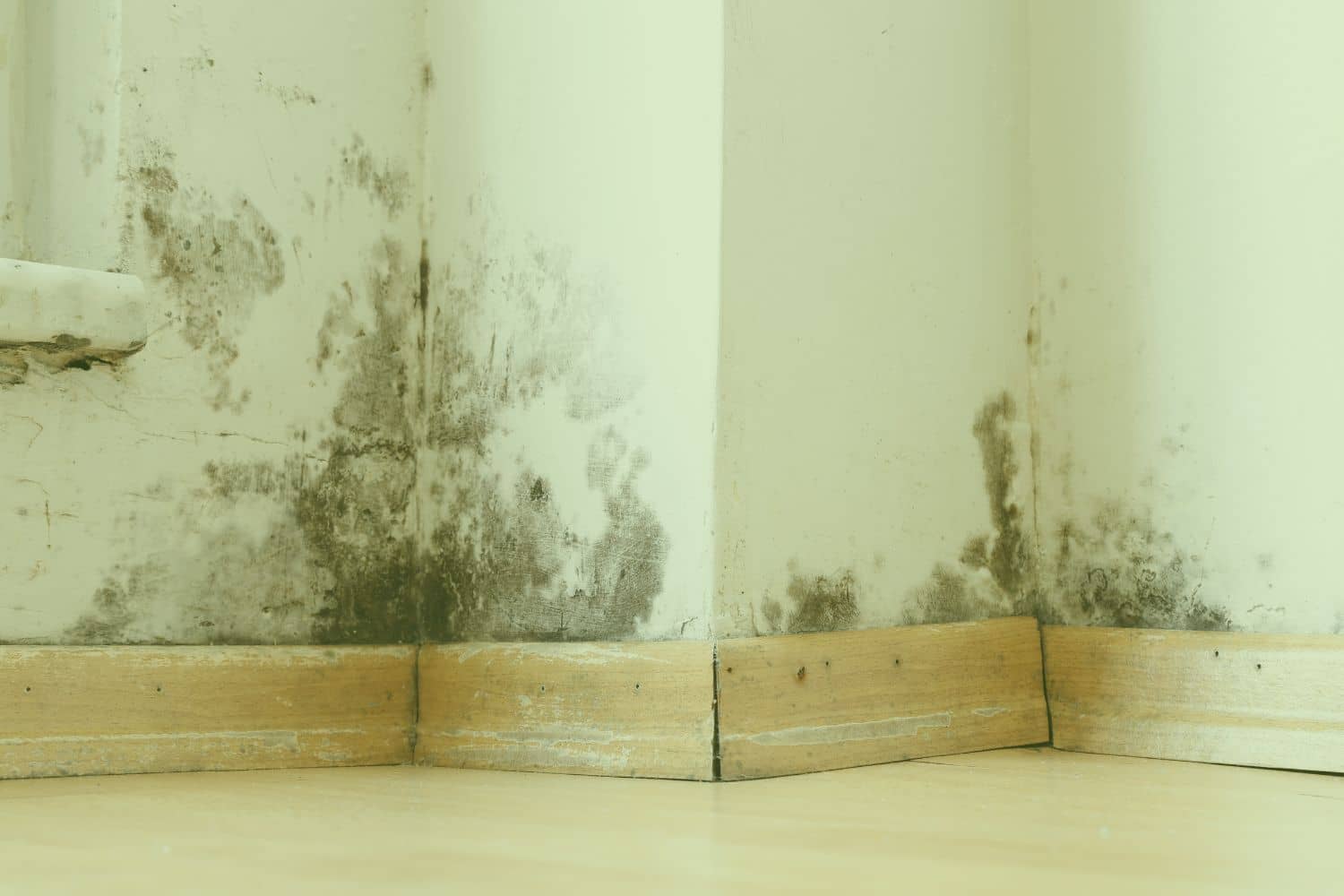
- Mold or musty odors
- Efflorescence on masonry surfaces
Ongoing moisture exposure and pressure from surrounding soil are among the leading causes of long-term foundation damage.
What a Home Inspection Can and Cannot Tell You About Foundation Health
Understanding the limits of a home inspection is just as important as understanding its benefits. Inspection findings provide valuable insight, but they are not a substitute for specialized structural analysis.
| What a Home Inspection Can Tell You | What a Home Inspection Cannot Tell You |
|---|---|
| Identifies visible cracks, movement, and moisture affecting the foundation | Confirms overall structural soundness |
| Notes patterns that may suggest foundation stress or shifting | Measures soil pressure or load-bearing capacity |
| Flags conditions that may require further evaluation | Determines the exact cause of foundation movement |
| Recommends when a specialist may be needed | Designs or estimates foundation repairs |
Understanding these boundaries helps homeowners and buyers know when a home inspection is enough and when a more specialized evaluation is the right next step.
When Does a Foundation Concern Require Further Evaluation?
Some inspection findings fall outside the scope of a standard visual evaluation. In these cases, additional expertise may be needed to determine severity and next steps.
Additional evaluation may be recommended if the inspection notes:
- Large or widening horizontal cracks
- Noticeable bowing or leaning of foundation walls
- Severe floor slope or signs of settlement
- Ongoing moisture intrusion linked to foundation movement
In these cases, a structural engineer can assess the condition and determine the underlying cause, while a foundation repair professional can focus on possible repair options. Knowing which type of expert to involve helps homeowners take the right next step with confidence.
How Foundation Issues Affect Home Value and Negotiations
Foundation-related findings often play a major role in real estate transactions because they raise questions about safety, cost, and long-term stability. Even minor concerns can influence how buyers, sellers, and lenders approach the deal.
For buyers:
- Lenders may require additional evaluation before approving financing
- Buyers may request repairs, credits, or price adjustments
- Unresolved concerns can slow negotiations or delay closing
For sellers:
- Known foundation issues may reduce buyer confidence
- Pre-listing inspections help avoid last-minute surprises
- Addressing concerns early can help protect pricing and terms
Clear documentation and professional evaluations help reduce uncertainty and keep negotiations focused on facts. When both sides understand the scope of the issue, transactions are more likely to move forward smoothly.
Can a Home Inspection Help You Avoid Costly Foundation Repairs?
One of the greatest benefits of a home inspection is early awareness. Identifying warning signs before they worsen allows homeowners to take proactive, cost-saving steps.
Identifying potential issues early allows homeowners to:
- Address drainage or grading problems before damage worsens
- Monitor small cracks or changes over time
- Plan and budget for future repairs instead of facing unexpected emergencies
Foundation repairs can range from minor fixes to major structural work. Catching issues early often helps keep repair costs lower and prevents small problems from turning into larger, more expensive ones.
What to Do If a Foundation Issue Is Noted in Your Inspection Report
If your inspection report identifies a foundation concern, it is important to take a clear and informed next step rather than react immediately.
- Review the findings carefully
Focus on the location, size, and pattern of the issue, not just the presence of a crack or note. - Ask your inspector for clarification
Your inspector can explain what was observed, why it matters, and whether it appears minor or concerning. - Pursue further evaluation if recommended
A structural engineer or qualified foundation professional can determine severity and next steps. - Use the information strategically
Buyers may negotiate repairs or credits, while sellers can plan fixes or disclose findings upfront.
Clear documentation and professional guidance help reduce uncertainty and support confident, well-informed decisions.
Related Questions
Can foundation problems be cosmetic only?
Some cracks result from normal settling or minor material changes and don’t necessarily compromise structural stability. Understanding how visible issues compare with deeper concerns is similar to evaluating other components in a professional home inspection that reviews a home’s structural elements from roof to foundation.
Are foundation cracks always serious?
Not all cracks are severe; their direction, width, and location play a bigger role. In much the same way, evaluating hidden conditions like pests or moisture requires specialized inspection techniques, such as a termite inspection for wood-destroying insects that often enter near structural points
Can foundation issues affect home inspection outcomes?
Home inspections describe the current condition of a property rather than “pass” or “fail” it. Significant concerns, whether related to the foundation or other systems, are documented so buyers and sellers can make informed decisions, similar to how inspection findings clarify the severity of moisture-related conditions and outline appropriate next steps.
Conclusion
A professional home inspection brings clarity to one of the most important parts of a home. It helps buyers understand potential risks and gives sellers the opportunity to address concerns before they become obstacles.
By identifying foundation-related issues early, inspections support safer purchases, smoother negotiations, and more confident long-term homeownership decisions.
Whether you are buying, selling, or maintaining a home, NISI Home Inspection Service provides thorough, unbiased inspections designed to help you understand what is happening below the surface. When you have clear information, you can move forward with confidence.
Contact us today to schedule your foundation inspection and protect your investment.