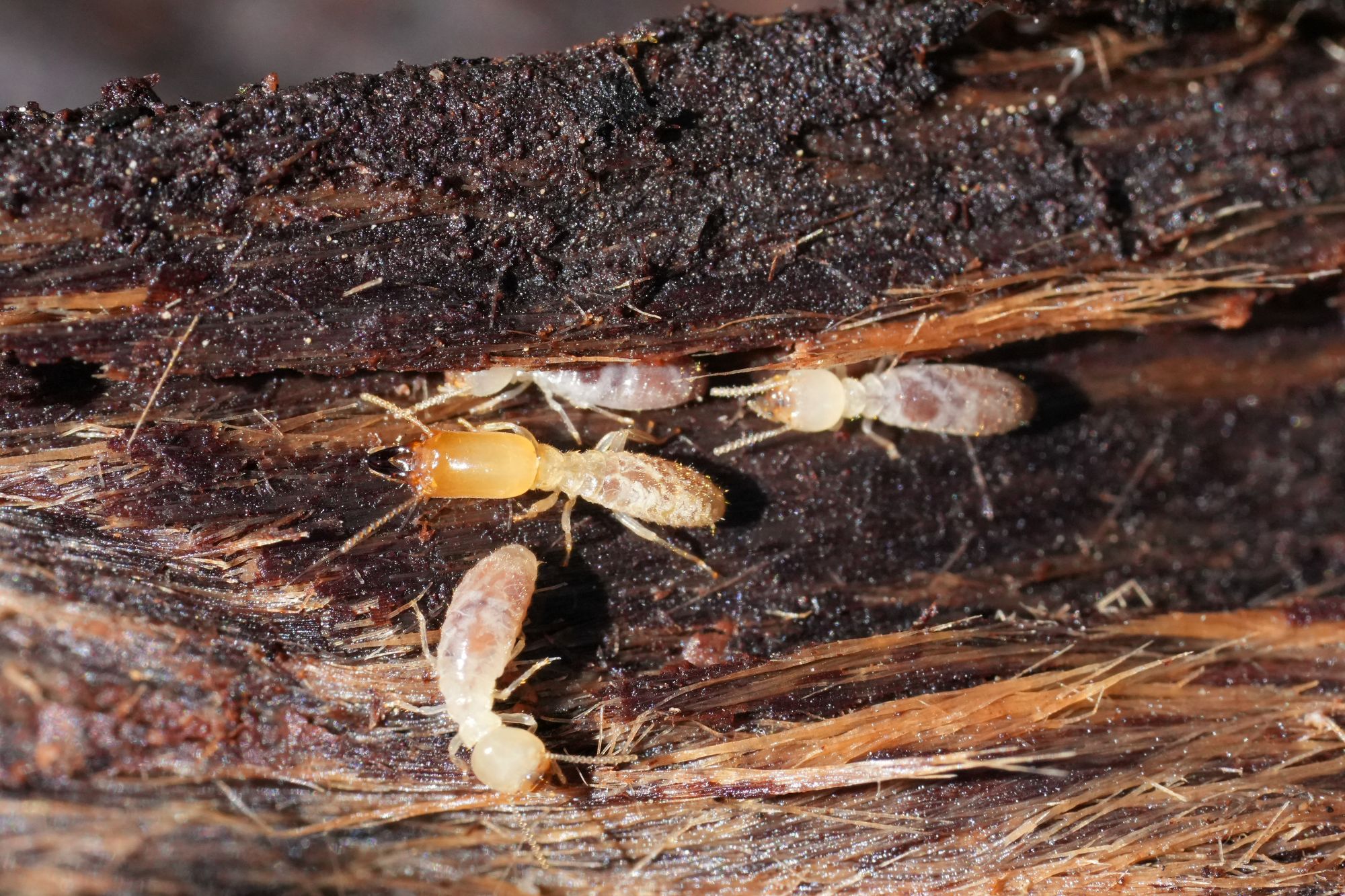
Termites get into houses through soil-to-wood contact, foundation cracks, and damp wood, then spread silently through hidden tunnels until the damage reaches a visible area.
Most infestations grow for months before a homeowner notices, which is why early signs matter so much. At National Inspection Service of Indiana, we find termite activity in homes that look perfectly fine from the curb.
This guide explains how termites get into houses, the signs to watch for, how fast they spread, and the steps that protect your home before the damage adds up.
How Termites Get Into Houses
Termites get into houses by traveling up from the soil and entering anywhere wood meets the ground. Subterranean termites, the most common type in Indiana, nest underground and build protected mud tunnels to reach the wood in your home. They only need a gap about the width of a credit card edge to slip inside.
The most common entry points include:
- Soil that touches wooden siding, trim, or framing
- Cracks in the foundation or around utility penetrations
- Crawl spaces with high humidity or poor ventilation
- Wet or rotting wood near plumbing leaks
- Wooden decks, porch steps, or posts connected to the home
- Mulch, firewood, or landscaping stacked against the siding
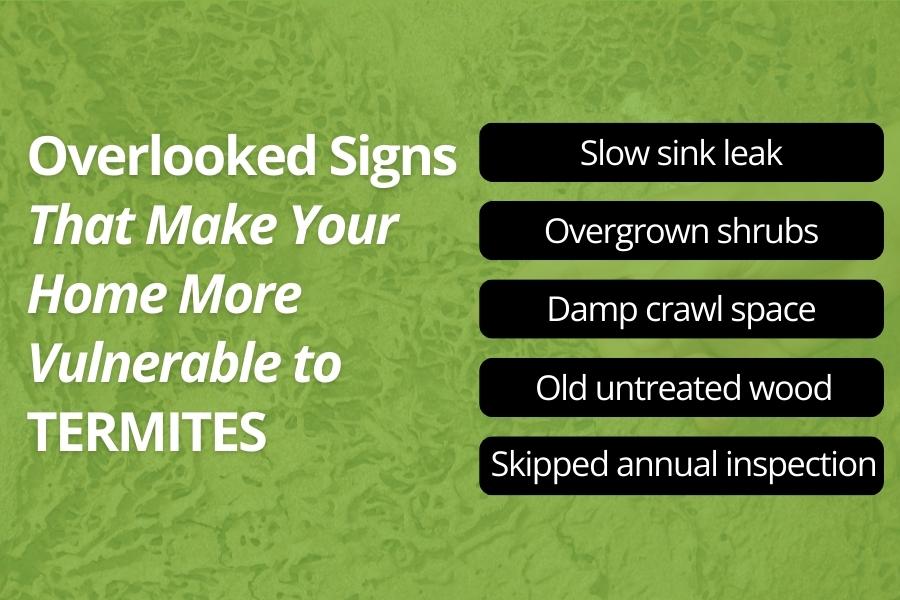
Because these areas stay damp and out of sight, termites can feed for a long time before anyone notices. Homes with moisture problems or aging wood are the most vulnerable, which is why a routine termite inspection is the most reliable way to catch early entry points.
Signs of Termites in Your House
The clearest signs of termites in a house are mud tubes, hollow-sounding wood, discarded wings, and small piles of frass (termite droppings). These signs often show up in more than one spot once a colony is established.
Watch for:
- Mud tubes: pencil-width dirt tunnels on foundation walls, in crawl spaces, or along framing
- Hollow or papery-sounding wood when tapped
- Discarded wings near windows and doors after a spring swarm
- Frass: tiny wood-colored pellets beneath infested wood
- Buckling or sagging floors and soft, blistered baseboards
- Bubbling or peeling paint that looks like water damage
- Swarmers (winged termites) indoors is a strong sign of an active colony
When you see these signs in more than one area of the home, termites have likely spread well past their first entry point. For a closer look at one of the most overlooked clues, the pest pros at Inside & Out Pest Services explain how to identify termite frass and other infestation signs.
How Termites Spread From One Area to Another
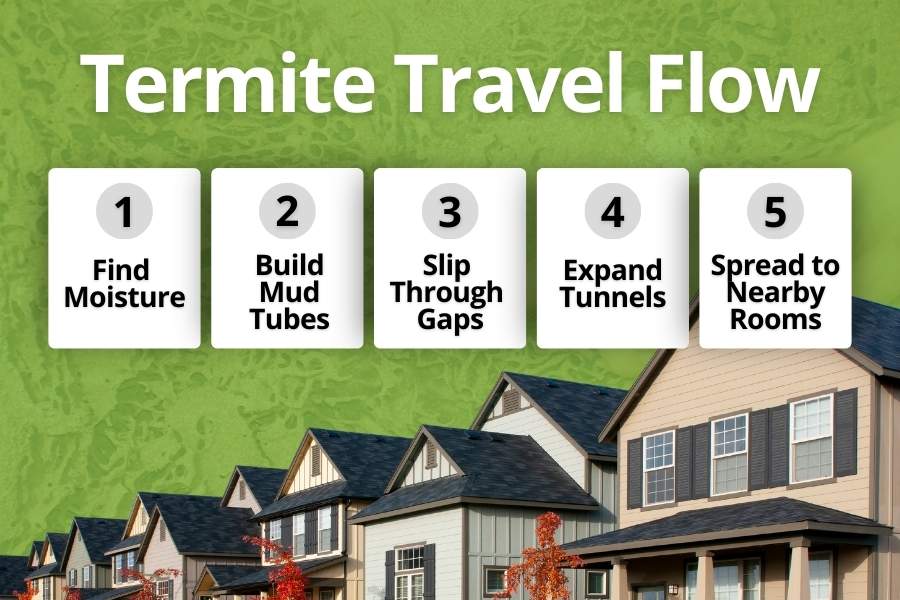
Once termites find a steady food source, they expand into nearby wood using protected pathways that keep them hidden from light and dry air. They work around the clock, so a colony can move through a house faster than most homeowners expect.
Mud tubes on walls or foundation
These thin, dirt-colored tubes let termites travel safely between the soil and the wood they feed on. Active tubes are damp and rebuild quickly if broken.
Subfloor and floor joists
Termites follow the wood grain through joists and framing in basements and crawl spaces, often reaching the kitchen and hallways next.
Plumbing and utility openings
Any hole cut for a pipe or wire gives termites a new route deeper into the structure.
Wall voids and framing cavities
Behind drywall, termites travel long distances completely out of sight, which is why hidden damage is so common.
Types of Termites That Infest Houses
Not all termites behave the same way, and knowing the type helps explain how an infestation spreads.
| Termite type | Where it lives | How it enters homes | Common region |
|---|---|---|---|
| Subterranean | Underground in soil | Mud tubes from soil to wood | Most of the U.S., including Indiana |
| Drywood | Inside dry wood, no soil contact | Swarmers fly directly into exposed wood | Warmer southern/coastal states |
| Dampwood | Very moist or decaying wood | Through wood with chronic moisture | Damp regions are rare in dry framing |
For Indiana homeowners, subterranean termites are the main concern. The U.S. Environmental Protection Agency notes that subterranean species cause the majority of termite damage nationwide, and you can review its guidance on identifying and controlling termites for federal recommendations.
How Fast Termites Spread and How Much Damage They Cause
Termites can spread several feet per year inside a home, and a mature colony of tens of thousands of workers feeds nonstop. Speed depends on three things: moisture, the size of the colony, and how much untreated wood is available.
Moisture is the biggest accelerator. When wood stays damp from leaks, poor drainage, or high humidity, termites move through it much faster.
According to the University of Kentucky’s entomology extension, a single colony can contain hundreds of thousands of termites foraging up to the length of a football field, which is why their homeowner guidance on termite control stresses early professional treatment over DIY fixes.
The damage usually stays hidden until it reaches a visible surface, so the cost often comes as a surprise.
When Are Termites Most Active in Houses?
Termites in houses are active year-round, but you are most likely to see visible signs in spring and early summer, when colonies send out swarmers to start new nests.
In Southern Indiana, warm and humid weather from April through July is peak swarm season, and a swarm indoors is one of the clearest signals that a colony is already established in or under the home.
Subterranean termites do not stop in winter. They simply move deeper, staying active in heated structures and warmer soil below the frost line. This is why year-round moisture control matters as much as a seasonal check.
The Evansville area sits in a region the International Residential Code rates as “moderate to heavy” for termite infestation probability, which means local homes face steady pressure rather than an occasional threat.
A spring swarm, mud tubes appearing after the first warm rains, or piles of discarded wings on a windowsill all deserve a prompt professional look.
How Much Termite Damage Costs
Termite damage is rarely covered by homeowners’ insurance, so the repair bill usually falls on the homeowner. Because the damage is structural and hidden, it tends to be more expensive than people expect once framing, subfloors, or load-bearing wood are involved.
Catching activity early through a routine termite inspection is far cheaper than repairing months of unchecked feeding.
The biggest cost driver is time. A small, recently started infestation may need only spot treatment and minor repair, while a colony that has spread through multiple rooms can require structural work alongside treatment.
That gap between “caught early” and “caught late” is exactly why annual inspections pay for themselves.
Treatment Options Once Termites Are in the House
Treatment depends on how far the termites have spread. A localized infestation caught early may only need spot treatment, while an established colony usually calls for a full structural approach.
Common professional options include:
- Liquid termiticide barriers are applied around the foundation to block and eliminate termites moving between the soil and the wood
- Bait stations are placed in the soil to slowly wipe out the colony
- Moisture correction: fixing leaks, improving drainage, and lowering crawl space humidity so the home stops attracting termites
- Wood repair where framing, subfloor, or drywall has been damaged
Avoid store-bought sprays. They scatter termites, hide the real source, and rarely reach the colony. A professional can map the spread and tell you which areas are still safe and which need attention.
How to Keep Termites Out of Your House
You can lower your risk significantly with a few consistent habits that remove the moisture and wood contact that termites depend on.
- Keep soil, mulch, and firewood away from the siding and the foundation
- Grade the ground so water drains away from the house
- Fix roof and plumbing leaks quickly
- Improve crawl space ventilation and add a vapor barrier if missing
- Keep gutters clean, and downspouts pointed away from the foundation
- Schedule routine termite inspections, especially for older homes
Honor Services, a home-services company outside Indiana, offers a helpful homeowner overview on how to tell if you have termites that pairs well with an annual professional check.
Related Questions to Explore
How do you know if you have termites in your house?
You know you may have termites when you spot mud tubes, hollow-sounding wood, discarded wings, or frass. These signs often appear in more than one location once a colony is active. The most reliable confirmation is a professional termite inspection, since much of the activity stays hidden behind walls and under floors.
What attracts termites to a house?
Moisture and wood contact attract termites the most. Leaky pipes, poor drainage, damp crawl spaces, mulch against siding, and untreated wood near soil all create the conditions a colony needs. Reducing moisture is one of the most effective ways to make a home less appealing.
Can you get rid of termites yourself?
You can take preventive steps yourself, but you cannot reliably eliminate an active colony with DIY products. Store-bought sprays scatter termites and mask the source. Premier Inspects explains why termite damage a home inspection will reveal itself before it becomes visible, which is why professional treatment is the dependable path.
Do termites go away on their own? No. Termites do not leave on their own as long as they have food and moisture. An untreated colony keeps expanding and causing steady damage, so the infestation only grows until it is professionally addressed.
When to Call a Professional
Call a professional the moment you see mud tubes, swarmers, frass, or wood that sounds hollow, and schedule a routine inspection even if you see nothing at all.
Termites are easiest and cheapest to handle early, before the damage reaches framing and floors.
A licensed inspector uses moisture meters, probes, and structural knowledge to find activity behind walls and under floors that homeowners cannot see.
At National Inspection Service of Indiana, our team serves Evansville and the surrounding Southern Indiana area, where subterranean termite pressure is rated moderate to heavy.
If you suspect activity or simply want peace of mind, schedule a termite inspection with our team.
Conclusion
Termites get into houses quietly and spread before most homeowners notice, but the warning signs are there if you know what to look for.
- The earliest signs are mud tubes, hollow wood, frass, and discarded wings
- Moisture and wood-to-soil contact are the biggest risk factors
- Early professional inspection and treatment prevent the most expensive damage
If you have seen possible termite activity or it has been more than a year since your last check, book an inspection with National Inspection Service of Indiana and protect your home before small problems turn into structural ones.