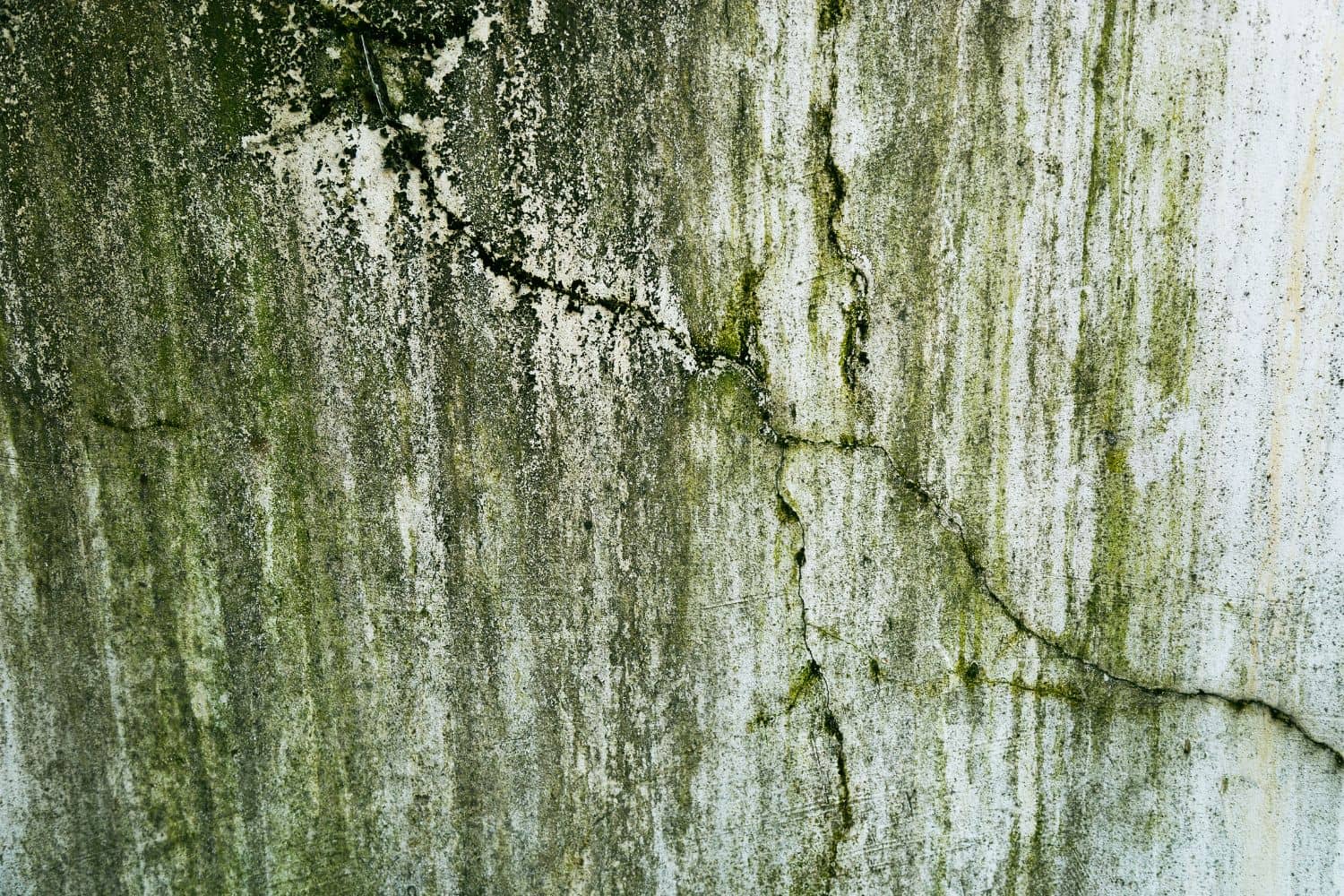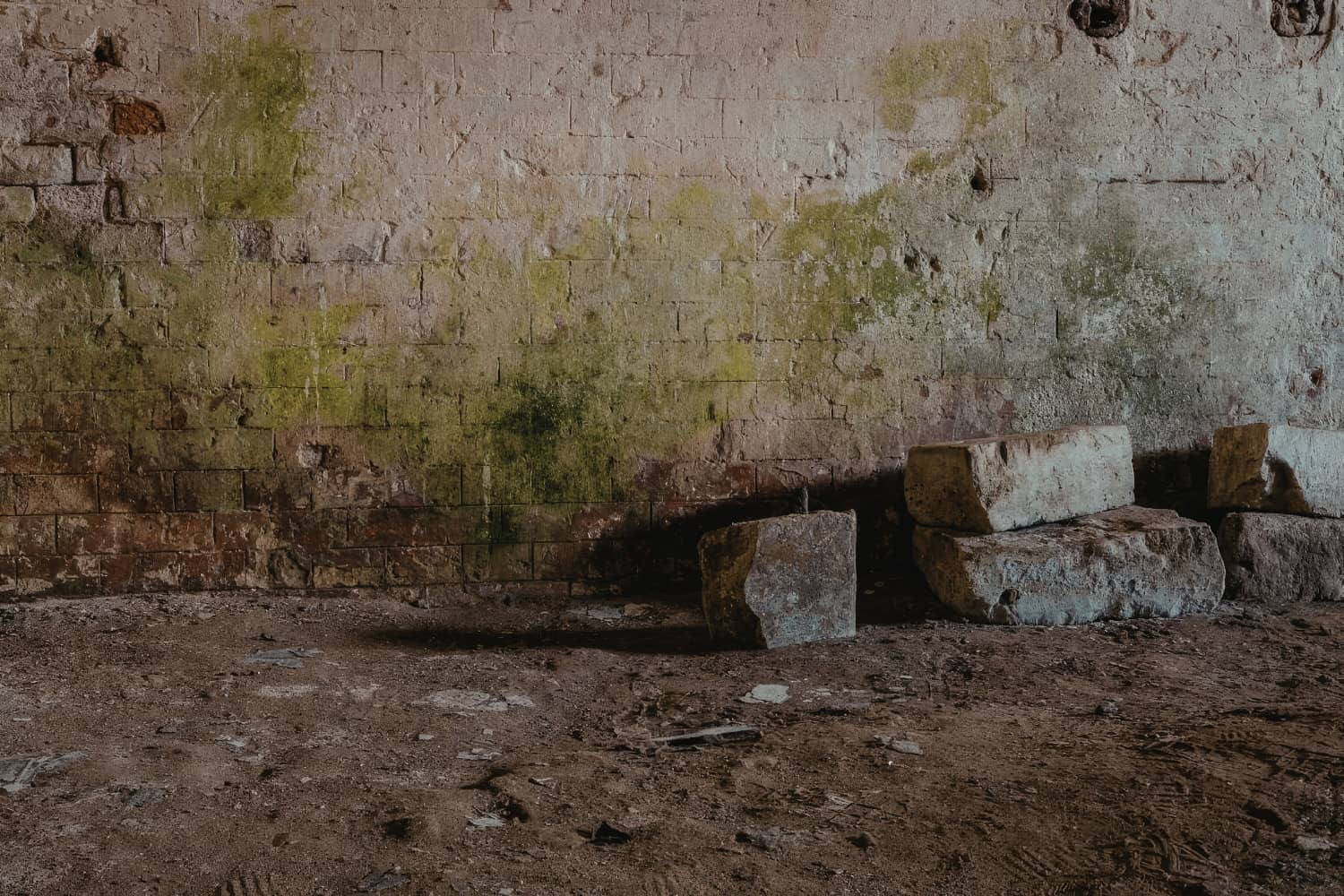
Most basement mold problems don’t start with a visible patch on the wall. They start with conditions that have been building quietly for months: excess humidity, a slow plumbing leak behind drywall, poor ventilation, or water intrusion that finds its way in every time it rains.
By the time mold shows up on a surface, it has usually been growing for a while.
Mold mitigation in a basement isn’t just about removing what’s visible. It’s about identifying the root cause and addressing it before future mold growth becomes a recurring problem.
A musty smell and black spots or stains are strong indicators of mold in your basement, but the underlying moisture issue is what actually needs to be fixed.
For homeowners in Evansville, Newburgh, and surrounding areas, basements are a year-round concern.
The region’s high humidity, clay-heavy soils, and seasonal rainfall make moisture control an ongoing priority for your family’s health and your home’s structural integrity.
Why Basements Are So Vulnerable to Mold
Basements sit at ground level or below, surrounded by soil on multiple sides. Soil holds moisture, and that moisture is constantly looking for a way in. Even a basement that appears dry can have humidity levels that support mold growth.
Mold requires four essential elements to grow: oxygen, a specific temperature range, organic material, and water. Water is the most controllable factor for mold prevention.
Wood framing, drywall, insulation, and stored cardboard all serve as organic building materials for mold spores to feed on. If moisture accumulation goes unaddressed, time takes care of the rest.
Common moisture sources in Evansville-area basements include:
- Groundwater seeping through foundation cracks
- Condensation forming on cold concrete surfaces during humid summer months
- Plumbing leaks from supply lines, drain connections, or water heaters
- Poor exterior drainage directs water toward the foundation
- Poor ventilation that traps humid air inside the space
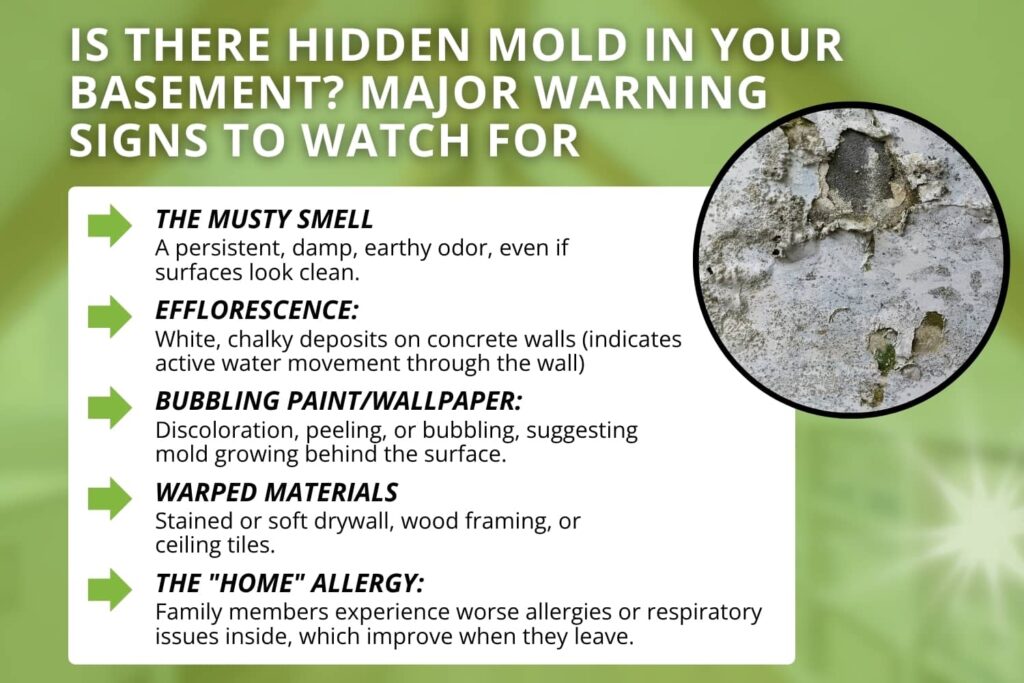
Warning Signs That Mold May Already Be Present
Catching mold conditions early makes mitigation significantly easier and less costly. Here is what to look for:
- A musty smell that persists even without visible growth
- Black spots, stains, or discoloration on walls, floors, or stored items
- Peeling or bubbling paint or wallpaper, which can indicate mold growing behind the surface
- Efflorescence: the white chalky deposits on concrete walls that signal active water movement through the material
- Warped or stained drywall, wood framing, or ceiling tiles
- Allergy symptoms, watery eyes, or respiratory issues in household members that improve when they leave the home
Mold exposure can seriously affect your family’s health, particularly for individuals with asthma, allergies, or compromised immune systems.
Certain species, such as Stachybotrys chartarum, commonly known as black mold, can release mycotoxins linked to chronic fatigue, headaches, and severe respiratory problems.
Air moves from lower levels to upper levels through the stack effect, meaning mold spores that originate in the basement spread upward into living spaces above.
Mold Mitigation vs. Basement Mold Remediation
These two terms get used interchangeably, but they mean different things.
Basement mold remediation refers to the physical removal of existing mold growth using specialized equipment. Professional mold remediation services are essential for effectively removing mold spores and roots, preventing regrowth, and ensuring a safe living environment. Remediation professionals typically follow industry standards such as the ANSI/IICRC S520.
For smaller mold jobs under 100 square feet, costs generally range from $500 to $1,500. Medium jobs covering 100 to 300 square feet typically cost between $1,500 and $4,000, with a median around $3,500 for most basement mold removal projects.
Professionals typically charge between $10 and $25 per square foot for full remediation services, including: inspection, containment, water extraction, removal of damaged materials, and drying.
Mold mitigation and mold control focus on eliminating the conditions that allow mold to grow in the first place. Basement mold removal without addressing the root cause is a temporary fix. The same conditions will produce the same results.
Practical Steps to Prevent Mold in Your Basement
Effective mold prevention works from the outside in.
Control Exterior Drainage
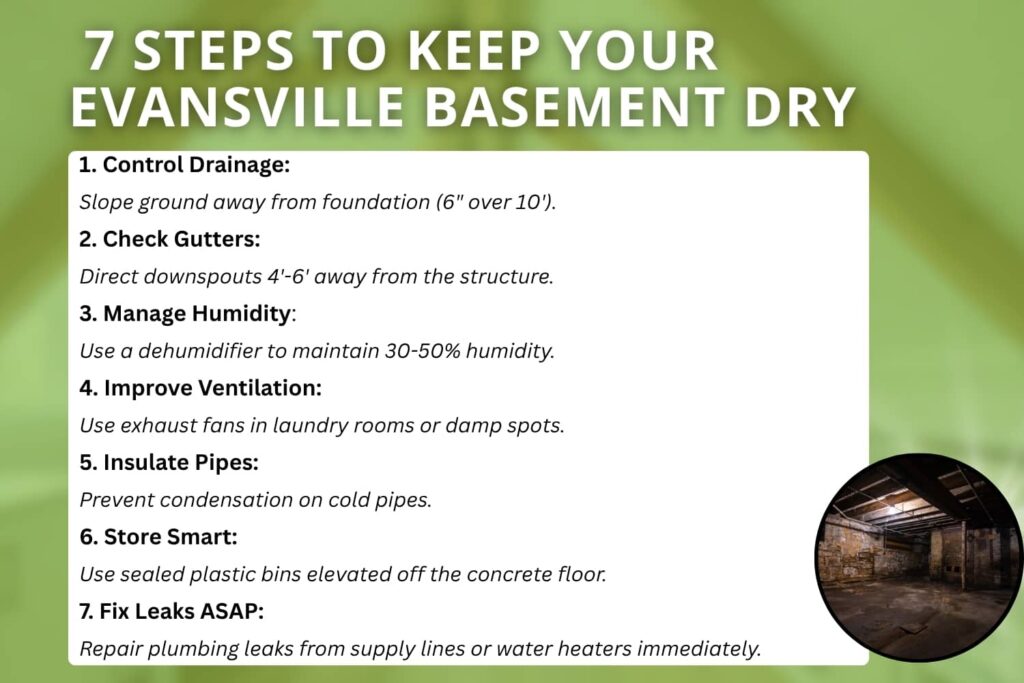
Water that pools near the foundation will eventually find its way in. The ground around your home should slope away from the foundation at a rate of about six inches over the first ten feet.
Gutters and downspouts should direct water at least four to six feet away from the structure. Seal foundation cracks and consider professional drainage systems for recurring groundwater issues. A sump pump is worth considering for basements that experience regular water intrusion to keep the space dry.
Manage Basement Humidity
The EPA recommends keeping indoor humidity levels between 30 and 50 percent to discourage mold growth. In a southwestern Indiana summer, basement humidity can climb well above that without active management.
A dehumidifier sized appropriately for the space will dramatically reduce moisture accumulation. Install exhaust fans to improve air circulation in laundry rooms and other areas where moisture collects. Using windows during cooler, drier weather when the weather permits helps bring in fresh air and keep the space dry.
Fix Plumbing Leaks Promptly
Condensation on cold water pipes is a common and overlooked moisture source. Pipe insulation prevents cold surfaces from attracting humidity.
Fix plumbing leaks from supply lines, drains, or water heaters as soon as they are identified. A small drip can saturate surrounding porous materials and create mold conditions within days.
Use Mold-Resistant Building Materials
Mold-resistant materials such as paperless drywall and plastic barriers should be used if refinishing a basement to reduce mold risk.
Standard drywall is a highly porous surface that holds moisture and gives mold an easy food source. Replacing it with moisture-resistant alternatives when refinishing or repairing the affected area is a proactive step that pays off long-term.
Store Smart and Reduce Organic Material
Cardboard boxes, paper materials, and fabric stored directly on a concrete floor give mold ideal conditions. Store items in sealed plastic bins elevated off the floor. Reducing available organic material limits mold’s ability to establish, even when some humidity is present.
When DIY Mold Removal Is and Isn’t Appropriate
For small areas of mold on hard, non-porous surfaces, some cleaning can be handled without professional help. Cleaning hard surfaces can be done with a mixture of water and detergent or a dedicated biocide or fungicide.
Diluted bleach in a solution of one part bleach to ten parts water can be used on non-porous surfaces, though bleach is not effective on porous surfaces like wood and drywall.
Gloves and a mask are necessary when working with any cleaning solution. Hydrogen peroxide at a 3 percent solution can be sprayed on concrete and brick walls, left for up to 30 minutes, then scrubbed and rinsed.
Baking soda mixed into a paste of one part baking soda and two parts water can be applied to moldy surfaces, left for at least 15 minutes, then scrubbed off. Vinegar mixed in equal parts with water is a safer alternative for smaller jobs, though it may not eliminate all mold spores.
Basement mold removal is not a DIY job when the affected area exceeds 10 square feet, when black mold is suspected, when mold covers structural materials like wood framing, or when the moisture source hasn’t been identified and controlled. In those situations, professional mold remediation with specialized equipment is the appropriate path.
Other Related Questions
What does a home inspection look for in a basement or crawl space?
A home inspection evaluates visible and accessible components below grade, including foundation walls, floor joists, signs of water intrusion, efflorescence, wood damage, and any conditions that suggest ongoing moisture or structural issues. Findings in the basement often drive recommendations for follow-up testing or specialized inspections, depending on what the inspector observes.
How do termites relate to moisture problems in a home?
Termites are drawn to the same conditions that produce mold: moisture and wood. Subterranean termites enter homes through foundation cracks and soil contact, making basements and crawl spaces their most common entry point. Homes with a history of water intrusion or wood-to-soil contact are worth inspecting for termite activity alongside any mold evaluation, particularly in older properties where both problems tend to concentrate in the same areas.
What is radon, and why does it matter for Indiana homeowners?
Radon is a naturally occurring radioactive gas that seeps into homes through foundation cracks and gaps at ground level. It has no odor or color, making testing the only way to know whether levels are elevated. Indiana has counties with above-average radon concentrations, and basements are the primary entry point and accumulation zone. Testing is straightforward and is often scheduled alongside a home inspection.
When to Call a Professional
If you’re seeing visible mold growth, smelling a persistent musty odor, or noticing water actively entering through foundation walls or cracks, those are signs the problem has already moved past basic prevention. At that point, the right next step is a professional mold inspection, not a guess.
A mold inspection from NISI gives you a documented picture of what’s actually present, where moisture is coming from, and how serious the situation is before you spend money on remediation.
That matters because remediation contractors are in the business of removing mold, not necessarily diagnosing the full scope of the problem. Going into remediation without an independent inspection first means you may not know whether the job was done correctly or whether the underlying cause was actually addressed.
A mold inspection is especially worth scheduling if:
- You’re buying a home, and the condition of the basement is unknown, or the seller has disclosed prior water issues
- The basement has experienced flooding or a significant plumbing leak in the past
- Anyone in the household has unexplained respiratory symptoms or allergy symptoms that improve when they leave the home
- Mold was previously remediated, and you want confirmation that it was resolved
Conclusion
Effective mold mitigation in a basement comes down to taking proactive steps to control moisture before mold has a chance to establish. That means managing drainage, sealing foundation cracks, keeping humidity levels in check, installing exhaust fans where needed, and knowing the warning signs that conditions have already gone too far.
For homeowners in southwestern Indiana, where the climate and soil conditions make basement humidity a persistent challenge, staying ahead of the mold problem is far less disruptive and costly than addressing structural damage and basement mold remediation after the fact.
Schedule a mold inspection with NISI and get a clear picture of what’s happening in your basement.