Spring is a good time to check for signs of poor attic ventilation and other issues in parts of your home that spent the winter working hard out of sight. Your attic is one of them.
After months of cold temperatures, snow, and freeze-thaw cycles, the signs of poor attic ventilation have a way of showing up right around now. Moisture that built up over winter starts to reveal itself. Mold that quietly formed on wood framing becomes active again as temperatures rise. Damage that happened in December might not be visible until March.
If your attic is not ventilated properly, Southern Indiana’s climate makes the consequences worse, and it’s the kind of problem that shows up clearly during a professional home inspection in Evansville.
Evansville averages over 49 inches of rain per year, and summer humidity climbs to nearly 80 percent. Your attic deals with that moisture pressure year-round. When ventilation is off, the effects show up in your roof, your energy bills, your indoor air quality, and sometimes your walls and ceilings.
Knowing the signs of poor attic ventilation and catching them early can protect your home from damage that gets expensive fast.
Why Attic Ventilation Matters
A well-ventilated attic works through simple airflow. Cool outside air enters through intake vents along the soffit at the lower edge of the roof. That air moves upward and exits through exhaust vents at or near the ridge. This continuous exchange prevents heat and moisture from building up inside the attic space.
When that balance breaks down, two separate problems develop depending on the season. Understanding the signs of poor attic ventilation starts with understanding what each season does to an unprotected attic.
In winter, warm air from your living space rises and finds its way into the cold attic through small gaps around light fixtures, plumbing penetrations, and attic hatches. When that warm, moist air contacts cold roof sheathing, it condenses.
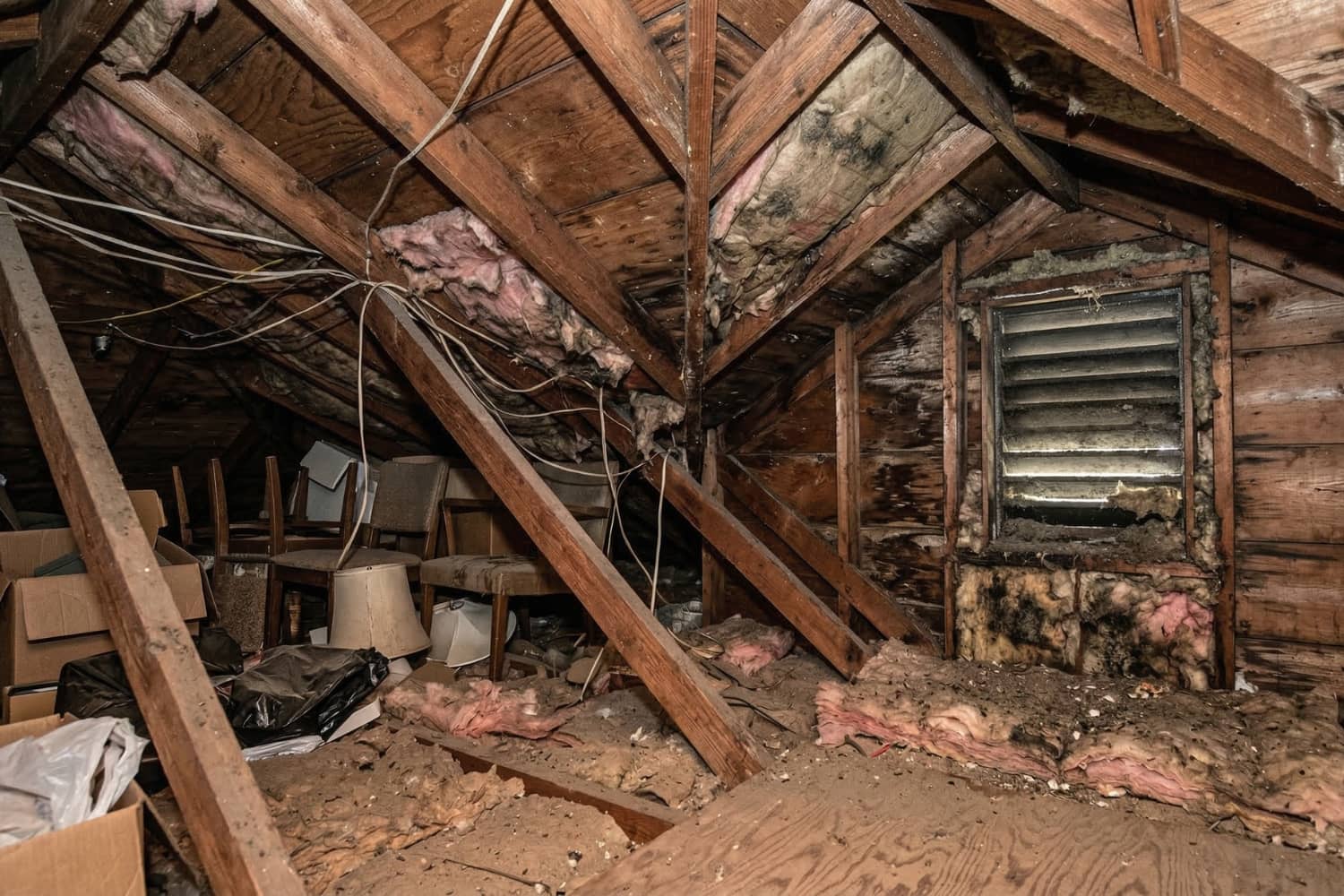
Over time, repeated condensation cycles lead to wet insulation, stained wood, and eventually mold growth on rafters and roof decking.
In summer, a poorly ventilated attic becomes an oven. Temperatures can climb well past 130 degrees when airflow is restricted. That extreme heat forces your HVAC system to work harder, accelerates shingle breakdown from the underside, and makes upper floors uncomfortable even with the air conditioning running.
Many homes in older Evansville neighborhoods were built before modern ventilation standards took effect. Soffit vents may be blocked by insulation added years later. Bathroom exhaust fans may have been routed into the attic rather than outside.
These are common findings during a home inspection, and most homeowners have no idea they exist until someone takes a proper look.
Signs of Poor Attic Ventilation to Look For This Spring
Some of these signs show up inside the attic. Others make themselves known through your energy bills, your ceilings, or the way your upper floors feel in summer. Here is what to look for as the season changes.
1) Moisture Stains or Water Damage on Roof Sheathing
One of the most telling signs inside an attic is staining on the plywood or OSB panels that make up the roof deck. These stains often appear in patches near the peak of the roof or along the lower edges near the eaves.
What causes this is not usually a roof leak. It is condensation. During winter, frost forms on the cold underside of the roof deck and on the tips of nails protruding through the sheathing. When temperatures rise in spring, that frost melts. The resulting moisture drips down onto insulation and framing and leaves stains behind.
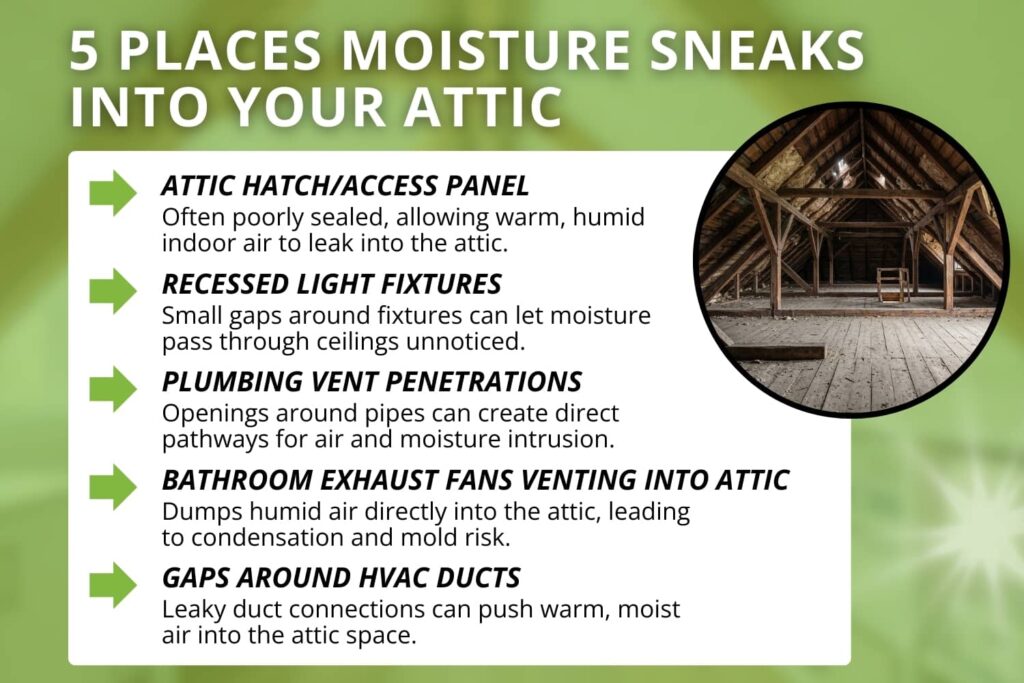
Rusty nail tips are a reliable early indicator that condensation has been cycling in your attic all winter. If you see rust on nails or brown ring stains on sheathing, the attic has been holding more moisture than it should.
2) Mold or Dark Staining on Rafters or Sheathing
Mold growth on attic wood is one of the most common findings during a spring home inspection. It tends to appear first on the north-facing sections of the roof, where temperatures stay coldest, and condensation is most concentrated.
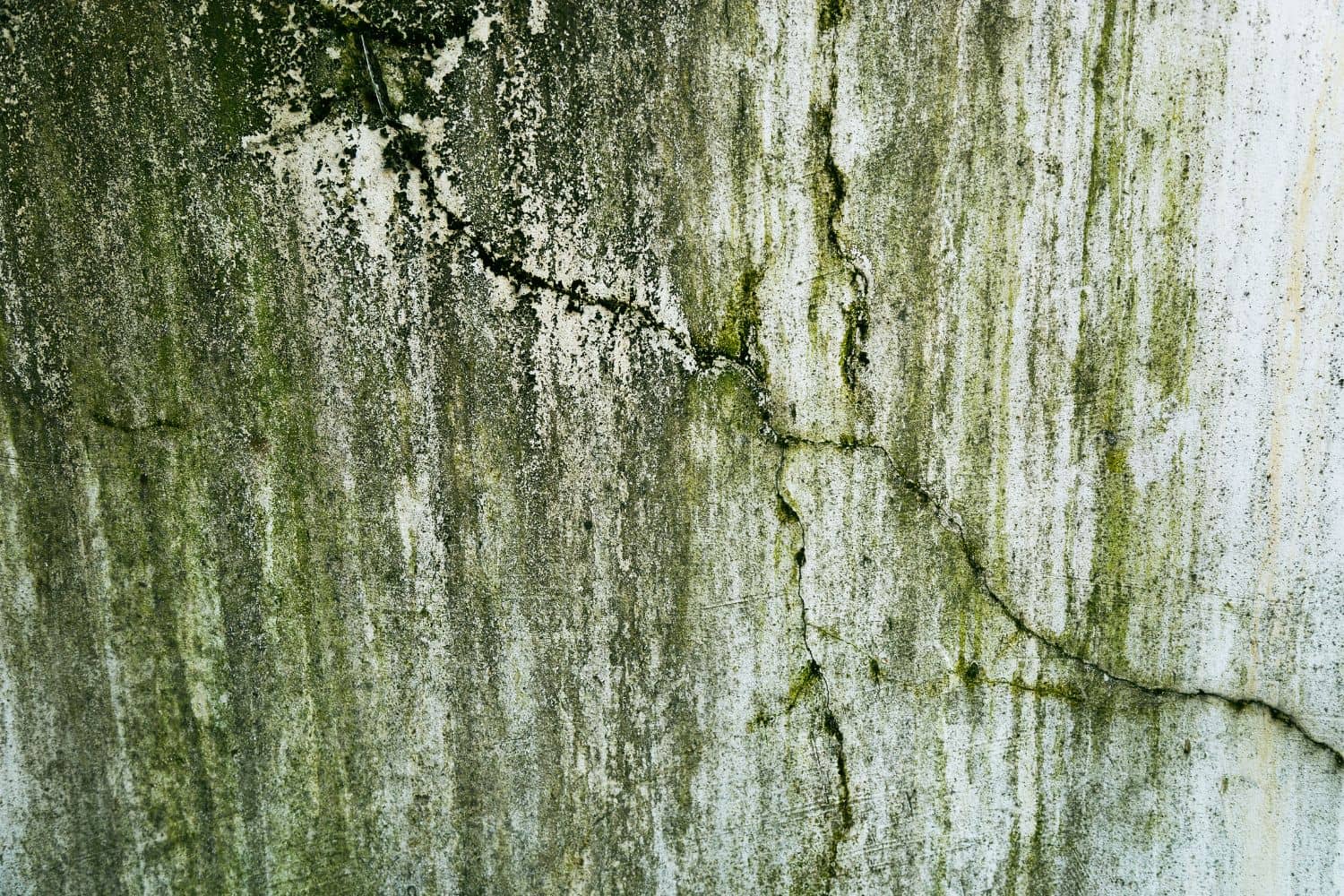
The staining can look like dark patches, streaks, or fuzzy growth on the wood surface. Not every dark mark is active mold. Some is old staining from past moisture events. But any growth worth worrying about needs to be evaluated by a professional rather than guessed at from the attic hatch.
If you notice dark spots and a musty smell together, that combination is a stronger indicator of an active problem. Understanding the difference between mildew and mold can help you make sense of what you are looking at, but either finding warrants follow-up.
Attic mold is one of the areas covered during a professional mold inspection, especially when ventilation deficiencies are suspected as the root cause.
3) Unusually Hot Upper Floors or Attic Space Last Summer
Think back to last summer. Were the upstairs bedrooms consistently warmer than the rest of the house, even with the air conditioning running? Did the attic feel like a furnace the moment you opened the hatch?
A properly ventilated attic should stay relatively close to the outside air temperature. When exhaust vents are blocked, missing, or insufficient, heat has nowhere to go. Attic temperatures in poorly ventilated spaces can reach 140 to 150 degrees on a hot Indiana day.
That heat radiates downward into the living space and backward into the HVAC system, which has to work much harder to keep up.
If last summer was uncomfortable upstairs, spring is the right time to investigate before the heat returns.
4) Ice Dams That Formed Along the Roofline Last Winter
Ice dams are a direct result of heat escaping through the attic floor. When warm air accumulates in the attic, it warms the roof deck and melts the snow sitting on top. That meltwater runs down to the cold eaves, where it refreezes and forms a ridge of ice.
As that ridge grows, it creates a dam. Water backs up behind it and can force its way under shingles and into the attic or the wall below. The resulting damage, including stained ceilings, wet insulation, and deteriorating roof flashing, often does not show up until spring when temperatures moderate and the ice melts away.
Indiana winters include enough freeze-thaw cycles for this to happen repeatedly. If you noticed ice buildup along your eaves this past winter, that is a sign worth taking seriously this spring.
5) Unexplained Increases in Heating or Cooling Bills
Energy bills that crept up last year without a clear reason can sometimes be traced back to the attic. A poorly ventilated attic puts steady pressure on your HVAC system in both directions: it forces more heat into the living space in summer and allows more heat loss in winter.
Homeowners often blame rate increases or aging equipment when the actual problem is sitting above the ceiling. If your bills have gone up but your usage habits have not changed significantly, the attic is worth adding to your list of things to check.
6) Musty Odors Near the Attic Access or Upper Floors
A musty smell is often the first thing a homeowner notices and often the first thing they try to explain away. It gets attributed to a window left open, seasonal dust, or the HVAC filter.
But a persistent musty odor near the attic hatch or in upper-floor rooms, especially one that seems stronger in spring and fall, usually points to moisture accumulation somewhere above. It does not always mean visible mold is present. It does mean that moisture is being held in a space where it should not be.
If the smell is new or getting stronger, that is a signal worth following up on before it becomes a bigger issue.
7) Visible Shingle Deterioration or Granules in the Gutters
Shingles are designed to take the weather from the outside. They are not designed to bake from the underside. When attic temperatures run consistently high, the adhesive strips on shingles break down faster, granules loosen, and the overall lifespan of the roof shortens significantly.
If you have noticed more granules than usual collecting in your gutters, or if your roof looks uneven or worn compared to neighboring homes of similar age, heat damage from below is a possible contributor. This is often misread as normal aging or storm wear when the actual cause is a ventilation problem that has been building for years.
Quick Reference: Signs, What They May Indicate, and Next Steps
| Sign | What It May Indicate | Suggested Next Step |
|---|---|---|
| Moisture stains on sheathing | Condensation from poor exhaust airflow | Schedule a home inspection |
| Mold on rafters or roof decking | Trapped humidity, inadequate ventilation | Mold inspection to identify root cause |
| Hot upper floors last summer | Blocked or missing exhaust vents | Attic inspection before summer heat returns |
| Mold inspection to identify the root cause | Ice dams along the roofline last winter | Check insulation and ventilation balance |
| Rising energy bills | Heat escaping through the attic floor | Attic assessment and insulation review |
| Musty odors near attic access | Moisture accumulation, possible mold growth | Professional evaluation |
| Granule loss or early shingle wear | Heat damage from below | Attic inspection and roofing evaluation |
What Home Inspectors Look For in the Attic
When a home inspector enters the attic, they are looking at things most homeowners would not know to check, and in some cases would not safely be able to access. Many of the signs of poor attic ventilation are only visible once someone gets fully inside the space.
A thorough attic assessment typically covers the type and condition of intake and exhaust vents, whether soffit vents are blocked by insulation, signs of condensation or moisture damage on sheathing and framing, the condition and coverage of insulation, and where bathroom or kitchen exhaust fans are actually terminating.
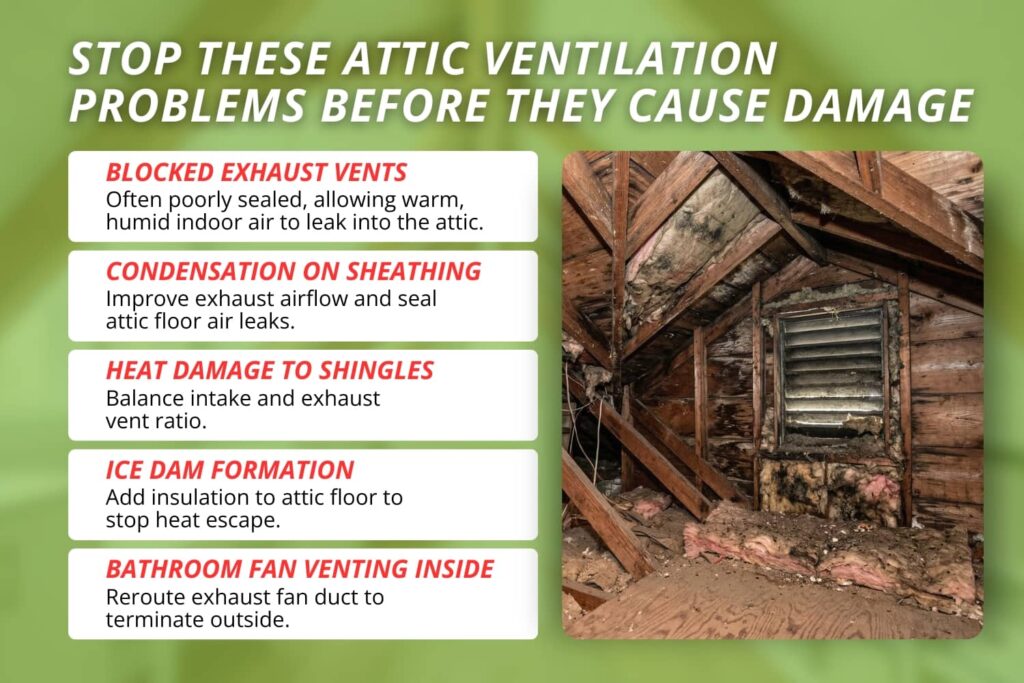
That last point matters more than most homeowners realize. Bathroom fans that vent into the attic rather than outside are one of the leading causes of attic mold. Warm, humid air from showers and baths gets dumped directly into an enclosed space and sits there.
It is an extremely common finding in older homes, and it creates ongoing moisture problems even when the rest of the ventilation system is functioning properly. NISI has written specifically about how bathroom ventilation affects moisture control throughout a home.
The value of a professional inspection is that it identifies what is actually causing the problem. Homeowners who skip this step sometimes spend money fixing symptoms like adding vents, replacing shingles, and running fans without addressing the root cause. The result is the same problem returning within a season or two.
A home inspection provides a clear, unbiased picture of the attic’s condition and points toward the right next steps rather than the most expensive ones.
Related Questions
Can poor attic ventilation cause mold?
Yes. Inadequate ventilation is one of the most common causes of attic mold. Spring is when attic mold that developed quietly over winter becomes active and visible. If you suspect mold is present, a mold inspection can identify the extent of the growth and help determine whether ventilation is the underlying cause.
How do I know if my attic has enough ventilation?
Some signs you can look for yourself: visible and unobstructed vents, no musty odors, and no staining near the attic hatch. A professional inspection gives you a complete picture, including whether vents are balanced, whether intake matches exhaust, and whether exhaust fans are routing properly to the outside.
Is poor attic ventilation covered by homeowners’ insurance?
Generally no. Most insurers treat attic ventilation problems as a maintenance issue rather than a covered loss. Gradual moisture damage and mold resulting from ventilation neglect are typically excluded. Catching and addressing the problem early is the most effective way to avoid costly repairs that come entirely out of pocket.
When is the best time of year to check attic ventilation?
Spring is the most practical window. Winter stress has already done its work, and any condensation, frost damage, or mold that developed over the cold months is visible now. Addressing problems found in spring leaves time to make corrections before the heat and humidity of an Indiana summer arrive.
Ready for a Closer Look This Spring?
If any of the signs of poor attic ventilation above sound familiar, spring is the time to act. NISI inspects attics, looking at ventilation, insulation, moisture conditions, and anything else that affects your home’s long-term health.
You do not need to guess what is happening above your ceiling. Schedule an inspection and get clear answers before the season changes.