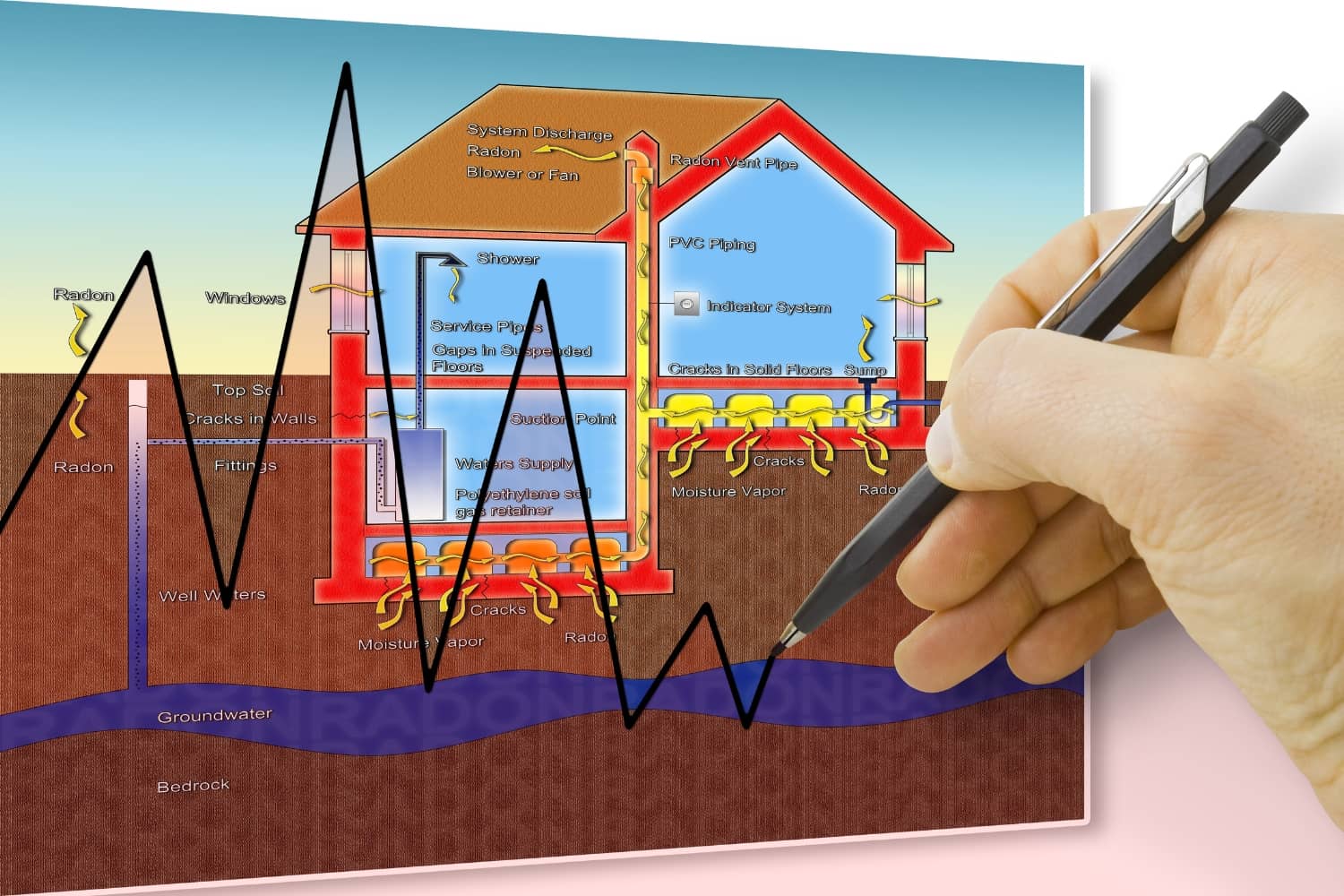
While a radon test isn’t always legally required when purchasing a home, many buyers still inquire about its necessity. This is because radon poses a hidden risk that can’t be detected during a standard visual inspection. Since long-term radon exposure has been linked to serious health concerns, buyers often choose to include testing during the inspection period to reduce uncertainty before closing.
Radon, a naturally occurring gas, is invisible and odorless, making testing the sole method to detect elevated levels. This guide explains when radon testing may be required, when it is optional, and why it is often recommended as part of a well-informed home-buying decision, even when it is not mandated by law.
Why homebuyers ask if a radon test is required
Buying a home already involves inspections, disclosures, and deadlines. Adding radon testing can be confusing, especially when requirements vary across different locations.
Most buyers ask this question because they want to know:
- If skipping a radon test could put their family at risk
- Whether lenders or states require it
- If it can delay closing
- Who pays for the test or any needed mitigation
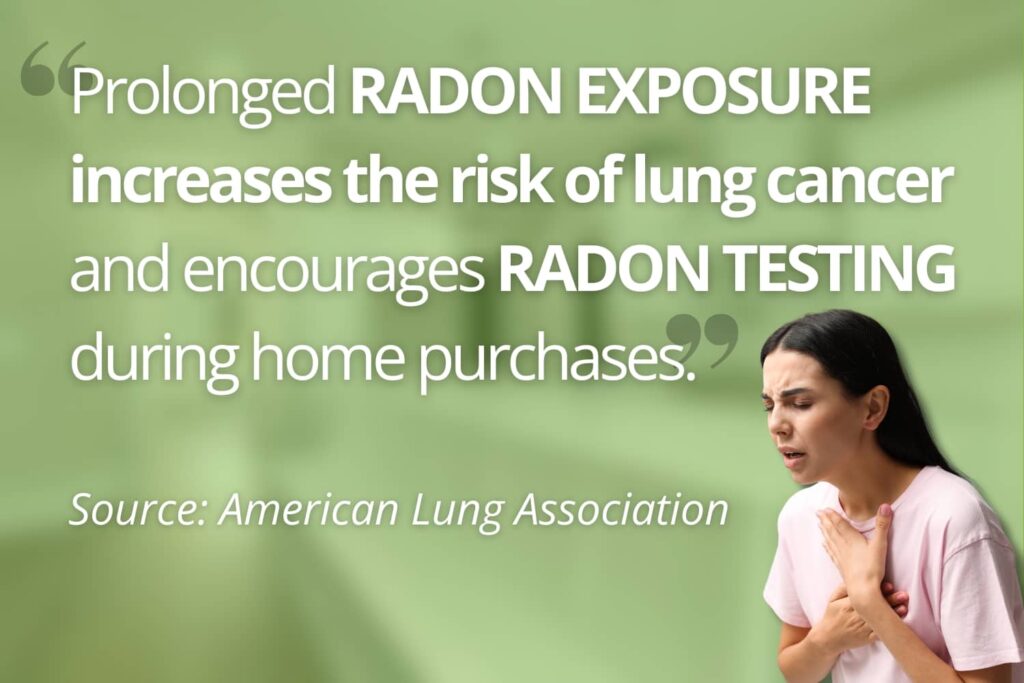
According to the U.S. Environmental Protection Agency, radon is the second leading cause of lung cancer in the United States and the leading cause among non-smokers.
That health risk is why radon testing is part of many home purchase decisions, even when it is not legally required.
Is a radon test always required when buying a home?
Is a radon test always required when buying a home?
No, a radon test is not always required when buying a home. There is no federal law that mandates radon testing as part of every real estate transaction, and most purchases move forward without it being legally required.
Radon testing requirements depend on several factors, including state disclosure laws, lender guidelines, and the type of financing used. While some loan programs or local regulations may encourage or require testing, many conventional and cash purchases do not.
Standard home inspections do not include radon testing. However, many buyers still choose to have their homes tested because elevated radon levels are common nationwide.
When a radon test may be required during a home purchase
Radon testing may be required or strongly encouraged in certain situations:
State or local disclosure rules
Some states require sellers to disclose known radon levels or past test results. While disclosure does not always mandate new testing, it often prompts buyers to request confirmation.
Certain loan programs
VA and FHA loans may include requirements or guidance related to radon, especially in areas with higher radon potential. Some lenders may also request radon testing to reduce risk.
New construction in regulated areas
New homes are not automatically radon-free. The Environmental Protection Agency (EPA) confirms that both new and older homes can have elevated radon levels, depending on the soil and construction methods used.
Radon test requirements vs recommendations when buying a home
Homebuyers are often confused about the difference between legally required radon testing and recommended precautionary measures. Requirements can vary based on loan type, location, and disclosure rules, which is why buyers often receive mixed guidance during the purchase process.
The table below outlines common homebuying scenarios to help clarify when radon testing may be required and why it is still often recommended, even when it is optional.
| Situation | Is a Radon Test Required? | Why Testing Still Matters |
|---|---|---|
| Conventional loan purchase | No | Radon levels vary by home, even within the same neighborhood |
| Cash purchase | No | Health risks still exist without lender oversight |
| VA loan | Sometimes | Testing may be required in higher-risk areas |
| FHA loan | Sometimes | Radon guidance may apply depending on location |
| New construction home | Rarely | New homes can still have elevated radon levels |
| Seller provides past radon results | No | Radon levels can change over time |
| State requires radon disclosure | No testing mandate | Disclosure often leads buyers to test |
| High-radon geographic area | No | EPA strongly recommends testing |
| Homes with finished basements | No | Basements are common radon entry points |
Key takeaway:
Even when a radon test is not legally required, testing is often recommended because radon cannot be detected during a visual inspection, and elevated levels can pose long-term health risks if left unaddressed.
When a radon test is not required but still important
In many real estate transactions, radon testing is not legally mandated. This often includes conventional loans, cash purchases, and private sales where lenders do not impose additional testing guidelines.
Even in these situations, skipping radon testing means accepting uncertainty. Radon levels can vary widely from one home to the next, even within the same neighborhood or on the same street.
A nearby home with low radon levels does not guarantee similar results, which is why many buyers choose to include radon testing during the inspection period to reduce risk and make informed decisions before closing.
Why radon testing matters before finalizing a home purchase
Radon testing is one of the few inspection services that directly relates to long-term health.
Testing before closing can also:
- Provide leverage during negotiations
- Prevent unexpected expenses after moving in
- Give buyers confidence in their decision
Addressing radon concerns early is often simpler and less stressful than dealing with them after closing.
How radon testing fits into a professional home inspection
Radon testing is not automatically included in a standard home inspection and is usually offered as an optional service. Because radon cannot be detected visually, testing requires specialized equipment and a separate monitoring period.
During the process, a radon monitor is placed in the lowest livable level of the home and left in place for about 48 hours to measure the average radon concentration. Many buyers opt to schedule radon testing simultaneously with their home inspection to minimize delays, adhere to the inspection contingency period, and provide ample time for follow-up or negotiation if elevated radon levels are discovered.
What happens if a radon test comes back high
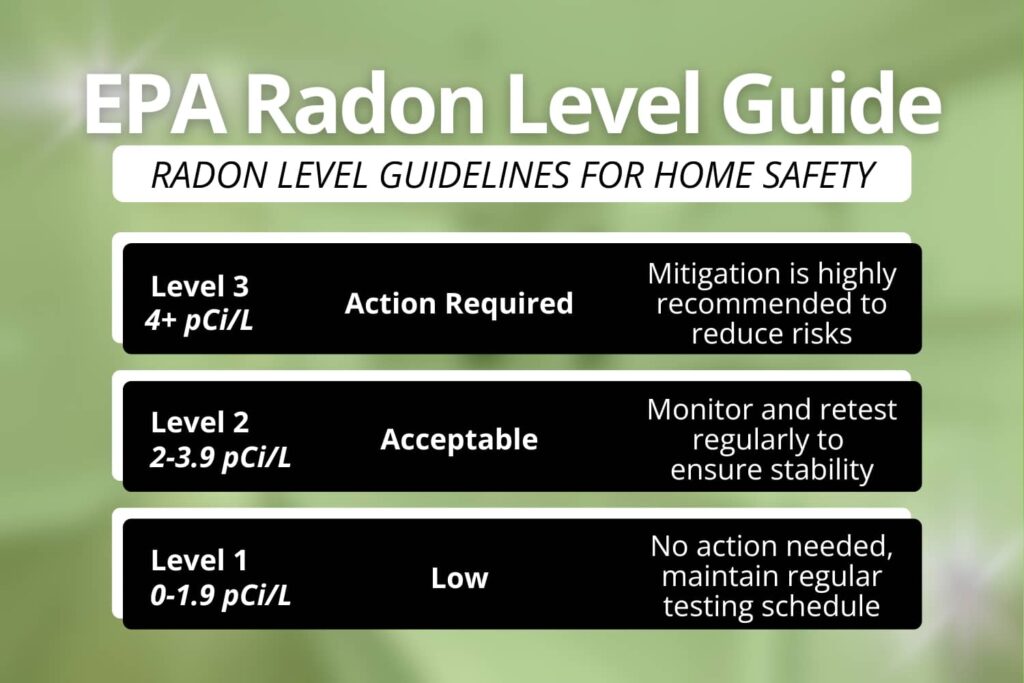
Radon test results are measured in picocuries per liter (pCi/L). The Environmental Protection Agency recommends taking action when radon levels are 4.0 pCi/L or higher, as prolonged exposure at or above this level increases health risk.
If a test comes back high during a home purchase, it does not automatically mean the deal falls apart. In many cases, buyers use the results as part of the negotiation process. Options may include requesting that the seller install a radon mitigation system, asking for a credit toward mitigation costs, or negotiating a price adjustment. Radon mitigation systems are widely used, proven effective, and designed to safely vent radon gas from the home, allowing buyers to move forward with added confidence once the issue is addressed.
Who should order the radon test and when
In most cases, the buyer orders and pays for the radon test. This helps ensure unbiased results and aligns with inspection timelines.
Best practice is to schedule radon testing:
- During the inspection period
- Early enough to allow time for follow-up or negotiation
Working with a professional home inspector ensures proper placement, accurate results, and clear explanations.
Common radon myths that confuse homebuyers
Only old homes have radon
Every home may have elevated radon levels due to the soil conditions and construction design. New construction can have elevated radon levels because radon comes from the soil and can enter through any foundation openings in homes of all ages.
Radon is only a problem in certain states
High radon levels have been found in homes in every U.S. state. Location alone does not reliably indicate radon exposure. The only way to know a home’s radon level is to test it. Testing is recommended for all homes below the third floor
If the seller never tested, it must be fine
A home that has never been tested has unknown radon levels, not guaranteed low levels. Testing is the only way to find out whether radon is elevated and whether mitigation is needed to reduce the risk
These myths often cause buyers to overlook radon testing, even though a simple and inexpensive test can provide clear answers about a potential health risk before closing the deal.
Related questions
Do sellers have to fix high radon levels?
No, sellers are not automatically required to fix high radon levels; however, mitigation is often negotiated as part of the purchase agreement, typically through repairs, credits, or price adjustments.
Can radon affect resale value?
Yes, elevated radon levels can raise concerns for buyers, while homes with professionally installed mitigation systems are often easier to sell because the issue has already been addressed.
How long does a radon test take?
Most radon tests run for about 48 hours, with results typically available shortly after the monitoring period ends.
Should new construction homes be tested for radon?
Yes, the EPA recommends testing all homes, including new construction, because radon levels depend on soil conditions and not the age of the home.
Is radon testing worth it if it is optional?
Many buyers find radon testing worthwhile because it provides clear information about a hidden health risk and helps avoid unexpected issues after closing.
When to talk to a professional home inspector about radon
If you are buying a home and want a complete picture of potential risks, radon testing is worth discussing with your home inspector.
A qualified inspection company can:
- Explain whether radon testing makes sense for your situation
- Coordinate testing with your home inspection
- Help you understand results and next steps
Conclusion
Radon testing is not required for every home purchase, but it helps buyers make informed decisions. Including radon testing early in the inspection process can provide clarity about a risk that cannot be seen during a visual inspection and allow time to address concerns before closing.
When working with a professional inspection company like NISI, buyers gain a clearer understanding of their options, enabling them to proceed with greater confidence and peace of mind.