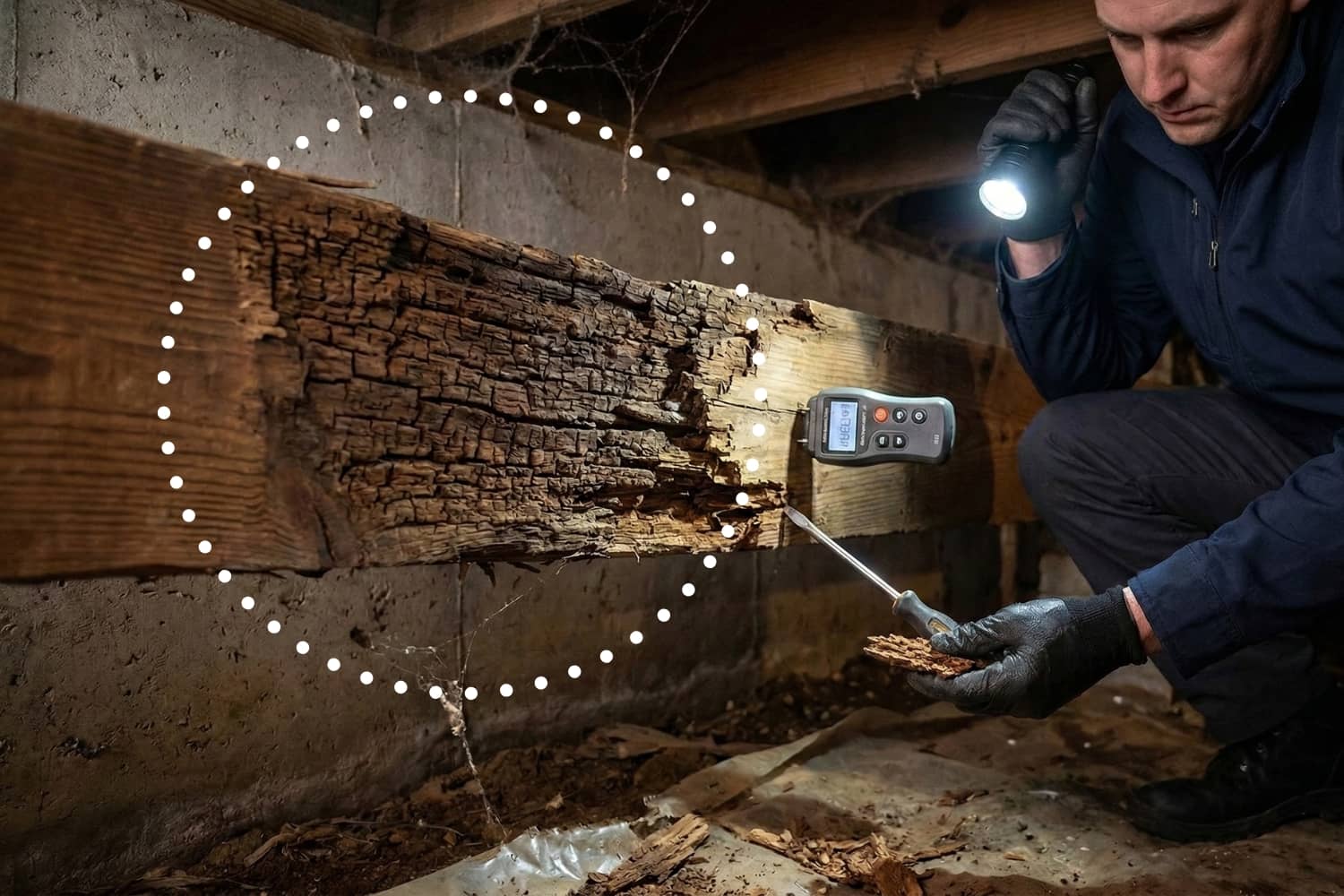
Dry wood rot is a type of wood decay caused by fungus. It weakens wood from the inside out. Even though it is called “dry,” it still needs moisture to grow. In Southern Indiana, spring moisture often brings hidden wood damage to light.
If left untreated, dry wood rot can turn into a structural problem. The good news is that early detection through a professional home inspection can prevent costly repairs.
Here is what homeowners need to know.
What Is Dry Wood Rot and Why Does It Happen?
Dry wood rot is caused by fungi that feed on damp wood. These fungi break down the fibers that give wood its strength. Over time, the wood becomes brittle, cracked, and weak.
Many people think dry wood rot happens because the wood is dry. That is not true. Moisture is always involved.
In Southern Indiana, moisture problems are common because of:
- Freeze and thaw cycles in winter
- Heavy spring rain
- High humidity
- Poor crawl space ventilation
- Clogged gutters and downspouts
Indiana averages more than 40 inches of rainfall each year. When water collects around exterior wood, decks, or crawl spaces, dry wood rot can begin.
This is why moisture control is such an important part of a home inspection.
Where Does Dry Wood Rot Start in Southern Indiana Homes?
Dry wood rot usually begins in areas that stay damp for long periods. In Southern Indiana homes, the most common trouble spots include:
Exterior Trim and Siding
Paint can crack or peel after winter. When water gets behind the surface, decay can start.
Deck Boards and Ledger Boards
Decks are exposed to rain and snow all year. The ledger board, which connects the deck to the home, is especially important. If this area rots, it can affect safety.
Window and Door Frames
Water often seeps in around small gaps in caulking or flashing.
Roofline and Fascia Boards
Ice buildup and clogged gutters can cause water to back up under shingles.
Crawl Spaces and Sill Plates
Crawl spaces are one of the most common places where hidden wood decay can develop. High humidity and poor ventilation create conditions that allow fungal damage to spread over time.
During a full home inspection, these areas are carefully evaluated for excess moisture and potential structural weakening.
What Are the Warning Signs of Dry Wood Rot?
Wood decay caused by moisture often develops slowly and may go unnoticed at first. Many homeowners only realize something is wrong once visible damage appears on exterior wood or inside crawl spaces.
Recognizing the early warning signs can help you address the issue before it spreads into structural areas.
Here are some of the most common signs of dry wood rot:
- Wood that feels soft or spongy: Healthy wood should feel solid and firm. If a board or trim piece feels soft when pressed or slightly sinks under pressure, moisture and fungal decay may already be weakening the wood fibers.
- Cracked, bubbling, or peeling paint: When moisture gets trapped behind painted wood, it often causes the paint to bubble, crack, or peel. While it may look like a simple paint problem, it can actually signal moisture intrusion and possible rot underneath.
- Dark stains or discoloration on wood surfaces: Black, gray, or brown staining can indicate long-term moisture exposure. These stains often appear around window frames, exterior trim, decks, and areas where water tends to collect.
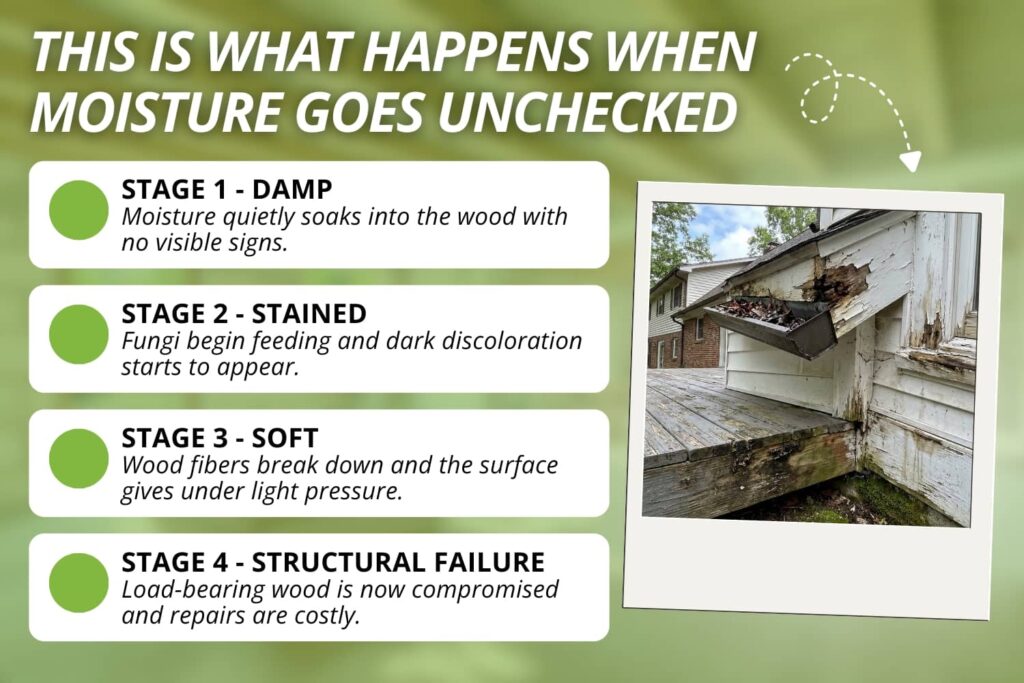
When Warning Signs Go Beyond the Surface
- Musty odors in crawl spaces or enclosed areas: A damp, earthy smell in crawl spaces or basements can be a sign of fungal activity. Even if rot is not visible yet, excess moisture in these spaces can create the conditions for dry wood rot to develop.
- Wood that flakes, cracks, or crumbles when touched: Advanced dry wood rot causes wood to become brittle. Instead of splintering like normal wood, the material may break apart easily or crumble into small pieces.
Sometimes these issues are only cosmetic and limited to surface materials. In other cases, the decay may extend deeper into structural components such as sill plates, joists, or framing.
A professional home inspector can help determine whether the damage is minor or a sign of deeper structural deterioration.
Where Dry Wood Rot Becomes a Structural Risk
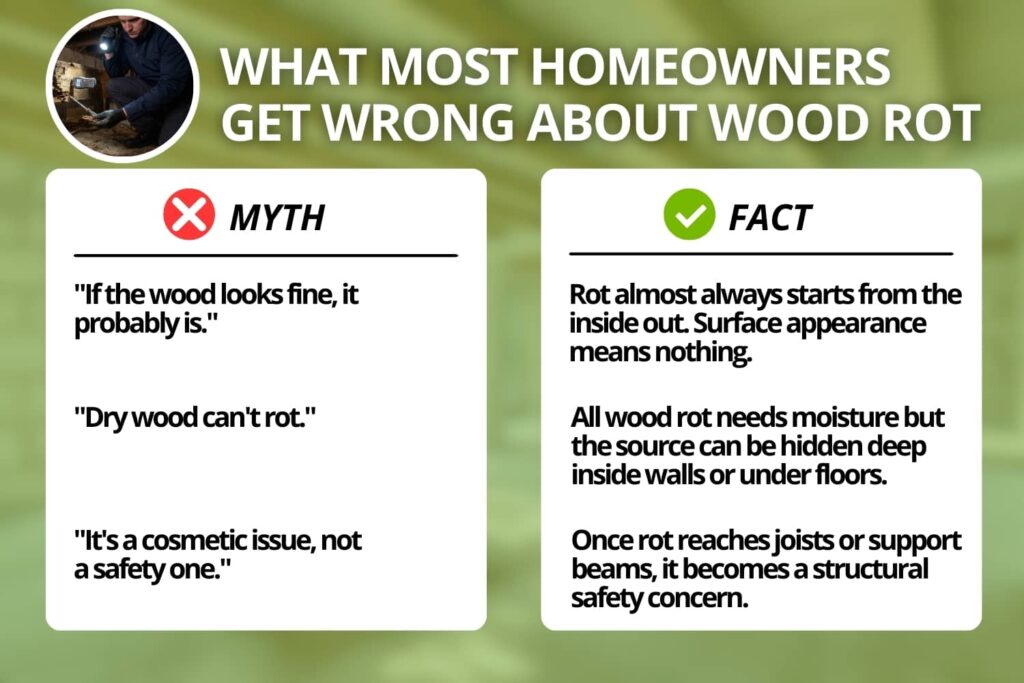
Not every case of wood rot leads to structural failure. The level of risk depends on where the decay is located and how deeply it has affected the wood.
The table below shows where moisture-related wood damage commonly appears in Southern Indiana homes and how inspectors evaluate its severity.
| Home Area | Why Dry Wood Rot Starts Here | What a Home Inspection Checks | Structural Risk |
|---|---|---|---|
| Exterior Trim and Siding | Moisture levels, fungal growth, and wood deterioration | Soft or crumbling wood, failed sealant joints | Low to Moderate |
| Deck Boards | Constant weather exposure and trapped moisture | Rain exposure and peeling paint allow moisture to build up behind surfaces | Moderate |
| Deck Ledger Board | Surface decay, fastener stability, and wood strength | Flashing condition, attachment integrity, hidden decay | High |
| Window and Door Frames | Small gaps allow water intrusion over time | Caulk failure, staining, soft framing | Moderate |
| Roofline and Fascia Boards | Clogged gutters and winter ice buildup | Wood rot near drip edges and soffits | Moderate |
| Crawl Space Sill Plates | High humidity and poor airflow | Hidden moisture and long-term damp conditions | High |
| Floor Joists and Support Beams | Hidden moisture and long term damp conditions | Sagging, weakened structure, advanced decay | High |
“Dry wood rot on trim may mean minor repairs, but when it reaches sill plates, joists, or deck ledger boards, it can become a serious structural safety issue.”
During a professional home inspection, these high-risk areas receive close attention. Moisture conditions, ventilation, and framing integrity are evaluated to determine whether damage is cosmetic or structural.
When Does Dry Wood Rot Become a Structural Problem?
Wood decay becomes serious when it reaches load-bearing components of a home.
This can include:
- Floor joists
- Support beams
- Rim joists
- Deck framing
- Sill plates
As fungi break down the wood fibers, these structural elements lose strength. The wood may appear solid on the outside but be weakened or hollow inside.
Spring is often when homeowners start noticing these issues. After winter moisture builds up, warmer temperatures allow fungal activity to increase.
Identifying moisture-related wood damage early can help prevent costly structural repairs.
Why Does Dry Wood Rot Spread Faster in Spring?
Spring creates ideal conditions for wood decay in Southern Indiana.
- Snow melt adds moisture to the soil
- Spring storms increase water exposure
- Warmer temperatures help fungi grow
- Humidity rises inside crawl spaces
Exterior wood, decks, and crawl spaces are especially vulnerable during this time.
Many homeowners only notice problems once paint starts peeling or wood begins to crack. By then, rot may have already spread beneath the surface.
How Do Home Inspections Help Protect Against Dry Wood Rot
A professional home inspection goes beyond what you can see.
Inspectors look for:
- Signs of moisture intrusion
- Improper drainage around the foundation
- Damaged flashing and sealants
- Poor crawl space ventilation
- Soft or weakened structural wood
Moisture meters and careful probing help identify hidden decay.
If you are buying or selling a home in Southern Indiana, a thorough home inspection can identify dry wood rot before it becomes a larger issue.
How Can Homeowners Reduce the Risk of Dry Wood Rot
Preventing wood rot mostly comes down to controlling moisture around your home. When wood stays damp for long periods, fungal decay can begin to develop. Simple maintenance habits can help reduce this risk and protect areas like decks, exterior trim, and crawl spaces.
Below are a few practical steps homeowners can take.
| Prevention Step | Why It Helps |
|---|---|
| Keep gutters and downspouts clear | Directs rainwater away from siding, trim, and the foundation. |
| Seal gaps around windows and doors | Prevents water from entering wood framing around openings. |
| Maintain proper drainage around the home | Stops water from pooling near the foundation. |
| Inspect decks for soft spots or loose boards | Helps catch early wood damage from weather exposure. |
| Monitor crawl space ventilation and moisture | Reduces humidity that can lead to fungal growth. |
A quick seasonal check around these areas can help catch moisture problems early and reduce the chance of dry wood rot spreading into structural components.
Related Questions
Is dry wood rot the same as termite damage?
No. Wood rot is caused by fungi that break down damp wood, while termites are insects that feed on wood fibers. Although both can weaken wooden structures, they require different treatments and inspection methods.
Can dry wood rot spread?
Yes. If moisture remains present, the fungi responsible for dry wood rot can continue spreading to nearby wood materials. Over time, this can cause damage to framing, joists, or other structural components.
Does insurance cover dry wood rot?
Most homeowners’ insurance policies do not cover dry wood rot caused by long-term moisture or lack of maintenance. Coverage may only apply if the rot is linked to a sudden and accidental event, such as a burst pipe.
Can dry wood rot be repaired?
Minor cases of dry wood rot may be repaired by removing the damaged wood and replacing or treating the affected area. However, when rot affects structural components, sections of framing or support wood may need to be replaced.
How often should Southern Indiana homes be inspected?
Many homeowners schedule inspections during real estate transactions, but routine inspections can also be helpful for ongoing maintenance. In Southern Indiana, checking homes after winter or early in spring can help identify moisture-related issues before they worsen.
Conclusion
Dry wood rot is common in Southern Indiana, especially during spring. Moisture around decks, exterior trim, and crawl spaces creates the right conditions for decay.
The key is early detection.
A professional inspection can identify moisture sources, evaluate structural risk, and help you plan next steps before damage becomes costly.
If you want peace of mind about your home’s structure this season, scheduling a comprehensive home inspection with NISI is a smart step. A thorough evaluation helps protect your investment and ensures small issues do not turn into structural problems.