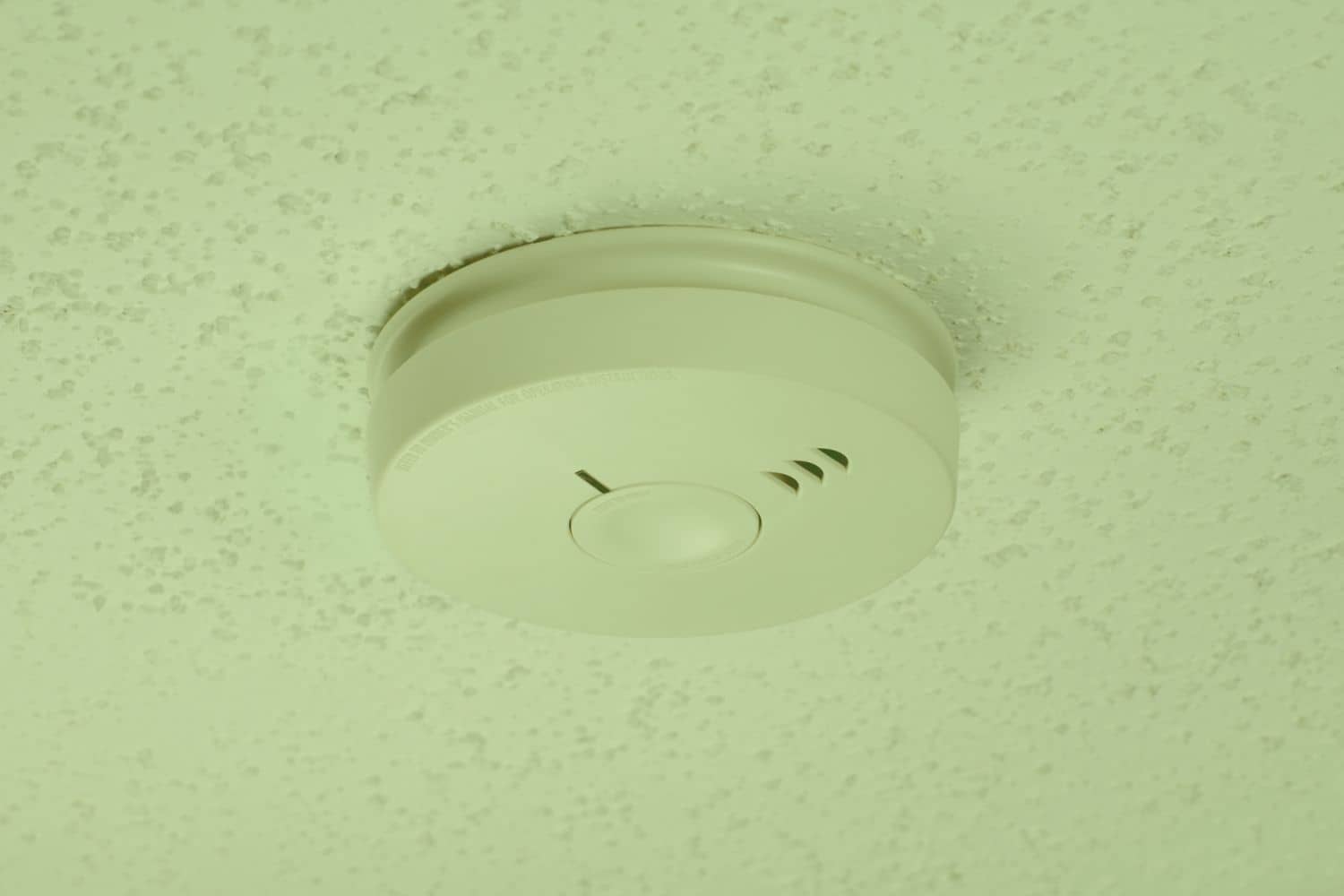
The best smoke detector placement is inside every bedroom, outside every sleeping area, and on every level of your home, including the basement. Mount each alarm on the ceiling or high on a wall, and keep it away from the stove and air vents.
At National Inspection Service of Indiana (NISI), we have helped Evansville homeowners and buyers look closely at their homes for years, and a missing or misplaced alarm is one of the easiest safety problems to fix. This guide shows you where each alarm goes, how far to stay from walls and cooking, and what Indiana law says.
Where Should Smoke Detectors Go in Your Home?
Put one alarm inside every bedroom, one outside each sleeping area, and one on every level of the home. The U.S. Fire Administration gives these same three rules. A level counts even if nobody sleeps there, so the basement needs an alarm too.
Here is a quick room-by-room view:
| Location | Why it needs an alarm | Placement tip |
|---|---|---|
| Inside each bedroom | You are closest to it while you sleep, even with the door shut | Ceiling near the center of the room, or high on a wall |
| Hallway outside sleeping areas | It covers the path everyone takes to get out | Put it between the bedrooms and the rest of the house |
| Every level, including the basement | Fire can start on any floor | Near the bottom or top of the stairs is a good spot |
| Living areas | Fires start in living rooms, too | Keep it away from vents and windows |
Most homes need more alarms than people expect. Picture a two-story house with three bedrooms and a basement. That home needs three bedroom alarms, one in the upstairs hallway, one on the main floor, and one in the basement. That adds up to six.
Tip: Interconnected alarms are worth the effort. When one sounds, they all sound. The USFA recommends them because you hear the warning wherever you are in the house.
Should You Mount a Smoke Detector on the Ceiling or the Wall?
The ceiling is the best choice, but a wall works if you mount the alarm high. Smoke rises, so the alarm needs to sit near the top of the room where smoke collects first.
Here are the usual spacing rules:
- Ceiling mount: Keep the alarm at least 4 inches from any wall. The corner where the wall and ceiling meet can hold dead air that smoke may skip.
- Wall mount: Place the alarm 4 to 12 inches below the ceiling, not in the middle of the wall.
- Sloped or peaked ceilings: Mount the alarm near the high point, and follow the spacing on the box.
These numbers come from fire department and manufacturer guidance. Your alarm’s instructions come first. If the box says something different, follow the box.
Where Should You Not Put a Smoke Detector?
Keep alarms away from spots that cause false alarms or block the smoke from reaching them. A nuisance alarm is annoying, and people often respond by pulling the battery. That leaves the home with no protection at all.
Avoid these spots:
- Close to the stove: Most fire safety guides say to stay at least 10 feet from cooking appliances. Never place an alarm directly over the stove.
- Bathrooms: Steam from a hot shower can set off an alarm.
- Near vents: Stay at least 3 feet from supply and return vents. Moving air can push smoke away from the alarm.
- Near ceiling fans: Keep about 3 feet of space between the two.
- Near windows and doors: Drafts can keep smoke from reaching the alarm.
- Hot or freezing spaces: Skip spaces that drop below 32°F or climb above 100°F. A hot attic is a good example.
What if your kitchen is small? Place the alarm in the nearest hallway or living area, and follow the maker’s rules for distance from the stove.
If an alarm keeps going off while you cook, don’t take out the battery. The USFA suggests using the hush button, airing out the room, or moving the alarm farther from the kitchen.
What Does Indiana Law Say About Smoke Detectors?
What Does Indiana Law Say About Smoke Detectors?
Indiana requires at least one working smoke detector in every dwelling, and that includes rentals. The rule is in Indiana Code 22-11-18-3.5. Here is what it covers:
- Alarms go outside each sleeping area, near the bedrooms.
- They can be mounted on the ceiling or on a wall a few inches below it. They cannot be recessed into the ceiling.
- Additional stories need alarms too, including basements and habitable attics.
- Alarms can be battery powered or hardwired, and you must be able to reach them to test them.
- The occupant must test them at least every six months.
- In a rental, the owner or manager installs the alarms and must repair or replace a faulty one within 7 working days of written notice.
- Tampering with or removing an alarm is not allowed.
Local governments can adopt stricter rules. Think of the state law as the minimum, not the goal. The USFA advice above, with an alarm in every bedroom, goes further. Laws change, so check the current Indiana Code or ask the Evansville Fire Prevention Bureau if you need to confirm a rule for your address.
What Is the Difference Between a Code Inspection and a Home Inspection?
A code inspection checks whether a home meets the rules. A home inspection reports on the condition of the home on the day of the visit. They overlap on smoke detectors, but they are not the same job.
A building or fire official checks smoke detectors against the code. That means looking for an alarm in each required spot, such as outside sleeping areas and on every level, and giving a pass or fail.
A licensed Indiana home inspector reports what they see. Indiana’s home inspector standards (878 IAC 1-2-1) tell inspectors to report when smoke detectors are missing. The same standards say inspectors are not required to determine whether a home meets codes, laws, or ordinances. So an inspector may point out a missing alarm or one in a poor spot, and may mention the code, but a clean report does not confirm that every alarm is up to code.
Need proof that a home meets code, such as for a rental? Ask your local building or fire officials. Use a home inspection to spot problems early.
How Often Should You Test and Replace Smoke Detectors?
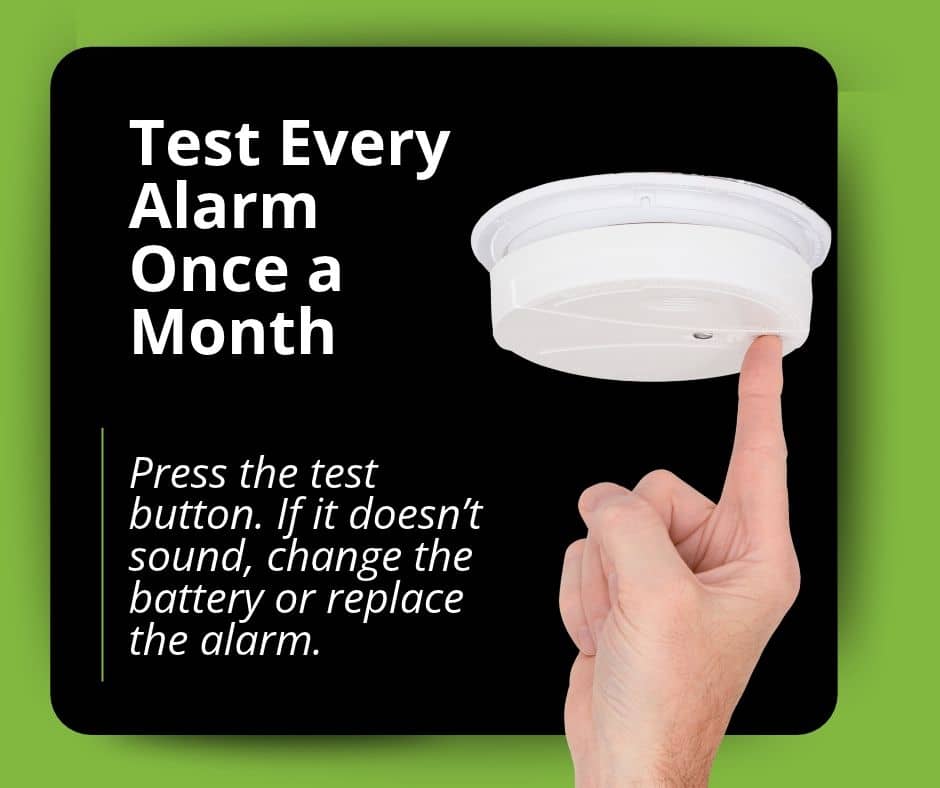
Test every alarm once a month, and replace the whole unit 10 years after its manufacture date. The USFA gives both rules. The date is printed on the back of the alarm. Not sure how to run the test? Here is a simple walkthrough on how to test a smoke detector.
Battery rules depend on the type:
- 9-volt batteries: Replace them once a year.
- 10-year lithium alarms: Follow the maker’s schedule.
You should also know which kind of alarm you own. Ionization alarms respond fast to flaming fires, and photoelectric alarms respond fast to smoldering fires. The USFA suggests using both types, or buying a dual-sensor model that does both.
How Can You Check Your Own Smoke Detector Placement in 10 Minutes?
Walk through your home with a notepad and a step stool. You can check every alarm in one trip. Here is the order that works best:
- Count your alarms. Write down how many you have, then compare that to your bedrooms and floors.
- Check each bedroom. Look for an alarm on the ceiling or high on the wall. No alarm means you have a gap.
- Check the hallways. Each sleeping area needs an alarm just outside it.
- Check every level. Don’t skip the basement or the top floor.
- Measure from the stove. If an alarm is closer than 10 feet, plan to move it.
- Look at the vents and fans. Move any alarm that sits within 3 feet of one.
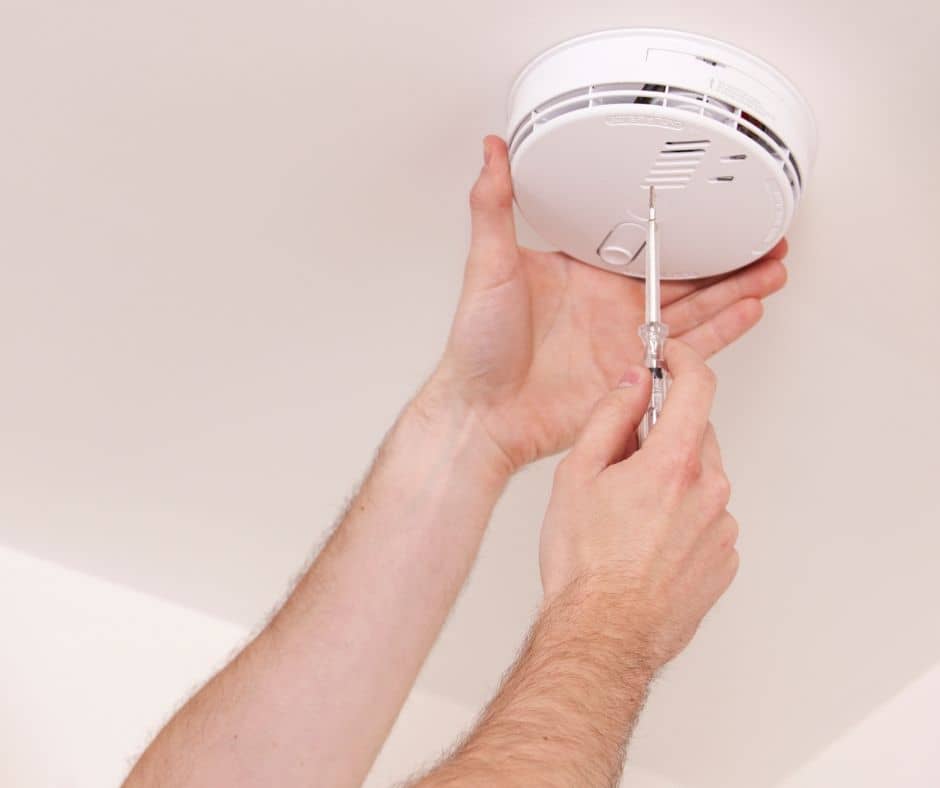
- Read the date. Twist the alarm off its base and look at the back. If it is 10 years old, replace the unit.
- Press the test button. Every alarm should sound. If it doesn’t, change the battery or replace the alarm.
If you have a combination alarm that also senses carbon monoxide, check its label too. Combination units still need to sit where the maker says.
Common Smoke Detector Placement Mistakes
Most placement problems come down to a short list:
- Only one alarm for the whole house: One alarm will not cover every bedroom and every level.
- No alarm in the basement: Basements count as a level.
- Alarm too close to the stove: This leads to false alarms and pulled batteries.
- Alarm mounted halfway down a wall: Smoke collects near the top of the room.
- Alarm past its 10-year mark: The sensor wears out, even if the test button still beeps.
- Alarm in a vent’s airflow: Moving air can carry smoke past the alarm.
A 2-minute walk through your home can catch all six.
Related Questions to Explore
How many smoke detectors do I need?
You need one in every bedroom, one outside each sleeping area, and one on every level. A three-bedroom, two-story home with a basement needs about six. Count your bedrooms and floors, then add the hallway. For a second look at the math, see this guide on how many smoke detectors you need. If you’re buying a home, the home inspection is a good time to ask how many alarms the house has.
Where should smoke detectors be placed in a bedroom?
Place the alarm on the ceiling near the center of the room, or high on a wall. Keep it away from vents, ceiling fans, and windows. Every bedroom needs its own alarm, even if there is one in the hall.
Can I put a smoke detector in the kitchen?
You can, but not close to the stove. Stay at least 10 feet from cooking appliances. If you can’t, put the alarm in the nearest hallway or living area instead. That keeps false alarms down and keeps the alarm working.
Is smoke detector placement the same as carbon monoxide detector placement?
No. Carbon monoxide alarms have their own placement rules, so follow the instructions on the box. Some units combine both alarms in one device. CO is a hidden gas, like radon. If you want to learn about another one, read our guide to radon test results.
Should smoke detectors go on the ceiling or the wall?
Ceiling is best. If you use a wall, mount the alarm 4 to 12 inches below the ceiling. Indiana law does not allow an alarm recessed into the ceiling. See the section above for the full spacing rules.
What are the smoke detector rules in Indiana?
Indiana requires at least one working smoke detector in every dwelling, rentals included. Alarms go outside each sleeping area, and additional stories need them too. See the Indiana section above for the full list.
When to Call a Professional
Call a professional when you can’t find an alarm’s date, when hardwired alarms fail, or when an alarm chirps or sounds for no clear reason. Hardwired alarms are tied into your home’s wiring. If one loses power, a tripped breaker can be one cause, and this post explains what’s tripping a circuit breaker. If the breaker is fine, an electrician is the right person for repairs to that wiring.
A home inspection is another good time to get help. If you’re buying or selling in the Evansville area, an inspector can look over the home’s safety-related systems. Aging wiring is one example. Our post on an old electrical panel explains what to watch for.
NISI is led by Rob Cahill, an Indiana licensed home inspector since 2005 who has been inspecting homes since 1995. Wondering what a visit involves? Read how long home inspections take. We serve Evansville, Newburgh, and the surrounding areas, and you can reach us at (812) 476-1999.
Conclusion
Smoke alarms only help when they’re in the right spots. Here is what to remember:
- Place one inside every bedroom, outside every sleeping area, and on every level.
- Mount alarms on the ceiling or high on a wall, away from the stove and vents.
- Test them monthly and replace each unit after 10 years.
Check your own home this week. If you’re buying or selling in southern Indiana, schedule a home inspection with NISI, and we will take a careful look at your home.