Radon is a radioactive, colorless, odorless gas that forms naturally as uranium and radium in the soil break down. It seeps into homes through cracks in the foundation, basement floors, sump pump openings, and gaps around pipes.
Once trapped inside a home, it builds to dangerous concentrations in the lower levels where families spend the most time. The gas itself does not trigger any alarm in your body when you breathe it in. What it does is release radioactive alpha particles that embed in lung tissue. Over years of repeated exposure, those particles damage DNA and raise the risk of lung cancer.
Per the EPA’s guidance on radon health effects, radon is the second leading cause of lung cancer in the U.S.
It is the leading cause of lung cancer among people who have never smoked.
If you are in Evansville or Vanderburgh County, the EPA places the area in Zone 2, which means predicted average indoor levels between 2 and 4 pCi/L (picocuries per liter). The action level is 4 pCi/L. The EPA also recommends considering mitigation between 2 and 4 pCi/L. Professional testing is the only way to know your actual number.
The Symptoms of Radon Exposure: What You Need to Know
Radon has no immediate symptoms. This is the most critical fact to understand.
There is no clinical diagnosis called “radon poisoning.” The accurate framing of radon exposure leading to elevated lung cancer risk over many years.
Searchers often expect headaches, dizziness, or a persistent cough as an early warning sign. None of those points specifically addresses radon exposure.
The only “symptoms” attributable to long-term radon exposure are the symptoms of radon-induced lung cancer. Those symptoms include:
- Persistent cough that does not go away or keeps getting worse
- Coughing up blood or rust-colored mucus
- Shortness of breath during routine activities
- Chest pain that worsens with deep breathing, coughing, or laughing
- Hoarseness that does not clear up
- Unexplained weight loss
- Wheezing
- Recurring pneumonia or bronchitis
These symptoms typically appear in the later stages of lung cancer, often 5 to 25 years after the period of prolonged exposure. According to the National Cancer Institute’s radon fact sheet, radon-induced lung cancer may not produce visible signs until the disease has advanced significantly.
This is why waiting for symptoms is not a workable strategy with radon. If you have lived in a home with untested radon levels and experience any of the symptoms above, mention your radon exposure history to your doctor.
Who Is Most at Risk from Radon Exposure?
Anyone living in a home with elevated radon levels carries some risk. A few groups face especially high stakes.
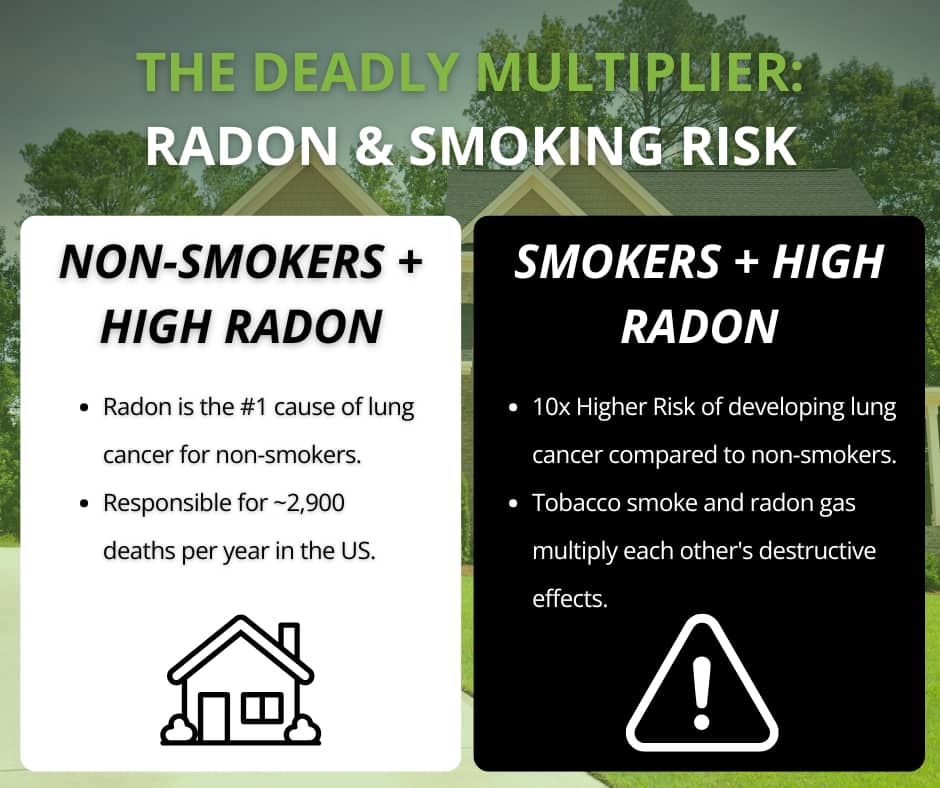
- Smokers face the greatest combined danger. Radon and tobacco smoke do not simply add risk to each other; they multiply it. A smoker living with radon above 4 pCi/L faces a risk of lung cancer roughly 10 times higher than a non-smoker at the same exposure level. Quitting smoking lowers overall risk substantially, but it does not eliminate the radon risk.
- Non-smokers are still at serious risk. Radon is the leading cause of lung cancer in people who have never smoked, responsible for approximately 2,900 deaths per year in that group alone.
- Residents of older homes with basements tend to see more radon exposure because entry points are more common in older construction, and basements concentrate the gas at ground level.
Additionally, Indiana homeowners face above-average radon rates compared to many other states. If you are buying or selling a home in the Evansville area, it helps to understand whether a radon test is expected in your transaction. Read this post for a full breakdown: Is a radon test always required when buying a home?
Indiana IDEM (the Indiana Department of Environmental Management) maintains state-level radon resources and guidance for homeowners who want to understand local risk by county.
How Is Radon Exposure Detected?
No blood test, urine test, or physical examination reveals radon exposure history. A doctor cannot diagnose past radon exposure by examining you. The only way to know whether your home has elevated radon is to test the air inside it.
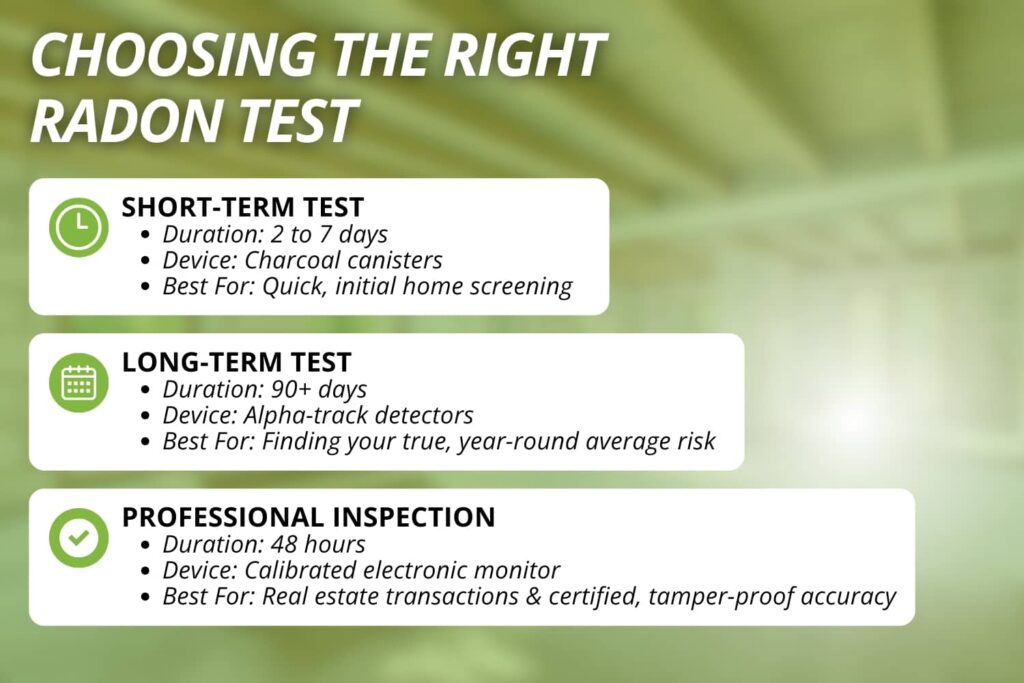
Home radon testing options include:
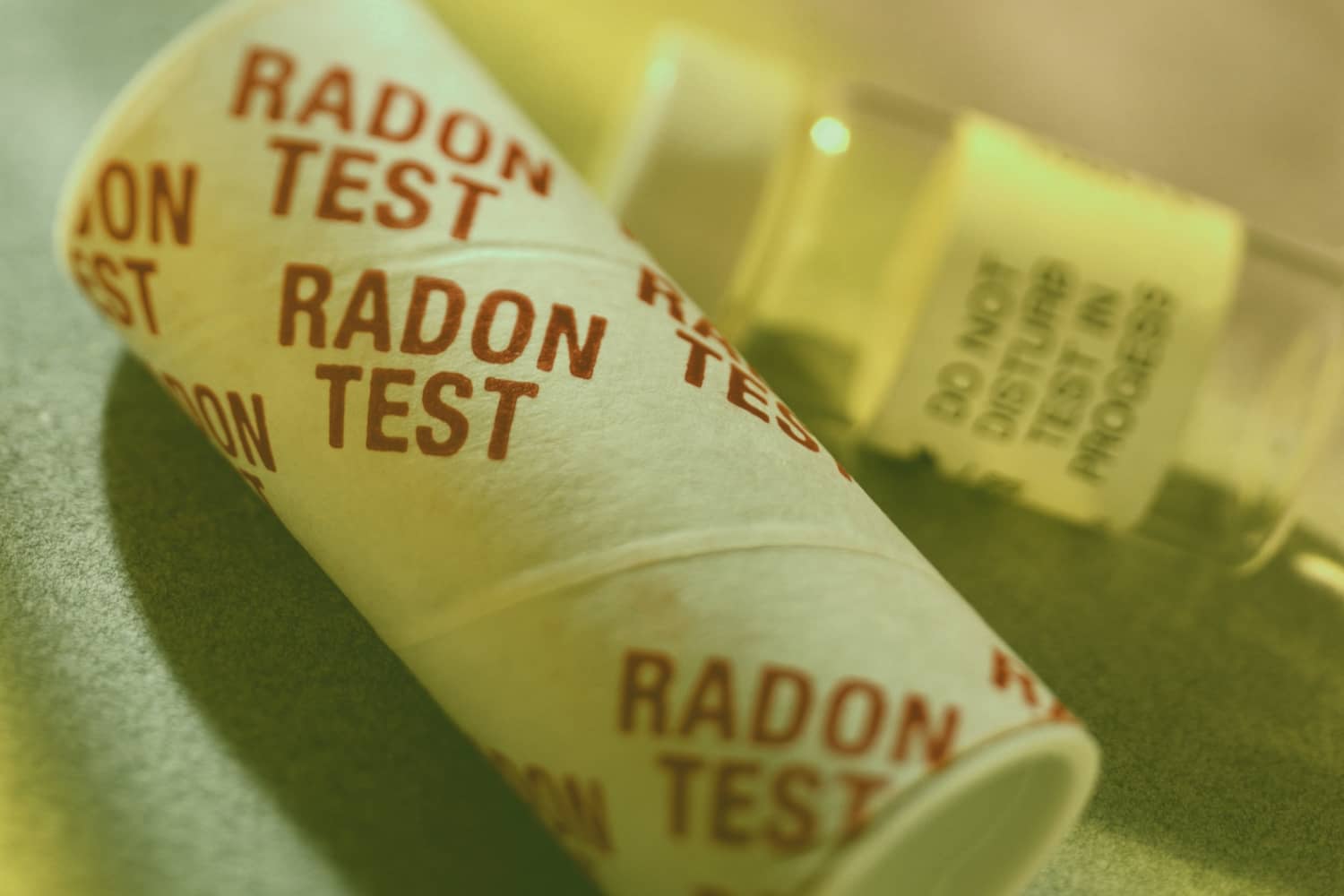
- Short-term tests (2 to 7 days): Charcoal canisters or electret ion detectors placed in the lowest livable area. Good for initial screening.
- Long-term tests (90 or more days): Alpha-track detectors that average radon levels over an extended period. More accurate for understanding true ongoing risk.
- Professional testing: A certified radon inspector uses a continuous electronic monitor that records hourly readings over a minimum of 48 hours. This method produces the most accurate, documented result and is required for most real estate transactions.
The EPA action level is 4 pCi/L. Any result at or above that threshold warrants mitigation. Results between 2 and 4 pCi/L are worth addressing, especially for smokers and households with young children.
If you are ready to know your home’s actual radon level, a professional radon inspection from a certified inspector gives you the documentation and clarity you need.
What to Do If Your Home Has High Radon Levels
A high radon test result is not a reason to panic. It is a reason to act, and the fixes are well-established.
Radon mitigation works primarily through active sub-slab depressurization: a pipe and fan system that pulls radon from beneath the foundation and vents it outdoors before it enters the living space. This method typically reduces indoor radon levels by 50% to 99%.
Other approaches that support mitigation include:
- Sealing cracks and openings in concrete floors and walls (helpful as a supplement, but not sufficient on its own)
- Improving natural ventilation in basement spaces
- Installing heat recovery or energy recovery ventilators
Mitigation costs vary based on home size, foundation type, and the number of entry points. Most Indiana homeowners pay between $800 and $2,500 for a complete system.
After installation, a follow-up radon test confirms the system is working as expected.
Do not rely on sealing alone. Both the EPA and certified radon mitigation contractors agree that crack sealing without an active ventilation component rarely brings levels to a safe threshold consistently.
Related Questions to Explore
Is a radon test included in a standard home inspection?
No, a standard home inspection focuses on evaluating the visible structural and mechanical components of a property, such as the roof, foundation, electrical, and plumbing systems. Specialized health and environmental safety assessments, including radon testing, mold inspections, and termite checks, require different equipment and distinct certifications, which is why they are typically scheduled as separate, add-on services.
How do radon and mold risks differ in lower levels of a home?
While both hazards frequently concentrate in basements and crawl spaces, they stem from entirely different sources. Radon is a naturally occurring, odorless radioactive gas that rises from the soil, whereas mold is a fungus triggered by ambient moisture, poor ventilation, or hidden water leaks. Because a damp lower level can harbor multiple hidden air quality issues, many homeowners choose to pair a mold inspection with a radon test for peace of mind.
Can foundation settling or pest infestations affect indoor air quality?
They can. Any compromise to the physical barrier between your living space and the surrounding soil can create new pathways for environmental hazards. Foundation cracks from natural settling, unsealed sump pits, or structural gaps left behind by a termite infestation can make it significantly easier for both moisture and radon gas to seep into the home.
What specialized inspections are most important when buying a home?
Beyond the essential structural review, buyers should consider the age, design, and location of the property. For example, homes with basements or those located in areas with known geological risks should always undergo radon testing. Properties showing signs of past water intrusion or musty odors benefit from targeted mold inspections, while a wood-destroying insect inspection is critical for catching hidden termite damage before closing.
When to Schedule a Radon Inspection
If your home has never been tested for radon, schedule a test now. Radon levels vary widely between neighboring homes and shift seasonally, so a nearby result tells you nothing about your own exposure.
Some situations make testing especially urgent:
- You are buying or selling a home in Indiana
- Your home has a basement or is built on a slab-on-grade foundation
- You have lived in the home for several years without ever testing
- A family member has been diagnosed with lung cancer, and radon exposure was never evaluated
- You have recently finished the basement space (which changes airflow patterns and can affect radon behavior)
Rob Cahill, owner of National Inspection Service of Indiana and a Certified Radon Inspector with more than 30 years of home inspection experience, provides professional 48-hour radon testing throughout the Evansville area.
Testing includes a calibrated continuous monitor, detailed printed results, and a clear explanation of what the numbers mean for your household.
Contact NISI to schedule your radon inspection or to ask questions about radon levels in your home.
Conclusion
Radon poisoning symptoms do not develop overnight. It is a long-term risk that builds silently, and lung cancer, the only health consequence, often does not announce itself until the disease has already progressed.
Key takeaways:
- “Radon poisoning” has no immediate symptoms; the risk is lung cancer that develops over the years
- Symptoms like persistent cough, shortness of breath, and chest pain appear late and require a doctor’s evaluation
- Indiana homeowners face above-average radon risk; roughly 1 in 3 Evansville-area homes test elevated
- Testing is the only reliable way to know your actual exposure level
A professional radon inspection is the most reliable way to understand the risk in your specific home. If levels come back elevated, mitigation is effective, affordable, and built to last. Contact National Inspection Service of Indiana today to schedule your inspection and secure peace of mind for your family.