The short answer: yes, you really need a home inspection before buying a house.
Skipping it means you close on a property without documented knowledge of potential structural problems, failing systems, or safety hazards that could cost thousands of dollars to fix after closing.
Rob Cahill, owner of National Inspection Service of Indiana, has found hidden foundation issues, outdated electrical panels, and active mold growth in homes that showed no warning signs from the outside.
This post covers what an inspection includes, what it costs, how to use the findings in negotiations, and the one situation where waiving an inspection contingency might still make sense.
What Does a Home Inspection Actually Cover?
A standard home inspection is a visual, non-invasive check of a home’s major systems and structural components.
The inspector evaluates what can be seen and safely accessed. Anything behind walls, underground, or requiring invasive testing is outside the scope of a standard inspection.
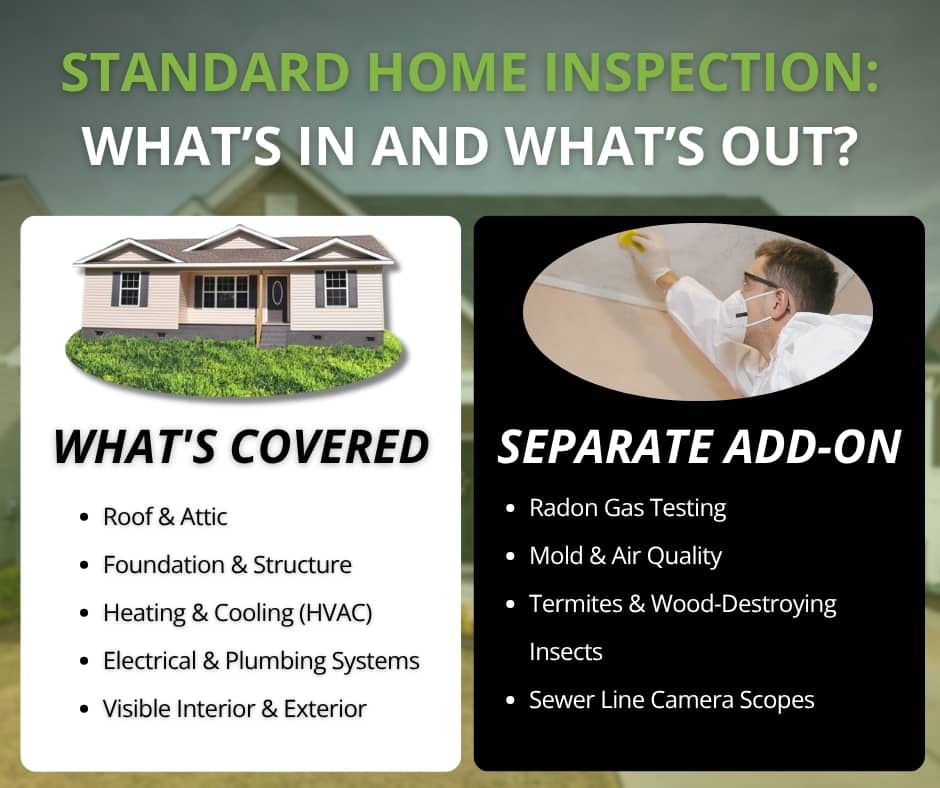
A typical home inspection covers:
- Roof and attic (shingles, flashing, ventilation, visible decking)
- Foundation and structure (basement walls, crawl space, visible framing)
- Exterior (siding, grading, drainage, windows, doors)
- Electrical system (panel condition, visible wiring, outlets, GFCI protection)
- Plumbing (supply and drain lines, water heater, fixtures)
- HVAC (heating and cooling equipment, ductwork)
- Interior (ceilings, floors, stairs, insulation where accessible)
One thing a home inspection does not do: it does not pass or fail a home. The report describes the condition of each item as found on the day of the inspection. What to do with that information is your decision.
For buyers in Southern Indiana and the Evansville area, older housing stock is the norm.
Homes here frequently show foundation settling, aging HVAC systems, and outdated electrical panels. A professional inspection catches these issues before you sign.
You can review the full scope of what is checked on the National Inspection Service of Indiana home inspection page.
How Much Does a Home Inspection Cost?
A home inspection typically costs between $300 and $500, depending on the size, age, and condition of the home. For most buyers, that is one of the smallest expenses in a transaction involving hundreds of thousands of dollars.
For that investment, you receive an objective written report on the condition of every major system in the home. If the report identifies a cracked heat exchanger, a roof nearing the end of its useful life, or an electrical panel flagged as a fire risk, you have documented, actionable information before closing.
A qualified home inspector typically spends two to four hours on-site and follows a defined standard of practice. The American Society of Home Inspectors (ASHI) and InterNACHI both publish inspection standards that licensed inspectors are expected to follow.
Per guidance from the U.S. Department of Housing and Urban Development, buyers have the right to request a home inspection before purchase. That right only has value if you use it.
Add-on inspections for radon, mold, and wood-destroying insects (WDI) are priced separately and are worth considering in Southern Indiana, where radon exposure and termite activity are regional concerns.
You can read more about radon testing services and termite inspections that NISI offers for Southern Indiana buyers.
Can You Use the Inspection Results to Negotiate?
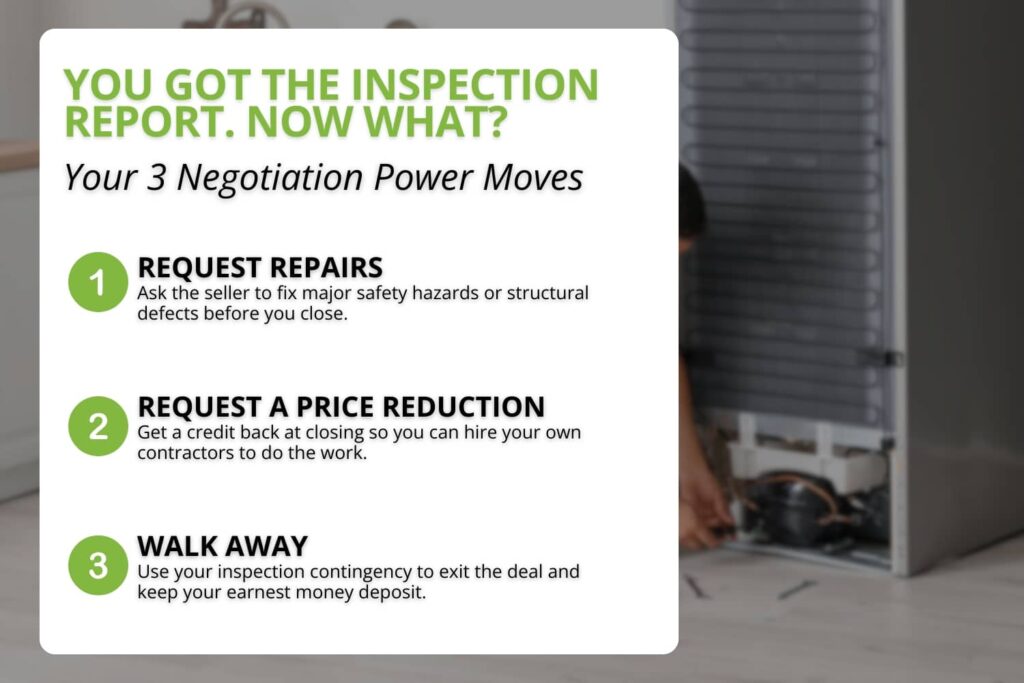
Yes, and that ability to negotiate is one of the most practical reasons to get a home inspection. Once you receive the report, you have three options:
- Request repairs before closing. Ask the seller to fix specific issues as a condition of the sale.
- Request a price reduction. Ask for a credit at closing to cover the cost of repairs you will handle.
- Walk away. If the inspection reveals major defects and the seller will not negotiate, an inspection contingency gives you the right to exit the purchase agreement without losing your earnest money.
The third option is more valuable than most buyers realize. Without an inspection contingency in your offer, walking away from the deal typically means forfeiting your deposit.
Not every finding warrants negotiation. Minor cosmetic items and routine maintenance are normal in any home with age.
Focus negotiation energy on safety hazards, systems nearing the end of their useful life, and anything that was not visible during the initial walk-through.
For a closer look at one of the most costly inspection findings, see our post on what a home inspection can tell you about the foundation.
Should You Waive the Inspection Contingency?
In a competitive market, buyers sometimes waive the inspection contingency to make their offer more attractive to sellers. This is different from skipping the inspection entirely, and the distinction matters.
Waiving the contingency means giving up the right to exit the deal based on inspection findings. You can still schedule an inspection for your own information. You simply will not have a contractual exit if the results are bad.
Skipping the inspection entirely means you close with no documented record of the home’s condition at all. That carries far more risk.
If you are considering waiving the inspection contingency to compete in a bidding war, most experienced real estate agents recommend getting an informational inspection anyway.
You lose the option to walk, but you will know what you are buying. If the inspection uncovers something serious, you will at least have time to prepare financially before the purchase agreement is finalized.
Cash buyers often assume there is no reason to get an inspection since no lender requires one.
In practice, cash buyers have strong negotiating leverage precisely because they are not tied to lender timelines. An inspection gives you documented grounds to negotiate a lower price or request a seller concession before closing.
What a Home Inspection Won’t Cover
A home inspection is a visual, non-invasive examination. It does not include:
- Invasive testing (opening walls, moving insulation, accessing concealed pipes or conduit)
- Termite or wood-destroying insect inspection (WDI) — requires a separate licensed WDI inspector
- Mold testing — visible mold may be flagged, but air or swab sampling requires a separate service
- Radon measurement — requires a separate test kit or inspector visit
- Sewer camera inspection — underground drain lines need a separate camera scope
- Chimney inspection — interior flue conditions require a CSIA-certified chimney sweep
- Pool or spa systems — typically excluded from standard home inspections
It helps to think of the home inspection as one layer of due diligence, not the complete picture. For buyers purchasing an older home in Southern Indiana, adding a radon test and WDI inspection is standard practice.
You can learn more about the mold inspection services NISI provides for buyers concerned about indoor air quality.
How to Choose a Home Inspector
Not all home inspectors deliver the same quality of work. Indiana has required home inspector licensing since 2009, but the thoroughness of inspections varies widely. Here is what to look for when choosing an inspector:
- License verification: Confirm the inspector holds a current Indiana license.
- Professional certifications: ASHI and InterNACHI membership signals ongoing education and adherence to published standards.
- Sample report: A quality inspector provides a sample report on request. Look for detailed photos, written descriptions, and prioritized findings, not a checkbox list.
- Experience and volume: Ask how many inspections the inspector has completed and whether they specialize in the age or type of home you are buying.
- Independence: Your inspector should have no financial interest in whether the transaction closes.
You can review the InterNACHI Standards of Practice to understand what a certified inspector is expected to evaluate on every inspection.
Per MSU Extension guidance on home inspections, a thorough inspection is “a critical step before you finalize your home purchase agreement.” The inspector you choose shapes how useful that step will be.
Rob Cahill and the NISI inspection team hold ASHI and InterNACHI certifications and have completed more than 20,000 inspections across Evansville and Southern Indiana since 1995.
Related Questions to Explore
How do I know if a home has termite damage during the buying process?
A standard home inspection looks for visible structural issues, but it does not cover a specialized wood-destroying organism review. To catch active infestations or hidden wood rot, buyers typically schedule a dedicated termite inspection alongside their standard property assessment.
Should I request radon testing if the home doesn’t have a basement?
Yes. Radon is an odorless, radioactive gas that enters a home through cracks in the foundation, meaning it can accumulate in homes with crawl spaces or slab foundations just as easily as those with basements. A professional radon testing service is the only definitive way to measure these levels and ensure the indoor air quality is safe.
Can a standard home inspector detect toxic mold?
A standard home inspector will note visible water stains or obvious fungal growth, but they do not perform environmental testing. If a property has a history of leaks, musty odors, or moisture issues, a certified mold inspection involving air sampling and surface swabs is needed to identify hidden spores.
Is a home inspection worth it for a brand-new construction home?
Even brand-new builds frequently harbor overlooked defects, such as missing insulation, improperly installed roofing flashing, or reversed electrical polarity. Getting a home inspection before closing on a new build allows you to hold the builder accountable for repairs before you move in.
When to Call a Professional Home Inspector
Home inspections should be scheduled as soon as possible after your offer is accepted, during the due diligence period. Most inspection contingencies give you a 7 to 14-day window, so timing matters.
Call a licensed home inspector when:
- You are purchasing any home, regardless of age, price, or condition.
- You are buying new construction (pre-closing inspection and one-year warranty inspection).
- You are purchasing a home as-is or through an estate sale.
- You are making a cash offer and want peace of mind before closing.
- You are selling your home and want to identify issues before listing.
National Inspection Service of Indiana has performed more than 20,000 inspections across Evansville and Southern Indiana since 1995.
NISI offers standard home inspections plus radon testing, mold inspection, and WDI/termite inspections.
Schedule your inspection through the NISI contact page before your due diligence window opens.
Conclusion
A home inspection is one of the best investments you can make before closing on a house. For a few hundred dollars, you get a written record of the home’s condition, grounds to negotiate repairs or a lower price, and peace of mind before you sign. Skipping it might help you win a bidding war, but it removes every safeguard you have before the purchase agreement becomes final.
Key takeaways:
- A home inspection is not legally required, but it protects your largest investment.
- The inspection report gives you documented grounds to negotiate repairs or a price reduction.
- Waiving the inspection contingency is not the same as skipping the inspection entirely.
- Add-on tests for radon, mold, and termites are standard practice for older Indiana homes.
Ready to schedule? Contact the National Inspection Service of Indiana team to get on the calendar. For a full overview of what to expect, visit our home inspection services page.