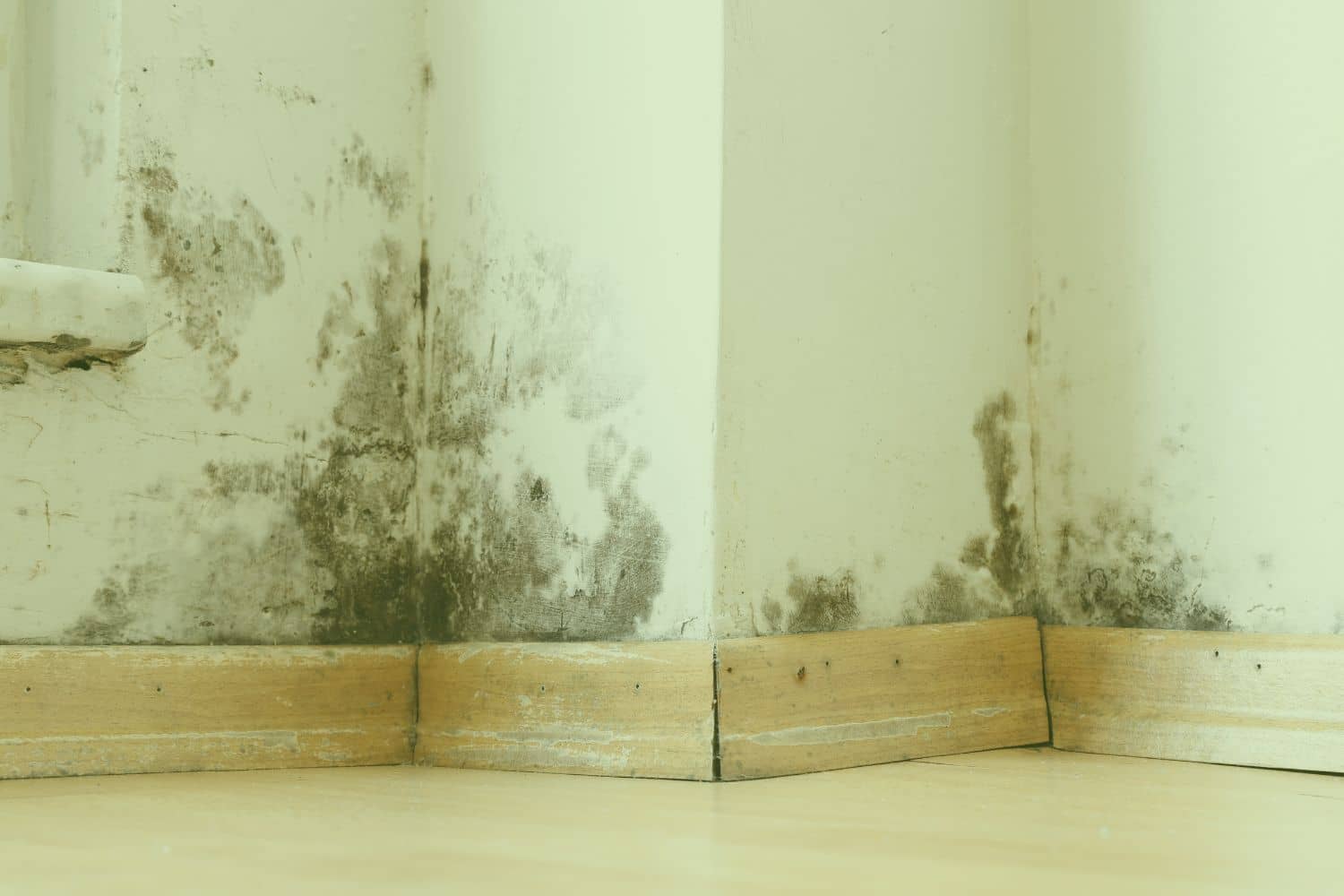
Black mold usually looks like dark green to black patches. They’re often slimy, fuzzy, or speckled, and you’ll typically find them on damp drywall, grout, wood, or insulation. But color alone can’t confirm what you’re looking at. At NISI, we’ve inspected more than 20,000 Evansville-area homes since 1995. One of the most common questions we hear is whether a dark spot is “the bad kind” of mold. A photo can narrow things down, but it can’t confirm the species or the health risk.
This guide covers what black mold looks like and the substances people often mistake for it. It also covers where mold tends to hide in local homes, and how a professional mold inspection identifies it.
What Black Mold Actually Looks Like
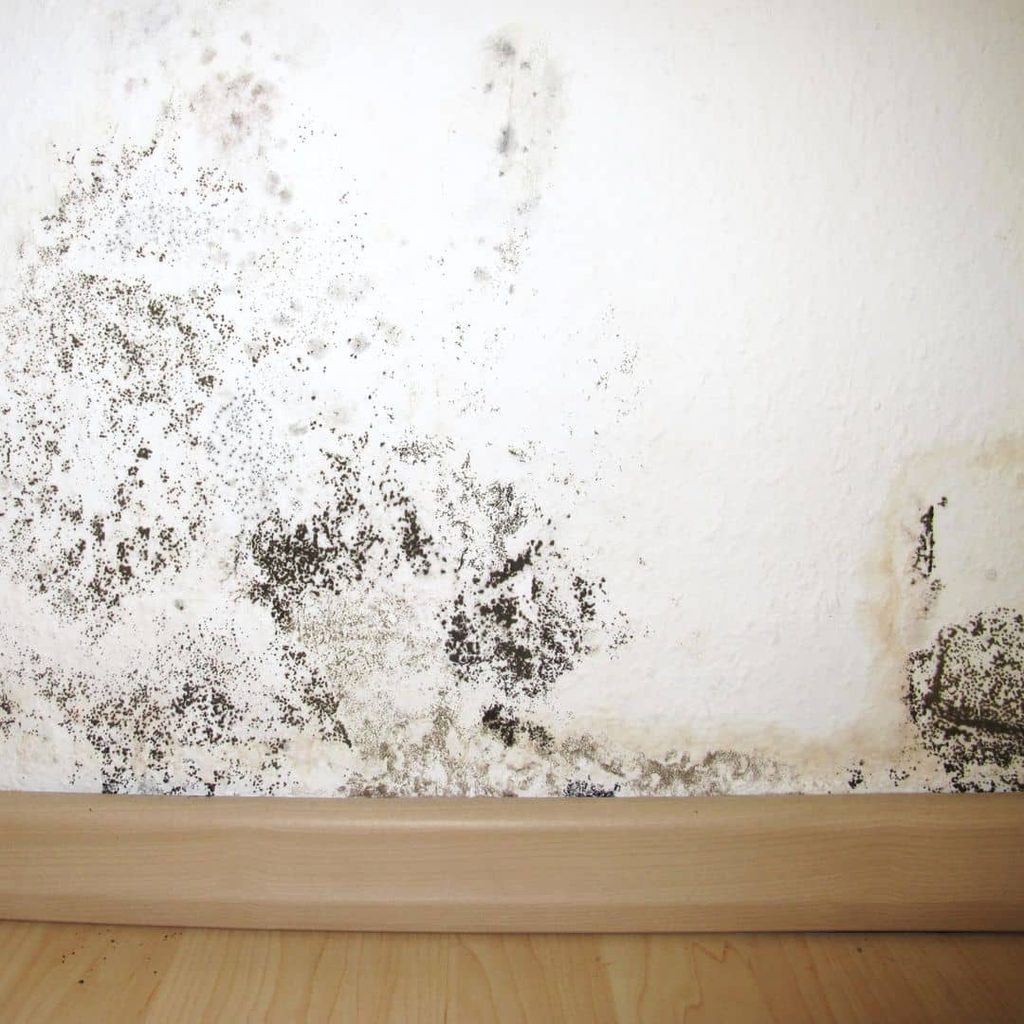
Black mold usually starts as small, dark specks. They’re easy to mistake for dust at first. As moisture keeps feeding it, the specks spread into irregular patches. Fresh growth often looks dark, wet, and almost oily. Older growth can turn powdery or fuzzy as it dries out. The color isn’t always uniform, either. You’ll often see mottled shades of black, dark green, or gray on the same patch.
Texture is one of the best clues. Mold sits raised off the surface with a fuzzy, velvety, or slimy feel. It usually smears when you wipe it, instead of wiping away cleanly. Mold also grows into the material it’s on, not just on top of it. That’s why drywall or wood near an established colony often feels soft or crumbles when you touch it.
Location matters as much as appearance. Mold clusters wherever moisture collects. Common spots include bathroom corners, behind toilets, and around window frames. You’ll also see it along the base of exterior walls, under sinks, and on ceilings below a slow roof leak.
Common Look-Alikes: Dirt, Soot, Efflorescence, and Mildew
Several ordinary household substances look like black mold. Telling them apart usually comes down to texture, moisture, and whether the spot wipes away.
| Substance | Color | Texture | Quick test |
|---|---|---|---|
| Black mold | Black, dark green, gray, mottled | Fuzzy, slimy, or raised | Smears when wiped; grows into the material |
| Soot/dust | Gray to black | Flat, feathered, follows airflow | Wipes away cleanly with a dry cloth |
| Efflorescence | White to yellowish | Powdery, crystalline | Dissolves in water; found on concrete or brick, not wood |
| Mildew | White, gray, pale yellow | Flat, powdery | Stays on the surface, wipes off more easily than mold |
Soot and dust collect near vents, heaters, or candles. They form an even, dry layer that wipes off without leaving a mark. Efflorescence is different: moisture moving through concrete or brick leaves these mineral deposits behind. You’ll only find efflorescence on masonry, never on wood or drywall. Mildew is a surface-level fungus. It’s usually lighter in color and flatter than mold, and it’s common on shower tiles.
A simple household check: dab a drop of diluted bleach on the spot. If it lightens within a minute or two, you’re likely looking at mold or mildew, not dirt or a mineral stain. This isn’t a substitute for lab testing, but it’s a reasonable first read. If you’re still not sure, our home inspection team can take a closer look as part of a full property evaluation.
Where Black Mold Typically Shows Up in Evansville-Area Homes
Southern Indiana’s humid summers and older housing stock give mold a head start that drier climates don’t have. Homes along the Ohio River valley deal with high humidity for much of the year. Many Evansville-area properties also have basements, crawl spaces, or older plumbing, which makes hidden moisture more likely.
The spots we see most often during inspections:
- Basements and crawl spaces with limited airflow or a history of water intrusion
- Behind drywall near a slow plumbing leak
- Under flooring after a past flood or spill
- Above ceilings below an aging or damaged roof (see our guide on extending your Evansville roof’s lifespan)
- Inside HVAC components and ductwork
- Around window and door frames where condensation collects
A visible patch on a wall is sometimes just the edge of something bigger growing inside the cavity. A musty smell with no clear source is reason enough to look harder, even if you can’t see anything yet. Controlling indoor humidity is the most effective way to prevent mold from taking hold. That’s according to the EPA’s guide to mold, moisture, and your home.
Why More Than One Mold Species Can Look “Black”
When people say “black mold,” they usually mean Stachybotrys chartarum, a greenish-black species that needs constant moisture to grow. The CDC describes it as a greenish-black mold. It grows on high-cellulose material like drywall, fiberboard, and paper whenever there’s ongoing water damage or leaks.
But Stachybotrys isn’t the only mold that looks dark. Cladosporium and Aspergillus niger can also appear black or dark green. Both are far more common in homes than Stachybotrys. Visually, an untrained eye usually can’t tell them apart. Even the CDC says no test proves a direct link between Stachybotrys and specific health symptoms. Its guidance treats all indoor mold the same way: if you find it, remove it, regardless of species.
That’s the real takeaway. The species matters less than most homeowners think. What matters more is finding the moisture source and confirming whether it’s actually mold. Then you handle it before it spreads or damages the structure.
How Inspectors Test and Identify Black Mold
A certified inspector confirms mold with a trained visual check and lab-analyzed sampling. Color and texture alone can’t identify a species or measure health risk. InterNACHI, the trade association our inspectors belong to, recommends this same combined approach instead of relying on sight alone. Here’s what that typically involves:
- Visual assessment. A trained inspector walks the property, looking for growth patterns, water stains, and conditions that support mold. That includes poor ventilation, past leaks, and high humidity.
- Moisture mapping. Moisture meters, and sometimes thermal imaging, locate damp spots behind walls or under flooring that you can’t see yet.
- Air sampling. A calibrated pump pulls a measured volume of air through a collection device to capture spores. A lab then compares that sample against an outdoor baseline.
- Surface sampling. Tape lifts or swabs collect material from a visible patch to confirm whether it’s mold, and often, which species.
- Bulk sampling. A lab examines pieces of contaminated material, like a section of drywall or carpet. This confirms how far growth extends when we need that detail.
- Lab analysis. A microscopist reads the samples, or an accredited lab analyzes them. Either way, the report lists species and spore concentration, not a guess based on appearance.
The size of the affected area generally determines whether you can handle cleanup yourself or need a professional. Past water damage plays a role too, according to the EPA’s guidance on mold cleanup. As a rule of thumb, areas larger than about 10 square feet call for a professional. The same goes for mold tied to contaminated water or HVAC contamination.
Related Questions to Explore
What does black mold smell like?
Active mold growth often produces a persistent musty, earthy odor, even when you can’t see anything. If that smell doesn’t go away after cleaning, it’s a strong sign. Mold may be hiding somewhere, like behind a wall or under flooring. Our home inspection service checks for this kind of hidden moisture as part of a full evaluation.
Is all black mold toxic?
Not necessarily. Several dark-colored molds, including common species like Cladosporium, aren’t the toxin-producing Stachybotrys chartarum behind the “toxic black mold” label. That said, the CDC recommends treating any indoor mold as something to remove. That’s because visual identification alone can’t rule out a health-relevant species.
Can I test for black mold myself?
DIY kits, like tape lifts, swabs, and petri dishes, can confirm mold is present. But they can’t measure spore concentration. They also can’t compare indoor air to an outdoor baseline the way a professional air sample can. They’re a reasonable first step for a small, visible patch. They’re not a substitute for a full inspection if you’re buying, selling, or dealing with a larger problem.
How much does professional mold testing cost?
Costs vary by home size and how many samples you need. A full assessment includes visual inspection, moisture mapping, and lab-analyzed samples. It’s worth the investment when your decision depends on the result. That includes a home purchase or a health concern. Schedule an inspection with our team for a quote specific to your property.
Does bleach kill black mold?
Bleach can lighten or kill surface mold on hard, non-porous surfaces. But it doesn’t reach mold growing inside porous materials like drywall or wood, where the roots stay intact. That’s why mold on porous material tends to come back, even after a bleach cleaning. Fix the moisture source first, ideally after confirming the problem with a professional mold inspection.
When to Call a Professional
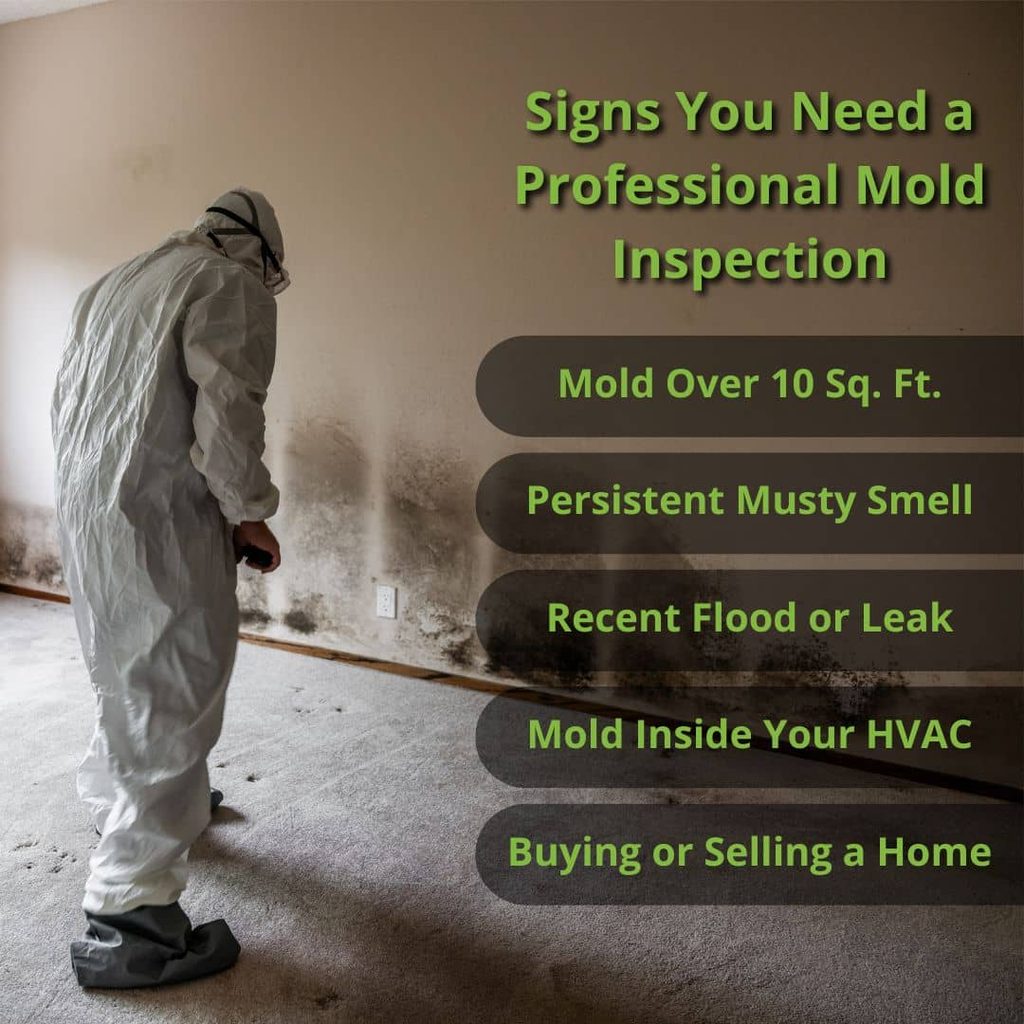
Call a professional if you see mold covering more than about 10 square feet. The same goes if it followed a flood or major leak, or if it’s inside your HVAC system. It also applies if someone in the home has ongoing respiratory symptoms. Those are also the situations where DIY test kits fall short. They can’t map hidden moisture, and they can’t tell you whether spore levels have actually gone up.
If you’re buying or selling a home in Evansville or Newburgh, a mold inspection gives you a documented, lab-backed answer. That beats guessing. We often bundle it with a full home inspection, so you get one clear picture of the property’s condition. Wondering whether a home inspection is worth it before you buy? Our post on whether you really need a home inspection walks through what’s at stake if you skip one.
Conclusion
A dark, fuzzy patch on a damp wall is worth taking seriously. But color and texture alone can’t tell you whether it’s Stachybotrys, a more common mold, or just soot and dirt.
- Mold smears and grows into material; dirt, soot, and efflorescence stay flat and wipe or dissolve away
- The species matters less than confirming what you’re dealing with and fixing the moisture source
- Lab-analyzed testing, not a photo or a bleach dab, is the only reliable way to know for sure
If you’ve found something suspicious in your Evansville-area home, schedule a mold inspection with NISI. Get a straight answer backed by testing, not guesswork.